
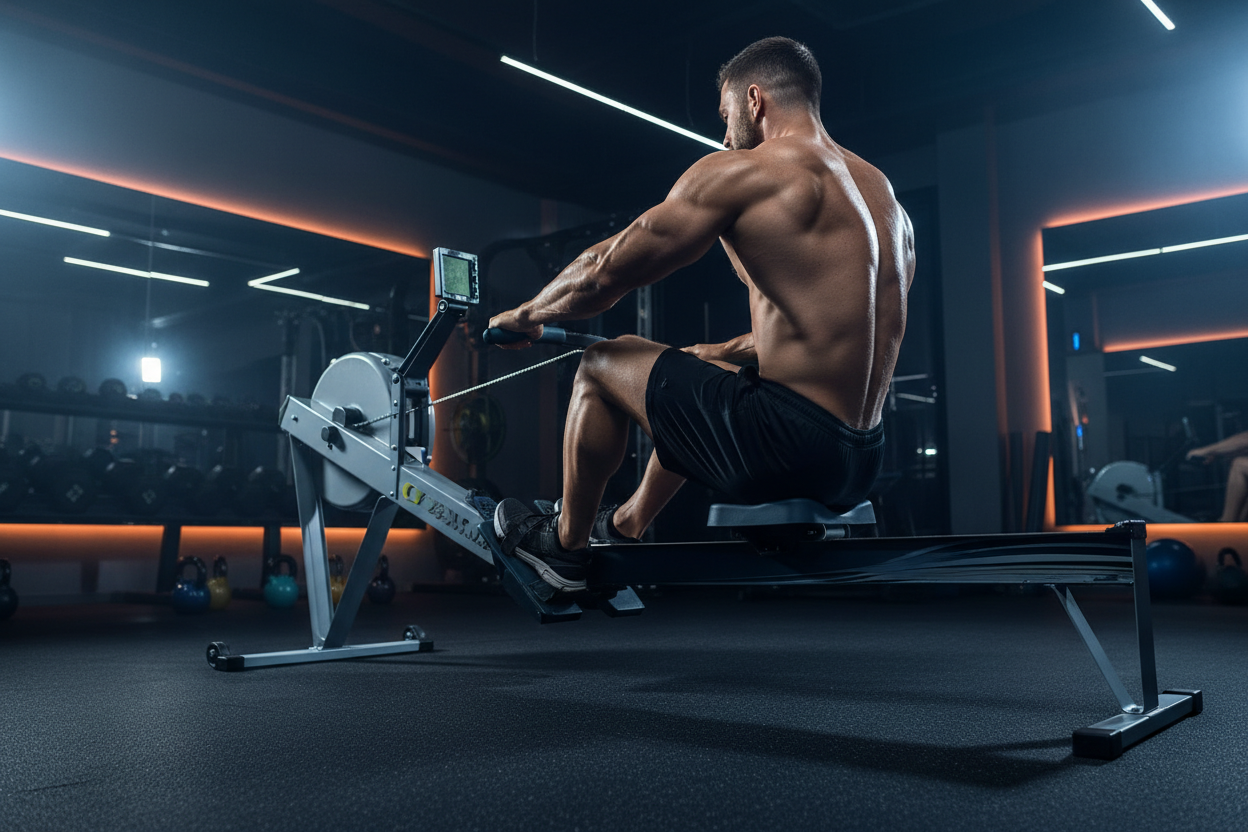
Stop Buying Heavy Duty Rowing Machines Until You Read This
Let’s be honest: there is nothing worse than setting up for a max-effort sprint, pulling hard on the handle, and feeling the entire machine lift off the floor. If you are building a serious home gym or outfitting a facility, standard equipment simply won't cut it. You need stability, longevity, and safety.
You are looking for heavy duty rowing machines because you want gear that survives the grind. But "heavy duty" is often just a marketing sticker slapped on flimsy aluminum frames. To get a machine that actually lasts, you need to look past the product description and look at the build mechanics.
Key Takeaways: What Defines "Heavy Duty"?
If you are in a rush, here is the checklist you need to distinguish professional-grade gear from cheap toys. These are the non-negotiables for a rowing machine heavy duty enough for serious athletes:
- Gross Weight: If the machine itself weighs under 60 lbs, it likely lacks the stability for high-intensity interval training (HIIT).
- User Weight Capacity: Look for a minimum high weight capacity rowing machine rating of 350 lbs (approx. 158 kg), even if you weigh less. This indicates structural integrity.
- Rail Material: Welded steel or commercial-grade aluminum with a stainless steel track is essential to prevent warping over time.
- Chain vs. Strap: Nickel-plated steel chains generally outlast nylon straps in heavy-use environments, though high-end Dyneema cords are a close second.
The Anatomy of a Heavy Duty Rower
When we talk about durability, we aren't just talking about how much weight the seat can hold. We are talking about how the machine handles torque, sweat, and repetitive force.
The Frame and Rail Assembly
The backbone of any rower is the monorail. On budget models, this is often a two-piece assembly bolted together. Over time, that connection point becomes a weak link. A true heavy duty machine features a monorail that is either a single continuous piece or bolted with reinforced steel plates.
You should also pay attention to the seat rollers. Plastic rollers on a raw aluminum track will eventually grind down, creating a bumpy, gritty slide. Heavy duty options usually pair heavy-duty polymer rollers with a stainless steel track cap. This ensures the thousandth stroke feels as smooth as the first.
Resistance Mechanisms: Air, Water, or Magnetic?
Durability varies significantly by resistance type:
- Air Rowers: These are the gold standard for commercial gyms. The fan flywheel is virtually indestructible. The main wear point is the chain and sprocket, which are easily replaced.
- Water Rowers: Excellent for consistent resistance, but the polycarbonate tank is a potential failure point if dropped or exposed to direct sunlight (which makes the plastic brittle).
- Magnetic Rowers: While quiet, the heavy duty nature depends on the flywheel weight. A light flywheel feels jerky. A heavy flywheel puts more stress on the bearings, so ensure the manufacturer uses sealed industrial bearings.
Why Weight Capacity Matters (Even for Lighter Athletes)
A common misconception is that you only need a high weight capacity rowing machine if you are a heavy individual. This is false.
Weight capacity is a proxy for build quality. A machine rated for 500 lbs has stronger welds, thicker bolts, and a wider base of support than one rated for 250 lbs. When you are sprinting at 30 strokes per minute, you generate significant lateral and vertical force. A high-capacity frame absorbs this energy; a low-capacity frame flexes and creaks under the pressure.
Common Mistakes When Buying
The biggest error I see athletes make is prioritizing the monitor over the metal. A fancy touchscreen is useless if the footplates snap off after six months.
Another mistake is ignoring the chain or strap housing. On heavy duty units, the housing is fully enclosed or designed to shed sweat. Sweat is corrosive. If it drips directly into an exposed flywheel bearing or a chain mechanism that isn't nickel-plated, you will be dealing with rust and seizure within a year.
My Training Log: Real Talk
I want to share a specific experience that changed how I view equipment specs. A few years ago, I was testing a "commercial-grade" magnetic rower that cost about half the price of a Concept2. It looked solid on paper—steel frame, 300 lb capacity.
I was doing a 500m sprint interval. At the start, everything was fine. But once I got my split time down near 1:35 and my stroke rate up, the machine started "walking." The stabilizers didn't have enough grip or weight to anchor it. I actually had to stop mid-interval because the front end shifted a good six inches to the left.
Contrast that with the heavy duty air rower I use now. The specific detail I appreciate isn't the smooth pull—it's the footplates. On the cheap model, the heel cup was flexible plastic that bent when I drove through my heels. On my current heavy duty rig, that footplate is rigid. There is zero energy leak. When I drive, the machine takes it. The only downside? The nickel-plated chain leaves a very specific, greasy tattoo on your shins if you don't clean the excess oil off. That’s a small price to pay for a piece of gear that feels like a tank.
Conclusion
Investing in heavy duty rowing machines is about buying peace of mind. You want to focus on your split time, your breathing, and your form—not on whether the bolt under your seat is loosening up. Look for a welded steel frame, a high weight capacity buffer, and a proven resistance mechanism. Buy nice or buy twice.
Frequently Asked Questions
What is the average lifespan of a heavy duty rowing machine?
With proper maintenance (oiling the chain, wiping the rail), a commercial-grade air rower can last 15 to 20 years. Water rowers and magnetic rowers typically have a lifespan of 10 to 12 years before requiring significant part replacements.
Do heavy duty rowers require special maintenance?
Yes, but it is minimal. For chain-driven machines, you must oil the chain every 50 hours of use to prevent stiff links. For all machines, wiping the monorail after every session is critical to prevent dust and grit from pitting the rollers.
Is a higher weight capacity always better?
Generally, yes. A machine rated for 500 lbs is over-engineered for the average user, meaning the components are operating well below their failure threshold. This "safety factor" translates directly to a longer lifespan and a more stable rowing experience.

