Stop Buying a Home Gym Rowing Machine Until You Read This
You want a cardio tool that torches calories without destroying your knees. You want a piece of equipment that works 86% of your muscle mass in a single movement. Enter the home gym rowing machine.
But here is the hard truth: the market is flooded with cheap, flimsy rowers that end up as expensive clothes racks within three months. Choosing the right rower isn't just about price; it's about understanding resistance physics, space mechanics, and data accuracy. If you get this wrong, you won't use it. If you get it right, it becomes the cornerstone of your fitness routine.
Key Takeaways
- Resistance is Everything: Choose Air for infinite scalability (cross-training standard), Water for aesthetics and sound, or Magnetic for near-silent operation in apartments.
- Check the Rail Length: If you are over 6'0", standard budget rowers often have rails that are too short, preventing full leg extension.
- The Monitor Matters: A professional rowing machine is defined by its data. Look for Bluetooth connectivity and reliable split times, not just a basic calorie counter.
- Footprint vs. Storage: Most quality rowers are long (8 feet+). Ensure you buy one that stores vertically or separates into two pieces.
The Resistance Debate: Air, Water, or Magnetic?
The engine of your workout is the resistance mechanism. This dictates the feel of the stroke and the noise level in your house.
Air Resistance: The Gold Standard
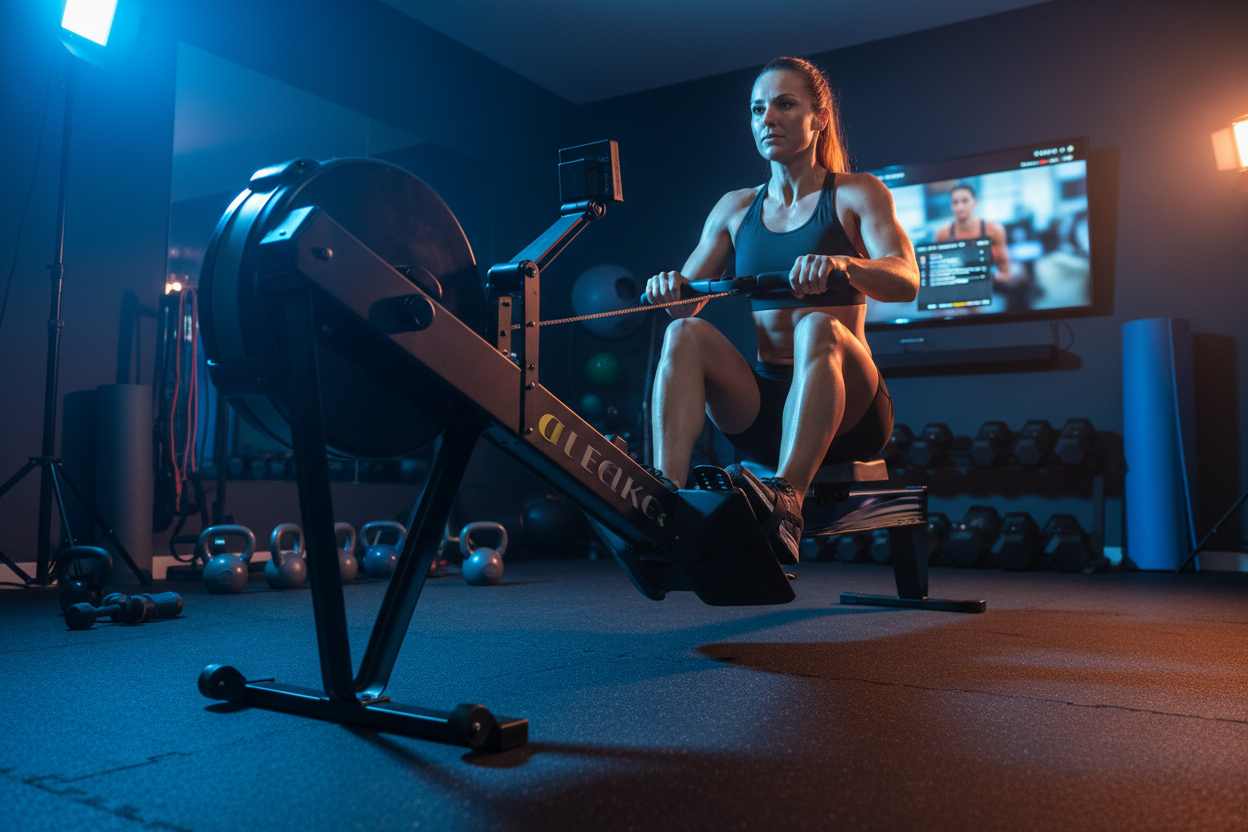
If you walk into a CrossFit box or a boathouse, you will see air rowers. As you pull harder, the fan spins faster, creating more wind resistance. The effort is linear and infinite. The downside? Noise. It sounds like a washing machine taking off. If you want a professional rowing machine experience at home, this is usually the route to take.
Magnetic Resistance: The Silent Partner
Magnetic rowers use magnets moving closer to a metal flywheel to create drag. The primary benefit is silence. You can row while watching Netflix without turning the volume to max. However, the resistance is often static. A hard pull feels the same as a soft pull, just heavier. It lacks the dynamic "water-like" feedback of air rowers.
Water Resistance: The Aesthetic Choice
These feature a tank of water with paddles. The resistance is dynamic (like air) and the sound is a soothing swoosh. They look beautiful in a living room, but they require maintenance (chlorine tablets) and the monitors are rarely as accurate as high-end air rowers.
Space Logistics for the Home Gym Rower
A rowing machine home gym setup requires significant floor space while in use. You need a rectangle roughly 9 feet long by 4 feet wide to accommodate the machine and your elbows.
However, storage is where the magic happens. Look for machines with a "quick release" frame lock that separates the rail from the flywheel, or machines designed to stand upright on their nose. If a machine doesn't fold or stand, it will dominate your room permanently.
The Data Trap: Why Monitors Make or Break the Experience
Many budget home gym rower options come with monitors that lie. They calculate distance based on simple revolution counts rather than force curves.
If you plan to follow online programming or compare times with friends, you need a monitor that measures force. Without accurate data, you cannot track progressive overload. Look for monitors that display 500m split times, watts, and strokes per minute (SPM) accurately.
My Training Log: Real Talk
Let’s step away from the specs for a minute. I want to tell you about the reality of owning a rower that the product pages won't mention.
The first time I set up my rower in the garage, I didn't account for the "fan breeze." On a cold winter morning, an air rower acts like a giant fan blowing freezing air right back at your face and chest. I actually had to rig up a piece of cardboard over the vent to divert the airflow upwards just to stay warm during the warm-up.
Then there is the "butt numbness." I don't care how padded the seat looks; after the 20-minute mark, your glutes will scream. I learned the hard way that you shouldn't wear loose gym shorts on a rower. The fabric bunches up, the rails get greasy, and if you aren't careful, the track can actually bite your shirt tail. I strictly row in compression shorts now—not for aerodynamics, but to prevent track-bite and chafing.
And finally, the calluses. You will get them right at the base of your fingers. Don't wear gloves; they make the grip diameter too thick and ruin your forearm endurance. Embrace the grit.
Conclusion
Adding a rower to your setup is an investment in longevity. It builds a posterior chain of steel and lungs of iron. Just remember to prioritize the resistance type that fits your living situation and ensure the rail fits your height. Don't buy the cheapest option; buy the one you will actually look forward to using.
Frequently Asked Questions
Is a rowing machine good for belly fat loss?
Yes. Rowing is a metabolic conditioning tool that burns a high amount of calories because it uses both the upper and lower body simultaneously. However, fat loss is primarily dictated by a caloric deficit in your diet, supported by the calorie burn from rowing.
Can I put a rowing machine on the carpet?
You can, but it is not ideal. A home gym rowing machine can "walk" or shift during intense sprints on the carpet. It is better to place a dense rubber mat underneath it. This protects your carpet from sweat and stabilizes the machine.
How often should I use my rower?
For general fitness, 3 to 4 times a week for 20–30 minutes is excellent. Because rowing is low impact, you can do it more frequently than running without the same risk of joint stress, provided your form is correct.