Stop Apologizing for Your Machine Only Bodybuilding Split
I remember the days I would scoff at anyone sitting on a selectorized chest press. I was that guy hoarding the squat rack for two hours, convinced that if it wasn't a barbell, it wasn't real training. Then my lower back started screaming, my shoulders felt like they were full of crushed glass, and my hypertrophy hit a wall that no amount of 'grinding' could break through.
Switching to a machine only bodybuilding approach wasn't an admission of defeat; it was the smartest move I ever made for my physique. When you stop worrying about balancing a 400-pound bar on your spine, you can actually start training the muscles you're trying to grow. It turns out, your quads don't know if the resistance is coming from a free-weight squat or a plate-loaded hack squat—they only know tension and failure.
- Machines allow for total focus on the target muscle without stabilization being the limiting factor.
- You can safely train to absolute mechanical failure without needing a spotter.
- Fixed-path equipment often matches the natural strength curve of a muscle better than gravity-dependent free weights.
- Recovery is often faster because you aren't taxing your central nervous system with massive stabilization demands.
The 'Barbells or Bust' Myth Needs to Die
The toxic gym-bro culture has spent decades convinced that the Big Three—squat, bench, and deadlift—are the only path to a pro-level physique. It is a lie rooted in ego, not biomechanics. While barbells are incredible tools for building general strength, they are often inefficient for pure hypertrophy. Your lower back will almost always give out on a heavy barbell row before your lats do.
Machines remove the 'middle man' of stabilization. When you sit in a high-quality chest press, the path is already determined. You don't have to waste 20% of your energy keeping the bar from wobbling or crushing your windpipe. That energy is instead redirected into the pectorals, allowing for a deeper level of fatigue and, ultimately, more growth.
Why Machine Only Bodybuilding Actually Builds Freaky Mass
Mechanical tension is the primary driver of muscle growth. To maximize it, you need to output as much force as possible through a specific range of motion. In a machine bodybuilding workout, the equipment is designed to keep the tension on the muscle where it belongs. Think about a dumbbell fly versus a cable fly; with dumbbells, the tension disappears at the top of the movement. With a machine or cable, the tension is constant.
By eliminating the need to balance, you can use techniques that are suicide with free weights. I'm talking about drop sets, rest-pause sets, and partials at the end of a long set. You can't safely do a drop set on a 405-lb back squat unless you have two very fast friends. On a leg press, you just move the pin and keep going until your legs turn to jelly.
You Can Hit True Failure Without a Spotter
Most people never actually hit true failure on free weights because the brain's 'survival mode' kicks in. Your body will naturally shift the load to other muscles or cut the range of motion short to avoid being pinned. This psychological safety net is a growth killer.
On a hack squat or a modern leverage chest press, that fear is gone. You can grind out a rep for five seconds, fail halfway up, and simply engage the safety catch. This allows you to explore the 'red zone' of intensity that is required for a truly elite physique without risking a trip to the ER.
How to Structure a Brutal Machine Bodybuilding Workout
A successful machine-based split isn't just wandering from one station to the next. You need to pick tools that offer a natural range of motion. Look for converging axes on chest and shoulder presses—this means the handles move inward as you press, mimicking the natural function of the pec or delt. For legs, a pendulum squat or a high-quality hack squat should be your bread and butter.
Structure your session by starting with your heaviest 'leverage' movements. These are the plate-loaded machines that allow for massive loading. Follow those with selectorized (pin-loaded) machines for higher-rep fatigue, and finish with cables to keep constant tension on the muscle in its fully contracted position. This three-tier approach ensures you hit every fiber type without the joint wear and tear of a heavy barbell session.
Stop Treating Machines Like a Lazy Circuit
The biggest reason people fail to grow with machines is that they treat them like a 'toning' tool. They sit down, pick a light weight, and scroll on their phone for 15 reps. If you want to grow, you have to load these things heavy. If the machine goes up to 300 lbs, your goal should be to eventually pin the whole stack for reps.
Don't fall into the trap of mindless movement. If you are going to perform a machine circuit workout, do it with the intention of progressive overload. Track your numbers just like a powerlifter would. If you did 200 lbs for 10 reps last week, you better hit 205 lbs or 11 reps this week. Machines are tools for intensity, not an excuse to take it easy.
The Bare Minimum Gear You Need to Do This at Home
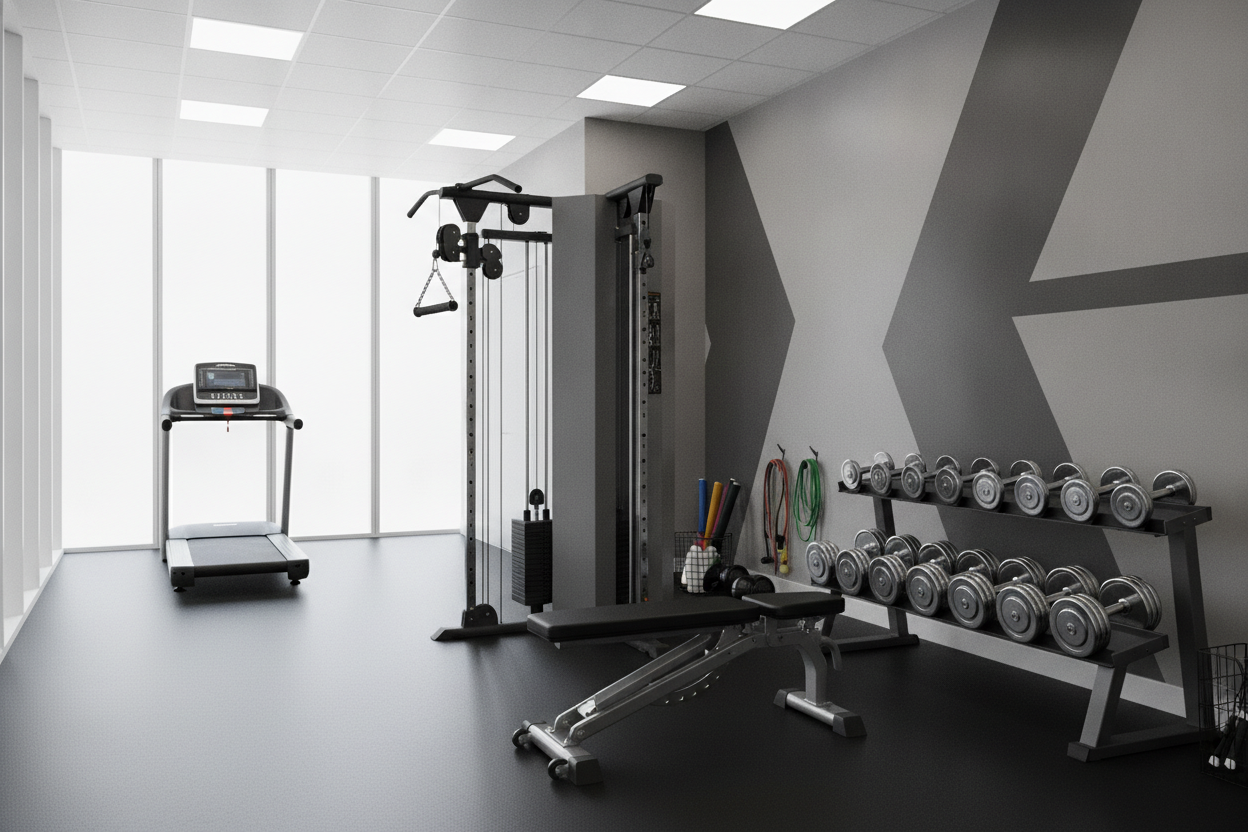
You don't need a 10,000-square-foot commercial gym to run a machine-only split. For a home gym, a high-quality functional trainer (dual cable towers) is the most versatile piece of kit you can own. Pair that with a heavy-duty adjustable bench and a plate-loaded leg press or hack squat, and you have everything you need to build a stage-ready physique in a 10x12 space.
Leverage gyms are another great option. These use arms attached to a frame to mimic the feel of a machine while using the Olympic plates you probably already own. They take up less space than a full rack and are much safer for solo lifting. If you're just starting out, this machine only workout program for beginners is a solid place to begin your transition away from the barbell cult.
FAQ
Is machine only bodybuilding as good as free weights?
For pure muscle growth, it can actually be superior because it allows for higher intensity and better isolation of target muscles without being limited by stabilizer fatigue.
Will I lose 'functional' strength?
You'll still be strong as an ox. While you might lose some specific skill in balancing a barbell, your muscles will be larger and more capable of producing raw force.
Can I do this in a home gym?
Absolutely. A solid cable crossover machine and a plate-loaded leverage station can replace almost an entire commercial gym's worth of equipment in a small footprint.