Step Platform Workout: The Ultimate Home Gym Training Guide
If you are struggling with a workout plateau or trying to maximize a small home gym footprint, you are not alone. Many fitness enthusiasts overlook one of the most versatile and space-efficient tools available. Integrating a step platform workout into your routine can bridge the gap between high-intensity cardio and foundational strength training, all without requiring a massive garage footprint.
Whether you are looking to spike your heart rate, improve agility, or build unilateral leg strength, this guide will help you unlock the full potential of your equipment and choose the exact setup your home gym needs.
Key Takeaways
- Space Efficiency: Perfect for apartments or tight garage gyms, easily sliding under a bed or couch when not in use.
- Versatility: Supports both high-intensity metabolic conditioning and heavy strength movements.
- Adjustability: Look for platforms with interlocking risers to scale the difficulty as your fitness improves.
- Low Impact Cardio: Offers an excellent way to elevate your heart rate while protecting your knees and lower back.
Mastering Platform Workouts: Core Applications
Cardio and Conditioning
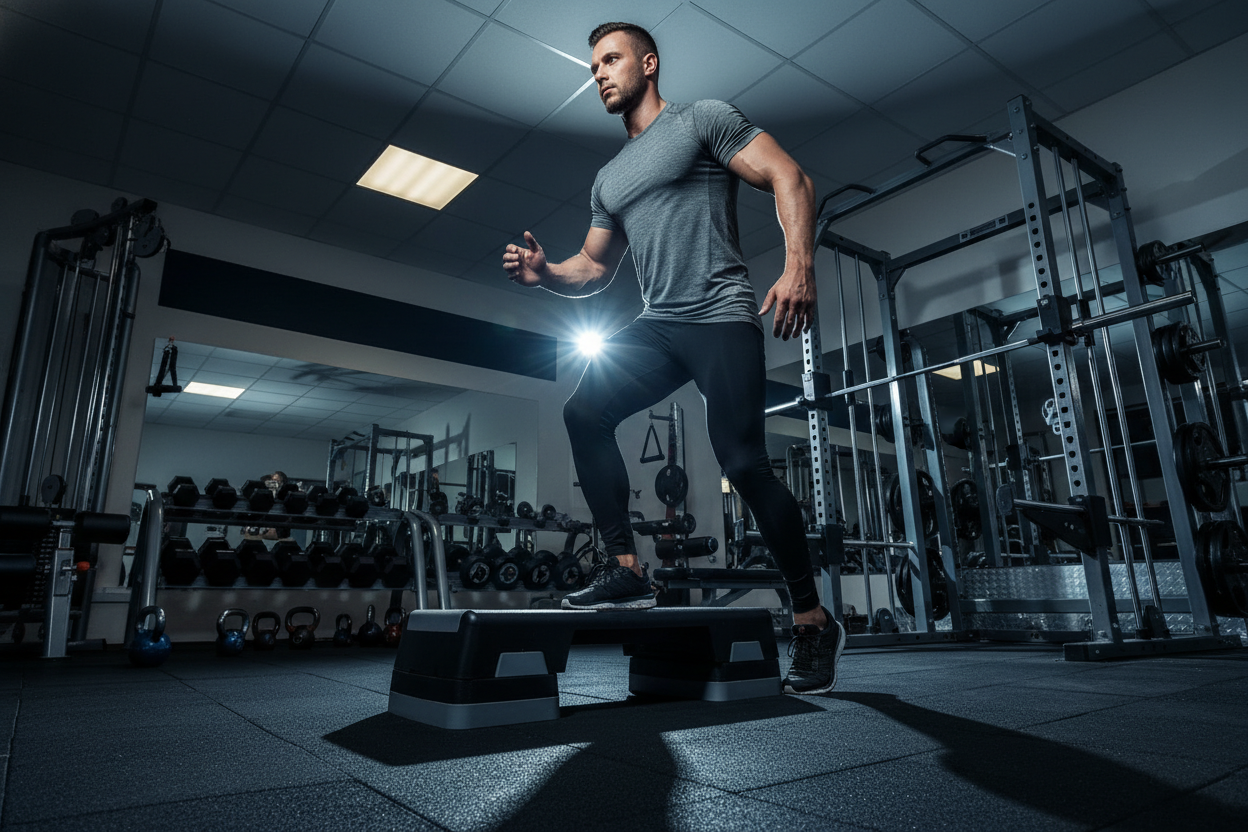
When people think of platform workouts, classic 90s aerobics classes often come to mind. However, modern programming has evolved significantly. Using a platform for lateral shuffle steps, box jumps, and burpee over-steps creates a brutal metabolic conditioning circuit. The key is maintaining a brisk pace while ensuring your entire foot lands securely on the textured surface to maintain balance.
Strength and Hypertrophy
This equipment shines just as brightly on leg day. Incorporating weighted platform exercises, such as Bulgarian split squats, deficit reverse lunges, and glute bridges, allows for a deeper range of motion. For targeted quad and glute development, heavy platform step up exercises with dumbbells or kettlebells are unmatched in building unilateral stability and correcting muscle imbalances.
Choosing the Right Platform for Your Space
Size and Weight Capacity
Not all steps are created equal. If you plan to use yours for heavy lifting, you need a commercial-grade high-density polyethylene (HDPE) platform with a weight rating of at least 300 to 500 pounds. Standard aerobic steps are often too narrow for broad-shouldered athletes performing upper body movements like incline push-ups or triceps dips.
Adjustability and Grip
Look for a system with secure, interlocking risers. A standard 4-inch base is great for fast-paced cardio, but stacking it to 8 or 12 inches is absolutely necessary for deep step-ups and box squats. Ensure the top features a non-slip rubber overmold, not just textured plastic, to prevent slipping when sweat starts dripping during intense sessions.
From Our Gym: Honest Take
After programming routines for the last three years in my own 400-square-foot garage gym, I can confidently say a commercial step is one of my most utilized pieces of gear. I regularly load up with 50-pound dumbbells for deficit lunges, and a quality commercial step does not flex or creak under the load. However, a quick caveat: standard plastic risers can slide on smooth concrete if you hit them at a harsh lateral angle. I highly recommend placing a thin rubber yoga mat or a piece of horse stall mat underneath the base if you are doing aggressive lateral bounds or speed skaters.
Frequently Asked Questions
Is a step platform worth it for a home gym?
Absolutely. Given its low price point and minimal footprint, it offers an incredible return on investment. It serves as a cardio tool, a plyometric box alternative, and even a makeshift incline bench for lighter dumbbell floor presses.
How high should my platform be for step-ups?
For cardiovascular endurance, a 4 to 6-inch height is ideal to maintain a fast cadence. For strength-focused step-ups, aim for a height where your thigh is parallel to the floor when your foot is resting on the box, which is typically between 12 and 16 inches depending on your height.
Can I use a step platform on carpet?
Yes, but with caution. Thick, plush carpets can make the platform feel unstable, especially when stacked high with multiple risers. If you are training on carpet, stick to lower heights or place a firm, flat wooden board underneath to ensure a completely stable base.