Squat Weight Training: The Definitive Guide to Mastery
If you walk into any gym, you will see the squat rack occupied. It is the centerpiece of strength programs for a reason. Often called the "king of exercises," the squat recruits more muscle fibers than almost any other movement. However, effective squat weight training is about more than just putting a bar on your back and bending your knees.
Most lifters plateau or get injured because they treat the squat as a passive leg exercise rather than a full-body structural hold. If your lower back aches or your knees cave inward, you aren't training; you are surviving the rep. This guide breaks down the biomechanics, the mindset, and the execution required to turn a mediocre lift into a powerhouse movement.
Key Takeaways
- Bracing is Non-Negotiable: Before you descend, you must create intra-abdominal pressure. A loose core equals a failed lift.
- Foot Pressure Matters: Maintain a "tripod" foot position (heel, big toe, little toe) to prevent knee valgus.
- Path of the Bar: The bar should travel in a vertical line over the mid-foot, regardless of whether you are doing a high-bar or low-bar squat.
- Depth vs. Ego: Breaking parallel is crucial for muscle activation, but never sacrifice spinal neutrality for depth.
The Mechanics of the Perfect Rep
To understand the squat lift, you have to look at it as a kinetic chain. Energy transfers from the floor, through your legs, across your hips, and into the bar. Any break in that chain leaks power.
The Setup and Walkout
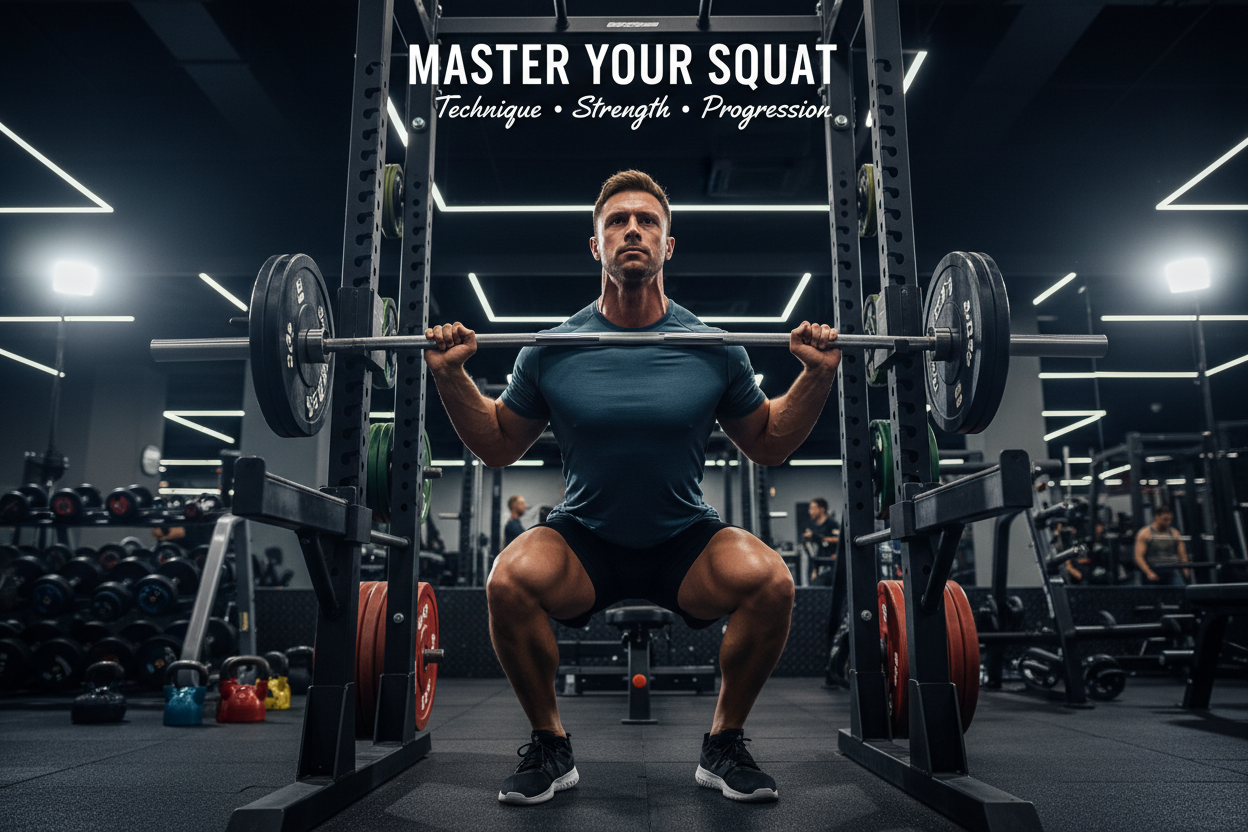
Your lift starts before the weight moves. When you unrack, wedge yourself under the bar. Create a "shelf" with your upper back muscles to support the load. When you step back, take two deliberate steps—one, two, set. Don't dance around. Every second you spend fidgeting is energy wasted that you need for the weight lift squat execution.
The Descent (Eccentric Phase)
Don't just drop. actively pull yourself down. Imagine you are loading a spring. Break at the hips and knees simultaneously. A common cue is to "spread the floor" with your feet. This engages the glutes and keeps the knees tracking over the toes. This control separates a novice squat weight lifting attempt from a pro lift.
The Drive (Concentric Phase)
Once you hit the bottom (the hole), drive your upper back into the bar. Lead with your chest, not your hips. If your hips shoot up first, you end up doing a "good morning" exercise, which puts massive strain on the lumbar spine. Drive through the mid-foot and exhale forcefully as you pass the sticking point.
Variations: Which Lift and Squat Style Fits You?
Not everyone needs to squat the same way. Your femur length and hip mobility dictate your ideal variation.
High Bar vs. Low Bar
In a high bar squat, the bar rests on your traps. This forces a more upright torso and targets the quads. In a low bar squat, the bar sits across the rear delts. This requires more forward lean but allows you to lift heavier loads by engaging the posterior chain (hamstrings and glutes). If your goal is pure lift and squat strength, low bar is often superior.
Front Squat
By moving the bar to the front rack position, you shift the center of gravity. This forces your torso to stay vertical. It is brutal on the core and quads and serves as an excellent accessory for improving your back squat posture.
Common Mistakes That Kill Gains
Heel Lift: If your heels pop off the ground, your ankle mobility is lacking, or your weight is too far forward. This shifts the load to your knees.
Knee Valgus: This is when knees collapse inward during the upward drive. It usually signals weak glutes. Fix this by lowering the weight and using a resistance band around the knees to cue outward pressure.
My Training Log: Real Talk
I want to share a specific detail about squat weight training that textbooks usually skip. It’s about the "shelf" and the pain of the bar.
When I first transitioned to low-bar squatting to move heavier weight, I thought I had the placement right. I didn't. I was letting the bar rest on my shoulder blades rather than creating a muscular cushion. I remember the specific, burning friction of the center knurling scraping down my back mid-rep at 315 lbs because my upper back wasn't tight enough.
It wasn't my legs that failed; it was the bar rolling two inches down, shifting my center of gravity forward and nearly folding me in half. The lesson? If your hands aren't chalked and gripping the bar so hard your knuckles turn white to pin that bar against your rear delts, you aren't tight enough. That specific feeling of the bar being "welded" to your back is the only way to ensure the weight moves where you want it to.
Conclusion
Mastering the squat takes patience. It requires you to leave your ego at the door and focus on the mechanics of the squat lift. Start with a weight you can control perfectly. Build your foundation, respect the movement, and the strength will follow. The iron doesn't lie; if your form is off, it will tell you.
Frequently Asked Questions
Should my knees go past my toes?
Yes, this is a myth that has been debunked. Allowing the knees to travel forward is necessary for most people to hit full depth while keeping an upright torso. As long as your heels stay flat, knee travel is safe and healthy.
How often should I train the squat?
For most intermediate lifters, squatting 2 times per week is the sweet spot. This allows for one heavy session and one volume or technique session to refine your squat weight lifting form without burning out the central nervous system.
Do I need a weightlifting belt?
A belt is a tool, not a crutch. You should learn to brace your core without one first. Once you are lifting near 80% of your one-rep max, a belt can help increase intra-abdominal pressure, making the lift safer and more efficient.