Squat in Rack: The Complete Setup and Training Guide
There is nothing quite as intimidating as staring down a heavy barbell in your basement or garage gym, knowing you are the only one around to spot the lift. If you want to push your lower body strength without risking injury, learning how to safely squat in rack is the single most important skill you can master. Understanding proper squat rack use will transform your training.
Whether you are transitioning from goblet squats or finally upgrading your home gym setup, this guide will walk you through everything from dialing in the perfect J-hook height to executing a flawless walkout.
Key Takeaways
- Always set your J-hooks to armpit height so you do not have to calf-raise the barbell out of the rack.
- Position your safety pins or straps just beneath your lowest squat depth to catch the bar if you fail.
- A proper walkout requires only two to three short steps backward—never walk too far from the safeties.
- Understanding how to use a squat rack correctly builds confidence, allowing you to lift heavier safely.
How to Use a Squat Rack for Beginners
For any squat rack beginner, the metal cage can look like a medieval torture device. But once you understand the basic mechanics, it becomes your best training partner. Let us break down exactly how to squat rack setups effectively.
Setting the Proper Squat Rack Position
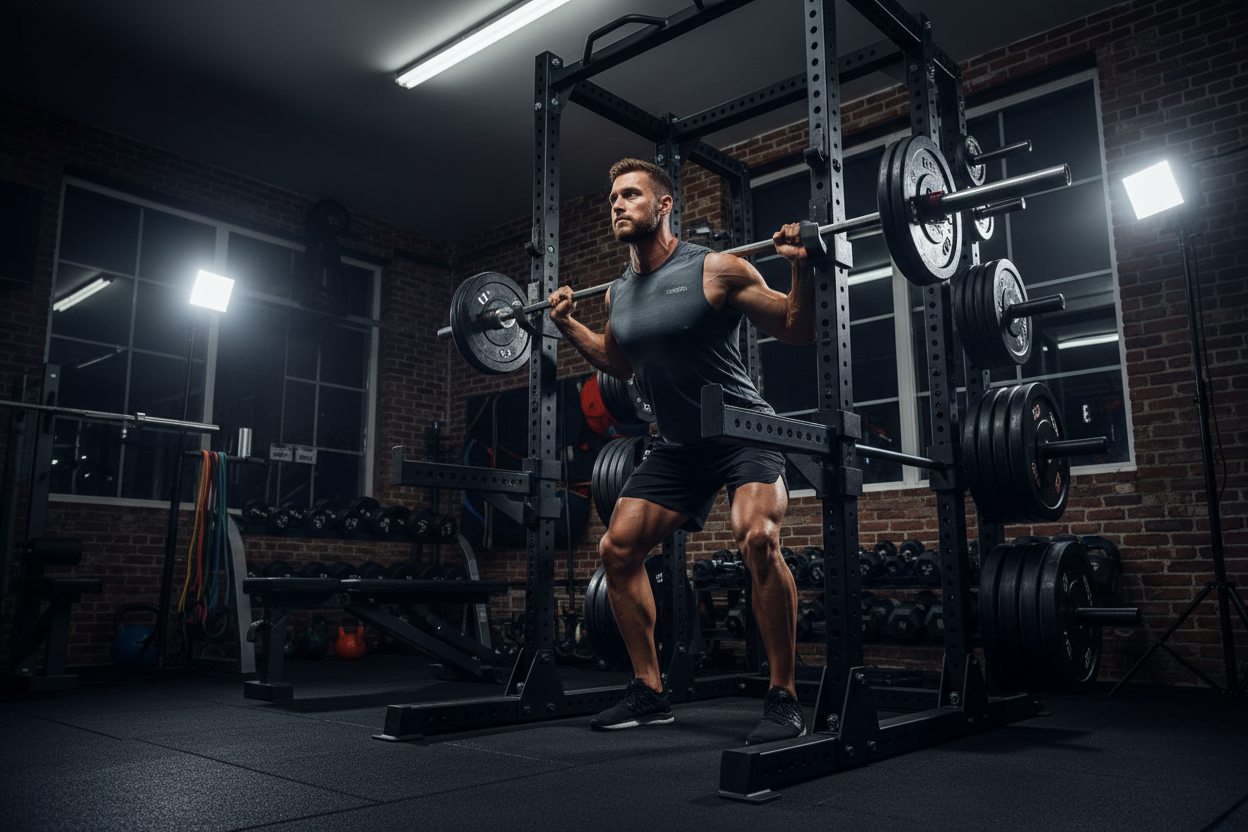
The foundation of a good squat rack squat starts before you even touch the barbell. The squat rack position is dictated by your J-hooks (the brackets holding the bar). Set them at mid-chest or armpit height. If you have to tip-toe to unrack the weight, they are too high. If you have to do a quarter-squat to lift the bar, they are too low.
The Walkout and Execution
When using a squat rack, efficiency is key. Step under the bar, brace your core, and stand up to unrack it. Take one step back with your left foot, one step back with your right, and a tiny adjustment step to square your stance. That is it. When you squat with rack safeties properly engaged, you only want to be a few inches away from the uprights. This ensures you stay protected throughout the entire movement.
Bringing the Squat Rack in Gym Experience Home
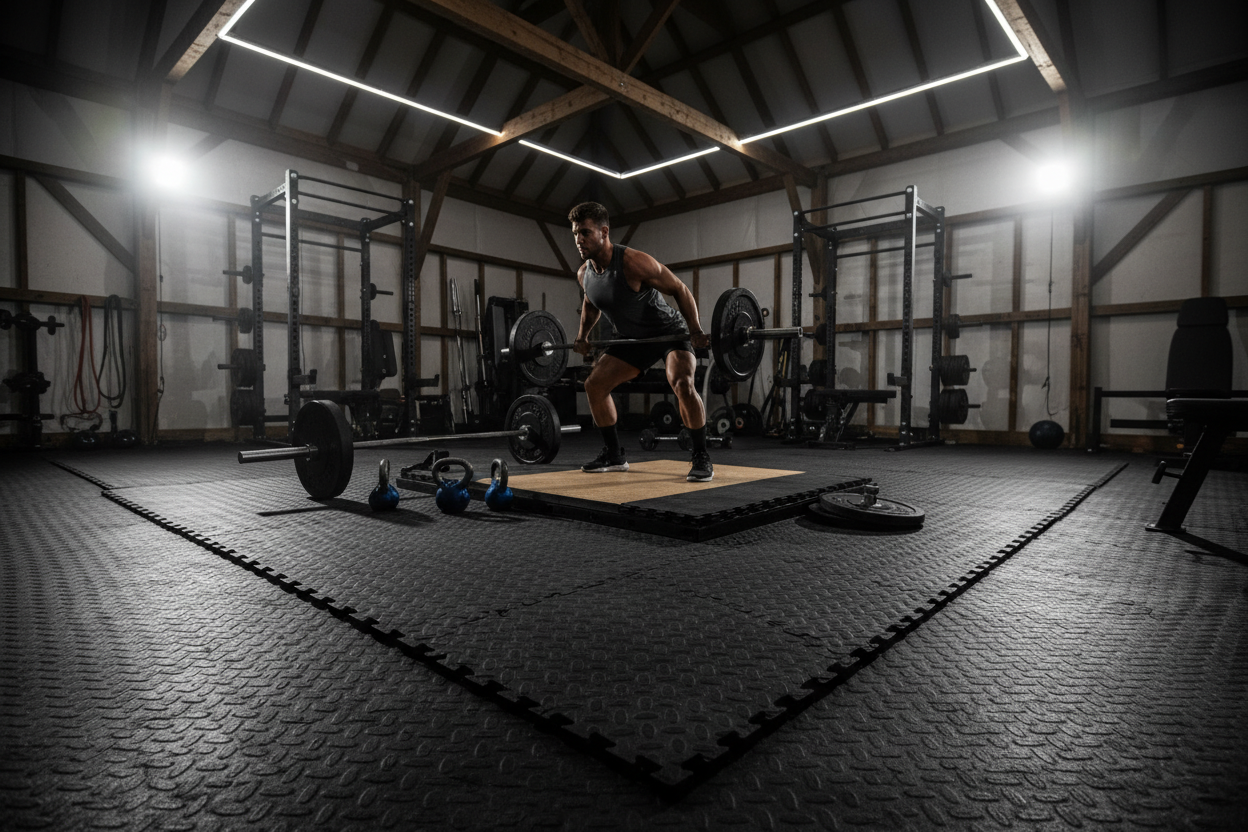
Using a commercial squat rack in gym settings often spoils us with endless space and bolted-down stability. When you bring that experience into a garage or spare bedroom, space planning becomes critical.
Finding the Right Fit
If you plan to squat on rack systems in a tight space, you need to account for barbell overhang. A standard Olympic barbell is 7 feet long. Even if your power rack is only 4 feet wide, you need a minimum of 10 feet of horizontal clearance to load plates comfortably. When you learn how to use a squat rack at home, you will also realize that ceiling height matters—ensure you have at least 80 to 90 inches of vertical clearance if you ever plan to do overhead presses inside the cage.
From Our Gym: Honest Take
I remember setting up my first power cage in a damp, low-ceiling basement. I thought I knew how do you use a squat rack until I tried bailing on a 315-pound back squat for the first time. The safety pins were set one notch too low, and I ended up pinned awkwardly at the bottom of the hole.
Since then, I obsess over safety heights. In our current testing facility, we use a 3x3-inch 11-gauge steel rack with laser-cut numbering. The numbering is a game-changer—no more counting holes to make sure the J-hooks are even. One minor caveat with many budget racks: the standard pipe-and-pin safeties can chew up the knurling on your barbell if you drop it hard. I highly recommend upgrading to strap safeties or UHMW plastic-lined spotter arms if you plan to push to failure often. It protects your bar and dampens the noise significantly.
Frequently Asked Questions
What does squat rack work?
A squat rack itself does not work muscles; rather, it is a safety apparatus that allows you to perform heavy compound movements safely. By enabling you to perform back squats, front squats, and lunges, it helps you target your quadriceps, hamstrings, glutes, calves, and core.
How to use squat rack machine safely?
If you are wondering how to use squat rack machine variations (like a Smith machine or a half rack), the principles remain similar. Set the safety stops just below your active range of motion, ensure the bar path aligns with your natural biomechanics, and always practice the movement with an empty bar first to nail down how to do squat rack exercises safely.
Is a squat rack for beginners necessary?
Absolutely. In fact, a squat rack for beginners is arguably more important than for advanced lifters. Beginners are still mastering their form and are more prone to losing balance or failing a lift. Knowing squat rack how to use basics and having safety pins in place provides the physical and mental security needed to progress.
Ultimately, whether you just want to use squat rack setups for basic strength or heavy powerlifting, mastering the setup ensures your home gym remains a place of progress, not injury.