Sprung Gym Flooring Explained: Is It Worth the Investment?
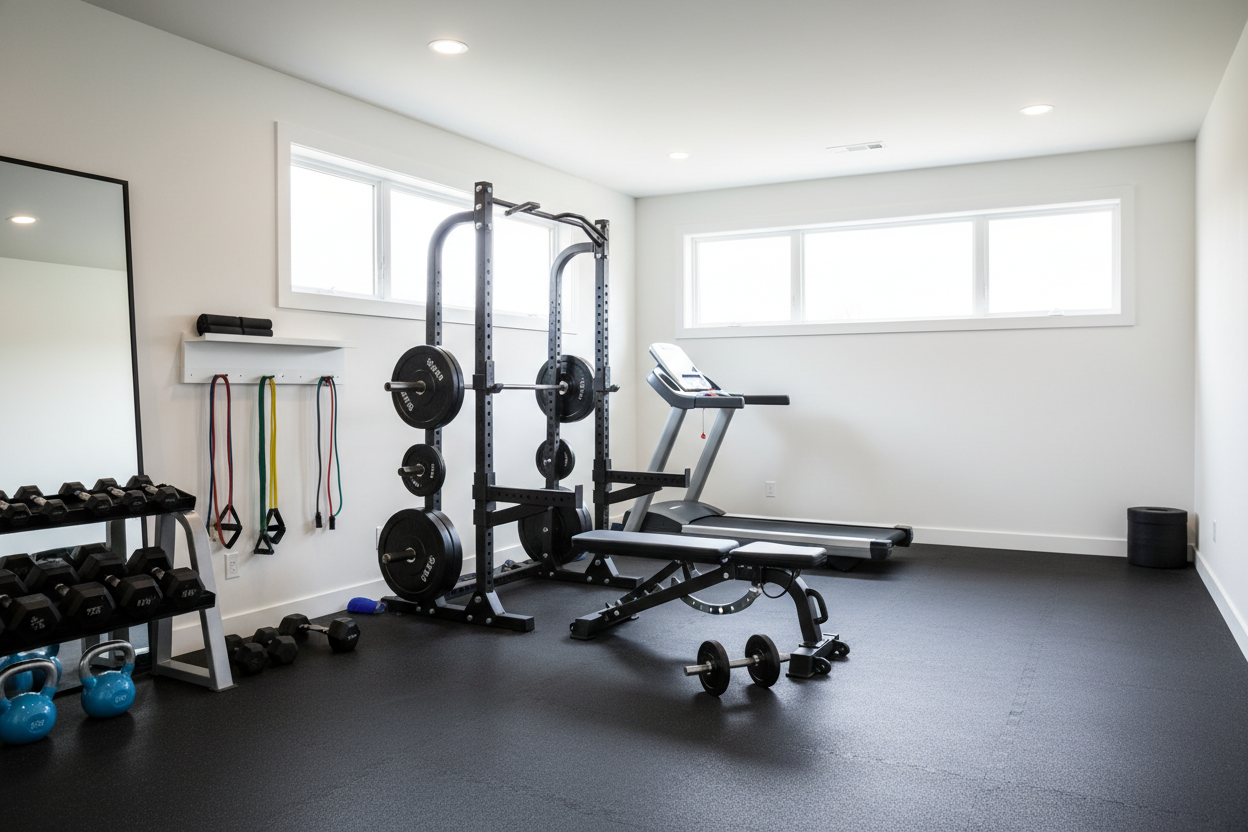
If you have ever felt a sharp ache in your knees after a heavy session of box jumps, or winced at the foundation-shaking thud of a dropped deadlift, you already know the limitations of standard rubber mats. Building a North American home gym is about more than just buying racks and plates; it is about creating an environment where you can train hard without destroying your body or your house's foundation.
Enter sprung gym flooring. Originally reserved for high-end professional athletic facilities and dance studios, this specialized flooring has made its way into residential garage and basement setups. But do you actually need it? In this guide, we will break down the mechanics, the space requirements, and whether upgrading your foundation is the right move for your long-term training goals.
Key Takeaways
- Sprung floors absorb kinetic energy, drastically reducing impact on joints during plyometrics and heavy lifts.
- They protect residential subfloors (like basement concrete) from cracking under dropped weights.
- Installation will raise your floor height by 1 to 3 inches, which requires careful ceiling clearance planning.
- Modern innovations like interlocking sprung tiles make DIY installation feasible for the average home gym owner.
What Actually Makes a Floor 'Sprung'?
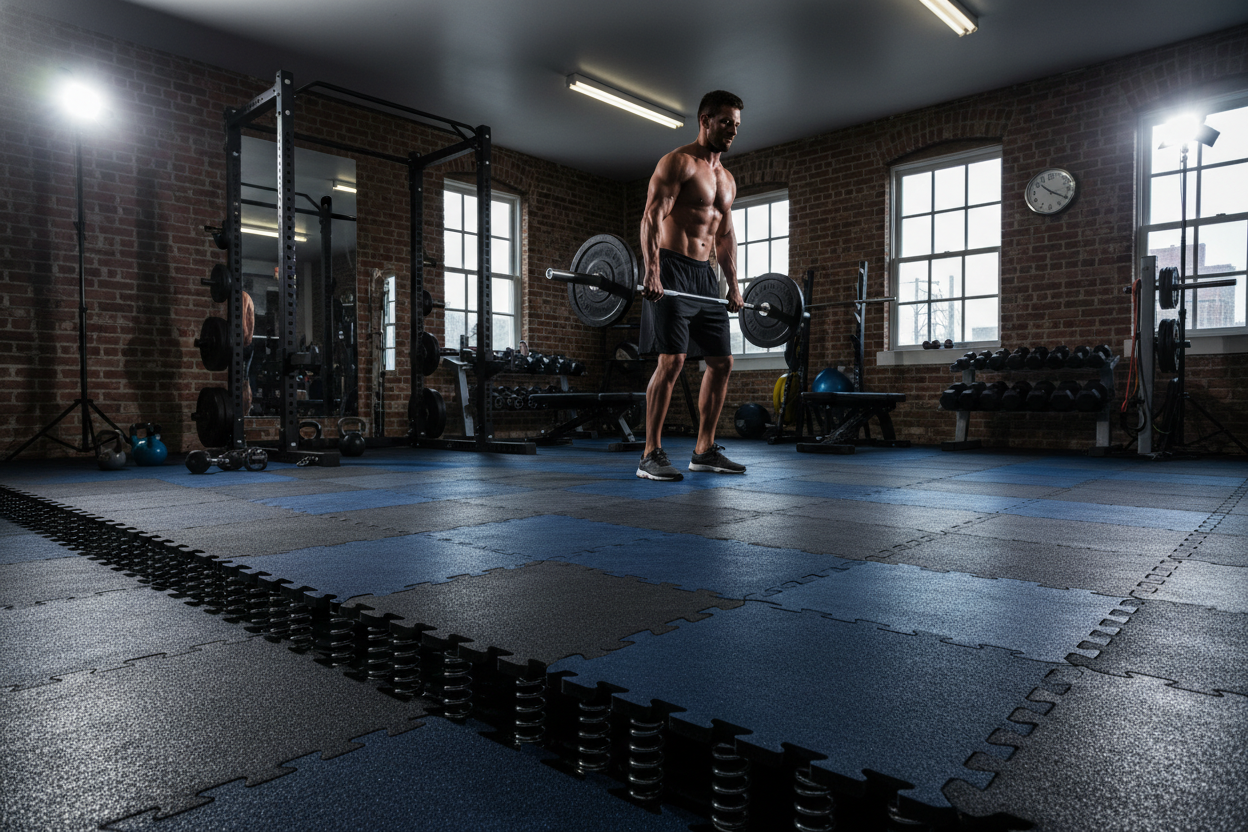
Unlike standard 3/4-inch horse stall mats that simply sit on top of concrete, a true sprung floor features an active suspension system. This usually consists of a lower layer of high-density foam blocks or coils, a rigid middle layer (like plywood), and a durable rubber top layer. When you land a jump or drop a barbell, the floor actively depresses and rebounds, dissipating the shockwave before it travels up your shins or down into your home's foundation.
The Rise of Modular Options
In the past, building a sprung floor meant hiring a contractor to lay custom plywood and foam. Today, the market offers drop-in sprung tiles. These modular squares feature built-in shock absorbers on the underside and heavy-duty rubber on top, allowing you to snap together a premium lifting platform in an afternoon without power tools.
Space Planning: Will It Fit Your Home Setup?
Before you upgrade your flooring, you need to measure your space with a critical eye. North American homes, particularly basement setups, often have strict spatial limitations that can complicate flooring upgrades.
The Ceiling Height Caveat
The biggest oversight buyers make is forgetting vertical clearance. Because a sprung system requires room to compress, it will raise your floor level by 1.5 to 3 inches. If you have an 84-inch basement ceiling and you are 6'2, losing two inches of vertical space might make overhead presses impossible inside your power rack. Always measure your overhead clearance with your tallest plates loaded on the bar.
Training Applications: Who Actually Needs This?
Not every home gym requires a suspended floor. If your routine consists purely of strict bodybuilding movements on machines, standard rubber mats are perfectly fine. However, if you are an Olympic weightlifter dropping heavy bumper plates, a CrossFit enthusiast doing high-volume double-unders, or an older athlete looking to preserve knee and hip health during HIIT workouts, the shock absorption is a game-changer.
From Our Gym: Honest Take
When we decided to test a sprung pro gym flooring system in our main garage test facility, I was initially skeptical of the price tag. We laid down a 10x10 foot section specifically for Olympic lifting and plyometrics. The difference was immediate. Dropping a 315-pound clean and jerk no longer sounded like a car crash, and the usual lower back stiffness I feel after heavy push presses virtually disappeared. However, I will note one minor drawback: rolling heavy equipment, like a 200-pound adjustable bench, across the floor takes slightly more effort because the surface has a microscopic 'give' to it. It is a small trade-off for the joint relief, but worth mentioning.
Frequently Asked Questions
Is sprung flooring worth it for a basic home gym?
If you primarily do slow, controlled lifts (like bench presses and bicep curls), standard rubber mats are sufficient. Sprung flooring is worth the investment if you regularly perform high-impact movements, drop heavy weights, or suffer from chronic joint pain.
How much height does a sprung floor add?
Depending on the specific brand and system, expect your floor to rise between 1.5 and 3 inches. Always factor this into your ceiling height calculations, especially if you have a tall power rack.
Can I park my car on sprung gym flooring in a garage?
Generally, no. While the surface is designed to handle the localized impact of heavy barbells, the sustained rolling weight of a 4,000-pound vehicle can crush the underlying foam blocks or suspension coils. If you have a multi-use garage, build a dedicated platform area instead of doing wall-to-wall installation.