Smith Machine for Low Ceilings: The Basement Gym Guide
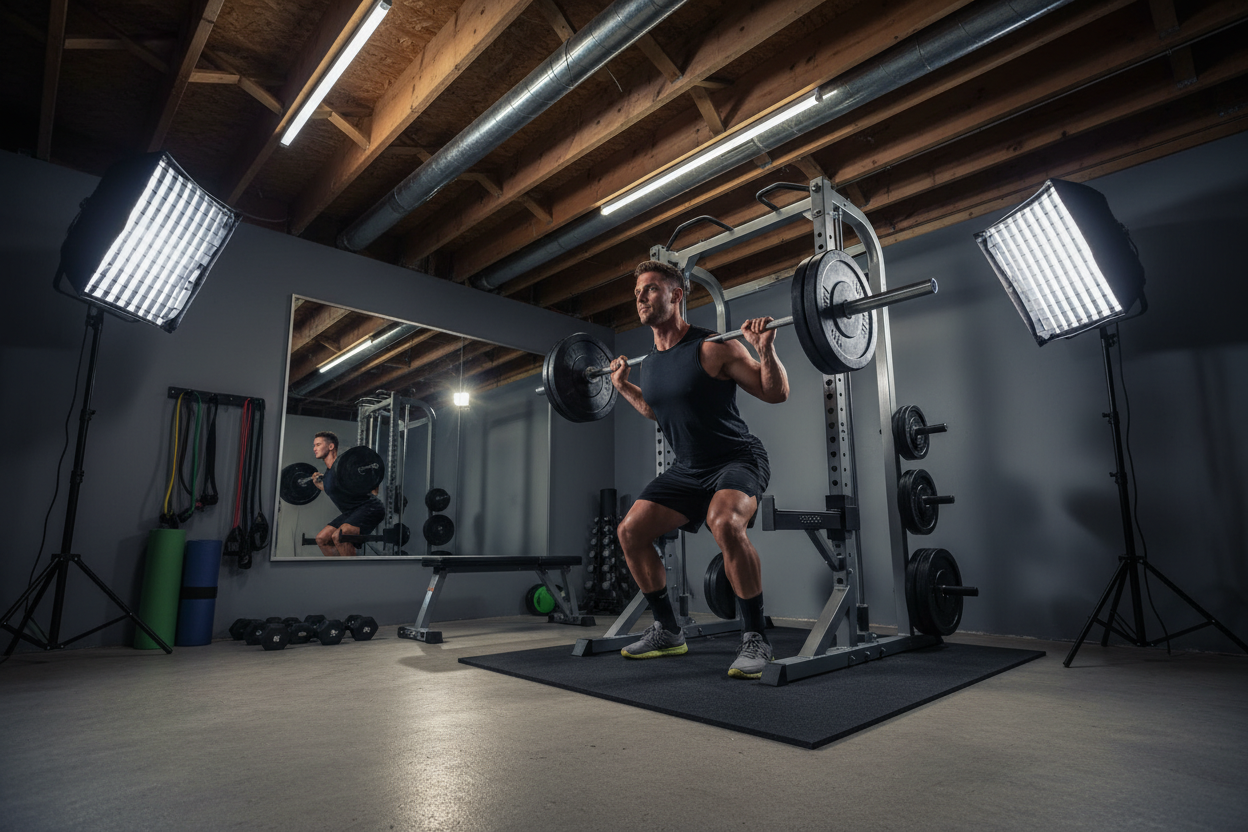
Building a serious training space in a basement or spare room often comes with one major headache: vertical limitation. You have the motivation and the budget, but standard commercial specifications don't care about your 84-inch clearance. Finding the best smith machine for low ceilings isn't just about finding the shortest unit; it is about understanding how structural height impacts biomechanics and safety.
If you ignore the geometry of your room, you risk buying a piece of steel that you literally cannot assemble, or worse, one that restricts your range of motion on key lifts. Let’s break down exactly how to fit heavy iron into a compact vertical space.
Key Takeaways: Choosing Low Clearance Gear
- Measure Diagonal Clearance: A machine might fit standing up, but you need extra height to tip it upright during assembly.
- Check the Pull-Up Bar: On many units, the pull-up bar is the highest point. Look for invertible bars or models without them to save 4-6 inches.
- Guide Rod Extension: Ensure the guide rods don't extend past the frame during max height lifts.
- Internal Working Space: Compact frames often sacrifice internal depth; ensure you have room to bench press without elbows hitting the rear supports.
- Standard vs. Short Models: Look for machines specifically labeled "short" or "compact," typically ranging from 78" to 83" in height.
Analyzing the Vertical Clearance Equation
When curating a home gym for low ceilings, the first mistake lifters make is looking only at the "Assembled Height" spec. That number tells you if the machine fits once it is standing. It does not tell you if you can actually use it.
You must account for the operating height. Some Smith machines use a counter-balance system with pulleys and weights that travel vertically. In a basement gym low ceiling scenario, these counter-weights often rise higher than the frame itself when the bar is lowered. If your joists are exposed, you might get away with positioning the machine between them, but for finished ceilings, a counter-balanced system can be a dealbreaker.
The Assembly Trap
This is the most overlooked aspect of buying exercise equipment for low ceilings. Most Smith machines are assembled lying down and then tipped up. The diagonal length of the uprights is significantly longer than the vertical height. If your ceiling is 84 inches and the machine is 83 inches, you mathematically cannot tip it upright in that room. You will have to assemble it vertically, which is a two-person job requiring ladders and dangerous balancing acts.
Features of a Low-Profile Smith Machine
To fit a low ceiling smith machine effectively, you usually have to sacrifice the overhead pull-up attachment. Standard racks put the pull-up bar at the very top, pushing the total height to nearly 90 inches.
Look for low ceiling gym equipment where the pull-up bar is either:
- Invertible: Can be bolted upside down to sit flush with the frame.
- Absent: Dedicated Smith machines (without the half-rack add-ons) are often shorter because they don't need the overhead stability brace for suspension training.
- Adjustable: Some high-end home gym basement low ceiling models allow you to mount the top crossmember at variable heights.
Range of Motion Considerations
The trade-off for a shorter machine is often a restricted range of motion (ROM) on overhead movements. If you are over 6 feet tall, a low ceiling exercise equipment setup might prevent you from doing standing military presses inside the rack.
However, this shouldn't deter you. The fix is simple: shift to Seated Overhead Presses or Z Press variations. The goal is to maintain the safety of the guided rail system for squats and bench presses, which are rarely affected by height restrictions unless the machine is exceptionally short (under 70 inches).
My Training Log: Real Talk
I learned the hard way about low ceiling smith machine logistics during my first basement build. I bought a reputable unit that was listed at 83 inches tall. My ceiling was exactly 84 inches. On paper, it was perfect.
The reality was a nightmare. I hadn't accounted for the bolt heads on top of the frame, which added another 0.5 inches. More importantly, the floor wasn't perfectly level—concrete slabs in basements rarely are. One corner of the room sloped upward, reducing clearance to 82.5 inches.
I ended up having to cut the rubber stall mats (which are 3/4 inch thick) around the feet of the machine just to gain the millimeter clearance I needed. And the worst part? Doing standing calf raises. At the top of the contraction, the guide rods on that specific model extended upward out of the frame. Every rep ended with a metallic clank as the rods hit the drywall ceiling. I had to patch that ceiling three times before I finally swapped the unit for a dedicated short-stack model designed specifically for basements. Measure twice, and then measure the guide rods.
Conclusion
Building a gym in a height-restricted room is entirely possible, but it requires looking beyond the brochure specs. Focus on the assembly diagonal, the guide rod travel, and the pull-up bar placement. With the right low ceiling gym equipment, you can replicate a commercial gym experience without putting a hole in your drywall.
Frequently Asked Questions
What is the minimum ceiling height for a home gym Smith machine?
Generally, you need at least 84 inches (7 feet) for standard "short" models. However, some ultra-compact models are designed to fit under 80 inches. Always leave at least 1-2 inches of clearance for assembly and floor leveling.
Can I cut the legs of a Smith machine to make it fit?
It is highly discouraged. Cutting the legs alters the structural integrity and voids the warranty. Furthermore, it lowers the safety stops, which might prevent you from getting a full range of motion on squats or bench presses safely.
Does a low ceiling affect standing overhead presses?
Yes. If you are using a compact Smith machine in a basement, you will likely need to perform overhead presses from a seated position. Standing presses usually require a ceiling height of 9 feet or more to clear the weights and the max extension of your arms.