Skip Arm Day: Why a brutal shoulder and forearm workout wins
I spent the better part of three years chasing the 'bicep peak' like a dog chasing a car I was never going to catch. I did the preacher curls, the concentration curls, and the weird cable variations. My arms looked okay in a tight t-shirt, but the second I tried to move something heavy in the real world—or even just hit a heavy set of deadlifts—my grip was the first thing to go. I looked like I lifted, but I didn't have the hardware to back it up. My forearms were thin, and my shoulders lacked that 'capped' look that separates the casuals from the lifters who actually put in the work.
The shift happened when I stopped treating my forearms as an afterthought and started treating them like a primary mover. Transitioning to a dedicated shoulder and forearm workout didn't just make my sleeves tighter; it stabilized my overhead press and fixed a nagging elbow issue I’d had for months. If you are training in a garage or a basement, you don't have time for fluff. You need movements that provide the biggest bang for your buck.
Quick Takeaways
- Grip strength is the literal bottleneck for almost every major upper-body lift.
- Thick-bar training forces forearm hypertrophy without adding extra time to your session.
- Shoulder stability starts in the hand; a weak grip leads to 'leaky' power at the shoulder joint.
- Flooring matters—heavy grip work means weights will eventually hit the ground.
Why I Finally Dropped Dedicated Bicep Work
Let’s be real: most people do bicep curls because they’re easy and they feel good. But if you're limited on time in your home gym, spending 40 minutes on isolation curls is a massive waste. I realized that my biceps were getting plenty of indirect work from heavy rows and pull-ups. What was missing was the 'brute' look—the thick, meaty forearms and the wide, powerful delts that command respect.
When you prioritize a shoulder forearm workout over high-rep arm fluff, you’re building functional mass. Think about the guys who work manual labor—they don't have big biceps because they do curls; they have huge arms because they spend all day gripping, carrying, and pressing. By shifting my focus, I found that my grip became a weapon rather than a weakness. Plus, there is something inherently more satisfying about pressing 100-lb dumbbells than doing 30-lb curls.
The Biomechanics of a Good shoulder forearm workout
There is a concept in kinesiology called 'irradiation.' It basically means that when you squeeze something as hard as you can, the muscle activation doesn't just stay in your fingers. It travels up your forearm, through your triceps, and directly into your rotator cuff. This is why you can often press more weight when you white-knuckle the bar. If you stop sabotaging your shoulder and workout routine by ignoring your grip, you'll find that your shoulders actually feel safer under heavy loads.
A weak grip sends a signal to your brain that the load is unsafe. Your nervous system will literally 'dial back' the power to your shoulders to protect you. By building massive forearm strength, you’re essentially giving your brain the green light to recruit more muscle fibers in your delts. It’s a kinetic chain connection that most lifters completely ignore. You want bigger shoulders? Start by crushing the bar with your hands.
The Three Lifts You Actually Need
I don't believe in 15-exercise 'circuits.' Give me three heavy, high-tension movements, and I’ll show you more growth than a month of 'muscle confusion' workouts. We are looking for high mechanical tension and maximum grip demand.
Fat Grip Overhead Dumbbell Presses
If you haven't used thick grips (like Fat Gripz or a dedicated thick bar), you’re leaving gains on the table. Snapping these onto your standard dumbbells increases the handle diameter to over 2 inches. This forces your forearms to fire at 100% capacity just to keep the weight from slipping, all while your delts are screaming through a heavy press. It turns a standard shoulder builder into a total arm developer. I usually stick to the 6-8 rep range here. If you can do 12, the weight is too light.
Plate Pinch Front Raises
This is a brutal hybrid. Take two 10-lb or 25-lb iron plates (the old-school ones with the flat sides work best). Pinch them together with your fingers—no using the holes or the rim. While keeping that pinch tight, perform a controlled front delt raise. The constant tension required to keep the plates from sliding apart will set your forearms on fire, while the leverage of the raise torches your anterior delts. It is a humbling movement. Most guys who ego-lift 50-lb dumbbells can't do this with two 10s for a set of 10.
The Farmer's Walk Finisher
The Farmer’s Walk is the king of 'man strength.' It builds the traps, caps the delts, and stretches the forearms under extreme load. Pick up the heaviest dumbbells or handles you can find and walk until your hands literally open on their own. This is the ultimate way to cap off the workout because it provides massive time under tension. For more ideas on how to kill your grip at the end of a session, check out our workout hub. I aim for three sets of 40 yards with a weight that makes me want to quit at yard 30.
Setting Up Your Space for Heavy Drops
When you train grip to failure, the weight is going to hit the floor. It’s not a matter of 'if,' but 'when.' I learned this the hard way when a 75-lb hex dumbbell slipped and took a chunk out of my garage concrete. If you're serious about this routine, you need to protect your foundation. You can't train with intensity if you're worried about damaging your house.
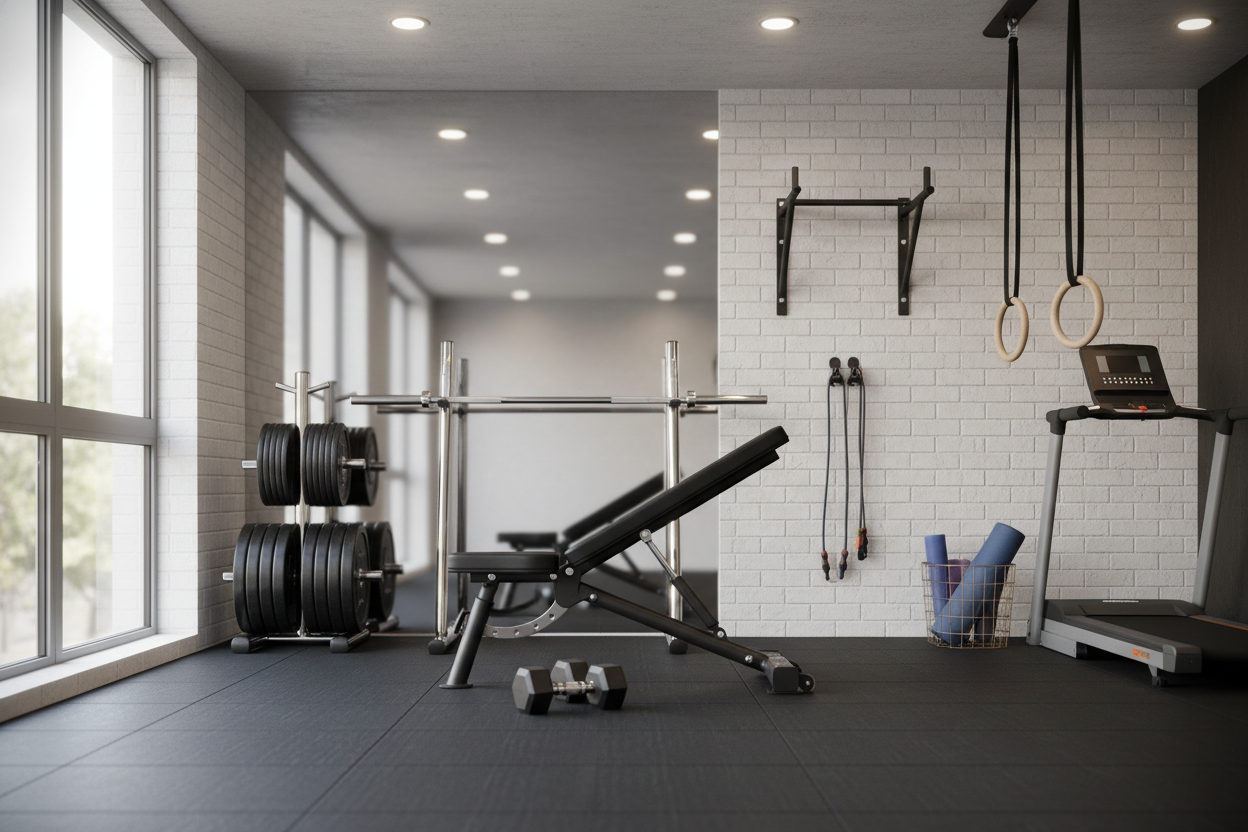
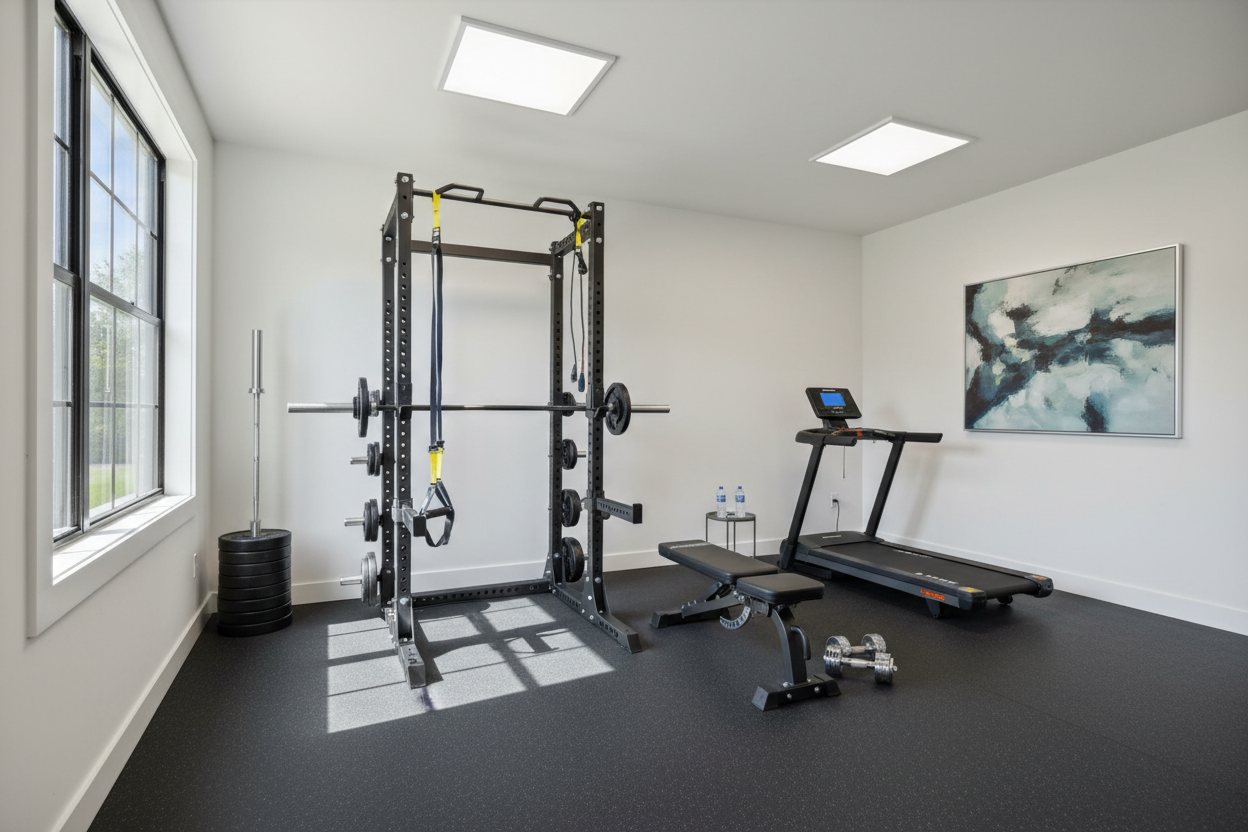
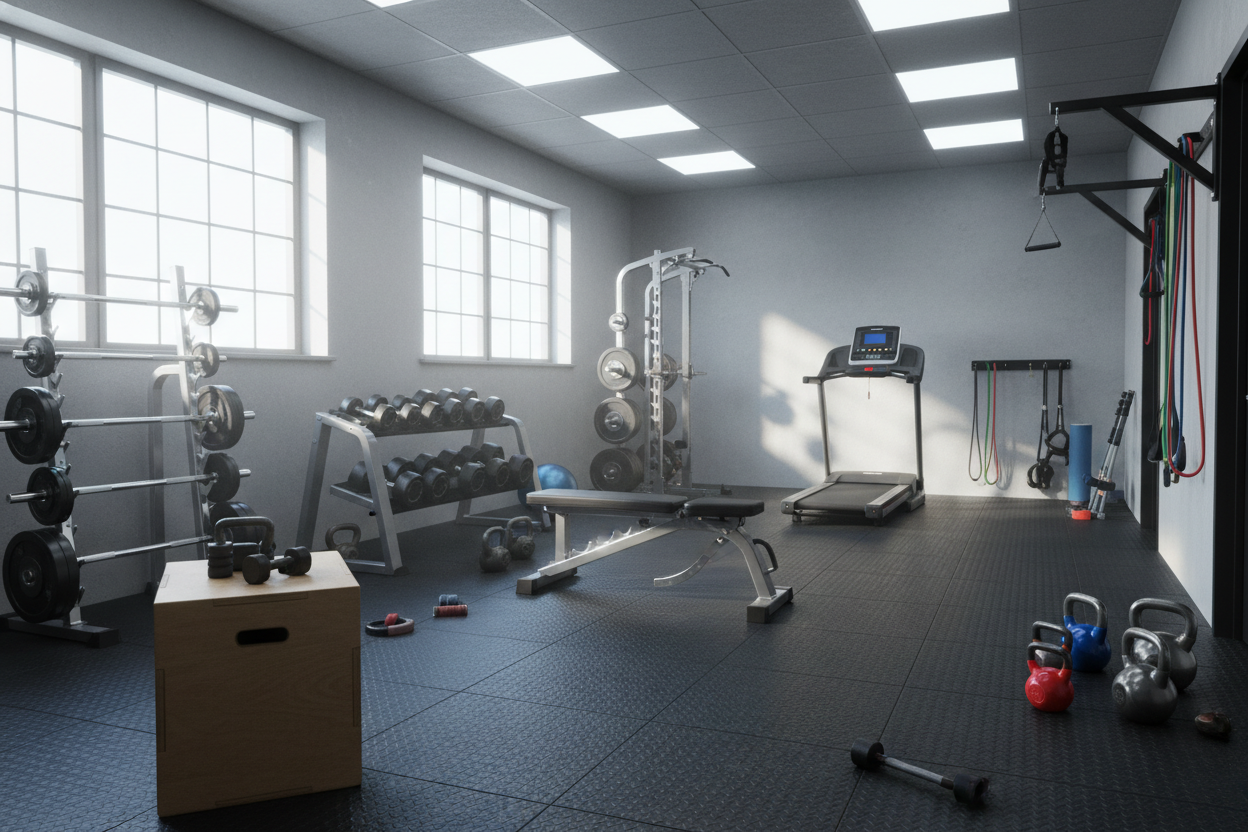
Invest in high-quality gym flooring for home workout spaces. You want something at least 8mm thick—ideally 3/4 inch stall mats—to absorb the shock. Not only does it save your floor, but it also deadens the noise so you aren't waking up the neighbors during your 6 AM sessions. I personally use a 6x8 ft area of dense rubber, which gives me enough room for the plate pinches and the start of my farmer's walks.
How to Program This Into Your Split
Don't just add this on top of an existing 6-day 'bro split.' You’ll overtrain your small connectors and end up with tendonitis. Instead, replace your traditional 'Arm Day' or 'Shoulder Day' with this routine twice a week. Give yourself at least 48 hours between sessions. Your forearms are small muscles, but they take a beating because you use them for every other lift in the gym.
I like to run this on Tuesdays and Fridays. Tuesday is the 'Heavy' day (lower reps, max weight), and Friday is the 'Volume' day (higher reps, focus on the burn). Within six weeks, you’ll notice that your hands feel like vices, and your shoulders will have that dense, thick look that you just can't get from lateral raises with 5-lb pink dumbbells.
FAQ
Can I do this with adjustable dumbbells?
Yes, but be careful. Some adjustable sets have plastic components that don't like being dropped. If you're using them for the Farmer's Walk, make sure the locking mechanism is secure. For the Fat Grip presses, they work perfectly on almost any handle.
What if my forearms give out before my shoulders?
That’s the whole point. Your forearms are the weak link. By forcing them to keep up, you’re raising the ceiling of your physical potential. Eventually, they will catch up, and your shoulder strength will explode.
Do I need to use chalk?
If you're in a humid garage, yes. But try to go without it for as long as possible. The goal is to make the grip the hardest part of the movement. If you're 'cheating' the grip with too much chalk or straps, you're missing the forearm hypertrophy benefits.