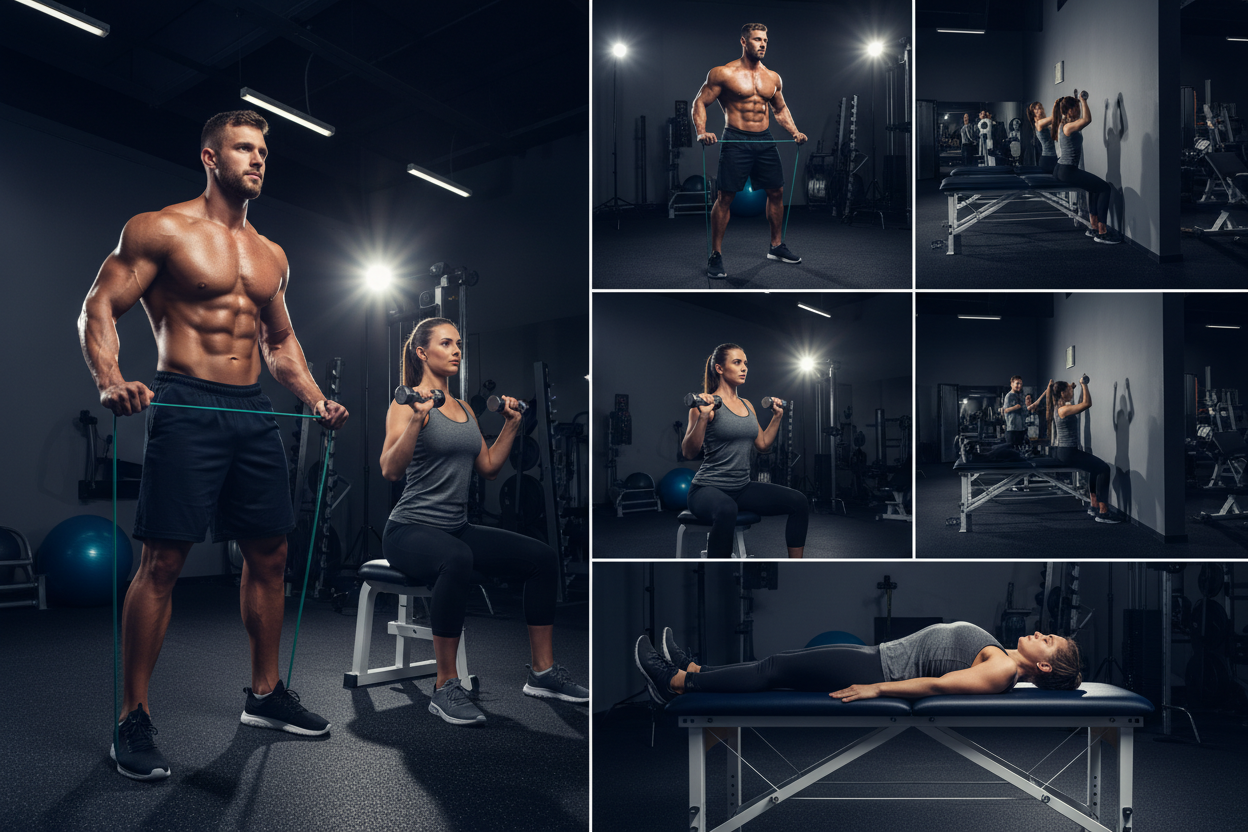
Shoulder Weakness Exercises: The Protocol for Lasting Stability
You reach for a coffee mug on the top shelf, and there it is—that sudden lack of power or a sharp pinch that stops you cold. It’s not just annoying; it’s a warning light on your body’s dashboard. Most people try to push through by doing overhead presses, but addressing shoulder weakness exercises requires a completely different approach.
Ignoring this instability often leads to chronic impingement or tears. The goal here isn't to build boulder shoulders immediately; it's to wake up the dormant stabilizers that allow your larger muscles to do their job. Let's fix the foundation so you can move without hesitation.
Key Takeaways: The Stability Checklist
- Scapular Control First: You cannot fix a weak shoulder if your shoulder blade (scapula) isn't moving correctly.
- Rotator Cuff Focus: The small stabilizers fail long before the large deltoid muscles do.
- Time Under Tension: For atrophy and weakness, slow, controlled eccentric movements beat heavy reps.
- Pain-Free Range: Never push into sharp pain; work right up to the edge of discomfort to stimulate adaptation.
Understanding Why Your Shoulders Gave Up
Before we grab any weights, we need to understand the mechanics. Often, what feels like weakness is actually neurological inhibition. Your brain senses instability in the joint, so it shuts down power to the prime movers (like the deltoids) to prevent injury.
If you are looking for how to fix weak shoulders, you have to look at the rotator cuff. These four small muscles suck the arm bone into the socket. If they are weak or atrophied, the joint rattles around, causing inflammation and perceived weakness.
Phase 1: Activation and Alignment
These movements are subtle. If you are sweating profusely or gritting your teeth, you are likely using the wrong muscles (traps) and defeating the purpose.
1. Scapular Wall Slides
This is the gold standard for teaching your shoulder blades how to glide. Stand with your back against a wall. Press your lower back, head, and elbows into the wall. Slide your arms up into a 'Y' shape without letting your lower back arch or your elbows leave the wall.
You will feel a deep burn in the mid-back. This engages the lower trapezius and serratus anterior, muscles critical for overhead stability.
2. The Side-Lying External Rotation
This is one of the best weak shoulder muscles exercises because gravity does the work against you. Lie on your side with a towel roll tucked under your top arm's armpit. Keep your elbow bent at 90 degrees.
Rotate your hand toward the ceiling while keeping the elbow pinned to your side. Lower it slowly. This specifically targets the infraspinatus and teres minor, usually the first muscles to suffer from atrophy.
Phase 2: Loading and Integration
Once you can control the joint, we introduce load. This bridges the gap between rehab and exercises to strengthen shoulders and arms for athletic performance.
1. The Face Pull (With External Rotation)
Most people butcher this exercise at the gym. Set a cable or band at eye level. Pull the rope towards your forehead, but as you pull, drive your thumbs back behind your head.
The key here is the end position: you should look like you are hitting a double-bicep pose. This hits the rear delts and external rotators simultaneously.
2. Isometric Wall Pushes
If you are dealing with severe weakness or recovering from an injury, shoulder atrophy exercises often start with isometrics. Stand in a doorway. Bend your elbow to 90 degrees and push the back of your wrist into the doorframe (external rotation) at about 50% effort. Hold for 10 seconds. This builds strength without the wear and tear of joint movement.
My Training Log: Real Talk
I want to share my personal experience with shoulder weakness exercises because I've been in the trenches with this. A few years ago, I developed a nasty case of 'sleepers shoulder'—my left side was visibly smaller than my right due to nerve compression.
I remember using those cheap, yellow TheraBands for rehab. The distinct, powdery smell of the latex is something I’ll never forget. But the worst part wasn't the exercise itself; it was the friction. The band would inevitably bunch up and pinch the hair on my forearm during external rotations. It was annoying, but that specific, burning sensation deep under the rear delt—not the surface burn, but that deep ache—was the only indicator that I was actually hitting the rotator cuff and not just shrugging with my traps. It took six weeks of daily, boring band work before the wobble in my bench press finally disappeared.
Conclusion
Fixing weak shoulders is a game of patience, not ego. You have to be willing to put down the heavy dumbbells and pick up the resistance bands. By focusing on stability and scapular control first, you build a platform that can eventually handle heavy loads safely. Start with the wall slides, master the rotations, and consistency will take care of the rest.
Frequently Asked Questions
How often should I do shoulder stability exercises?
For rehab and activation, frequency is key. You can perform unloaded movements like wall slides and isometric holds daily. For loaded exercises like face pulls, aim for 3 to 4 times a week to allow for recovery.
Can I still bench press if I have weak shoulders?
If you have pain, stop. If it's just weakness, reduce the weight significantly and focus on tempo. Using a neutral grip (palms facing each other) with dumbbells often reduces stress on the joint compared to a barbell.
How do I know if I have shoulder atrophy?
Visibly, one shoulder may look flatter or less round than the other. Functionally, you might notice significant shaking or 'wobbling' when holding a light weight overhead, or an inability to keep your arm externally rotated (hand falling forward) during movement.