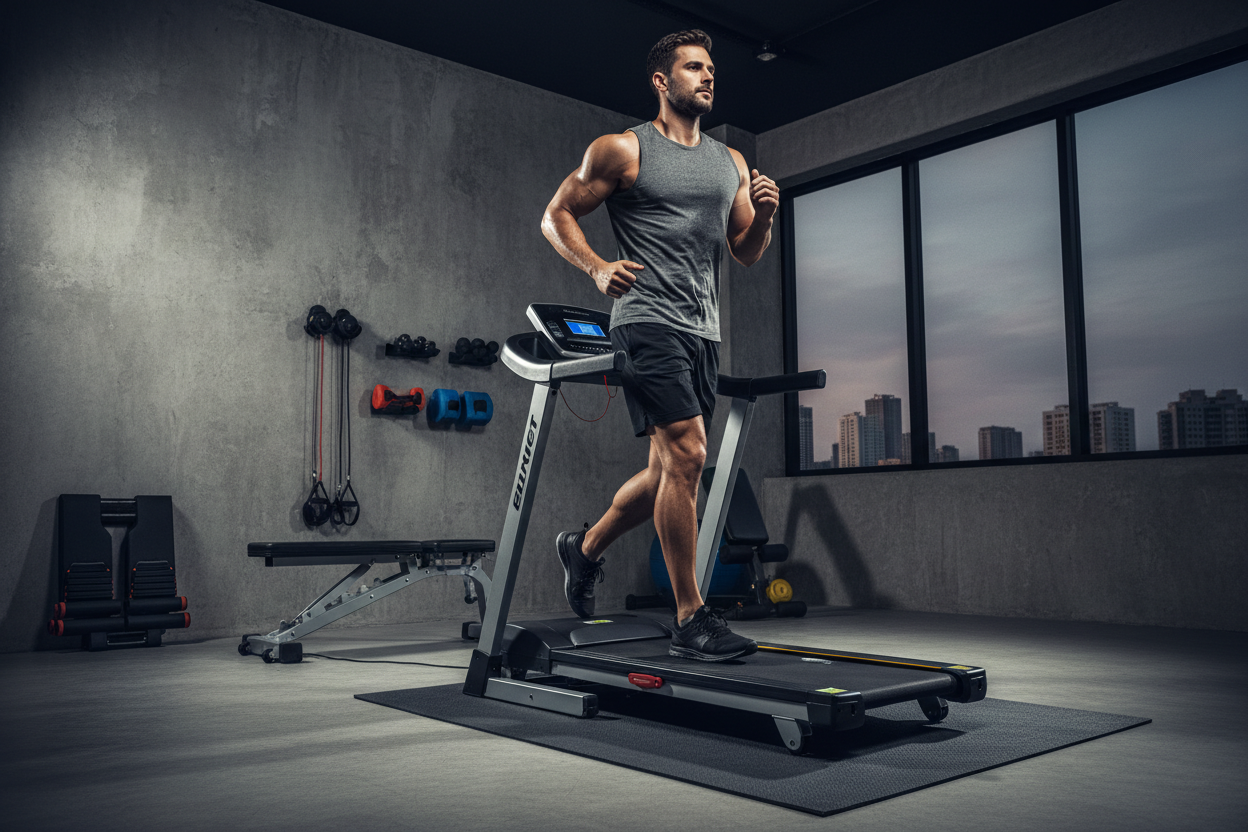
Running Machine Small: Is Compact Cardio Actually Worth It?
If you have ever tried to squeeze a commercial-grade treadmill into a spare bedroom, you know the struggle. The footprint is massive, the delivery is a nightmare, and suddenly your cozy office feels like a cramped commercial gym. But what if you could get your miles in without sacrificing half your floor plan? Finding a running machine small enough to fit your life—and your living room—is the ultimate home gym hack.
Whether you are dodging winter weather or just want to add more movement to your work-from-home routine, downsizing your cardio equipment is a smart move. In this guide, we will break down exactly what to look for when shopping for compact treadmills, how to plan your space, and what separates a reliable machine from a flimsy trip hazard.
Key Takeaways
- Measure twice, buy once: Always check the folded AND unfolded dimensions, plus clearance space.
- Motor power matters: Look for at least 2.0 CHP if you plan to jog; under 2.0 is strictly for walking.
- Belt size is crucial: A minimum belt length of 40 inches is required for walking, while runners need 50 inches or more.
- Weight capacity indicates durability: Higher weight limits usually reflect better frame construction and motor quality.
Making Sense of Compact Cardio Options
Motor Power and Performance
When evaluating a small electric treadmill for home use, the motor is the beating heart of the machine. Compact models typically feature motors ranging from 1.5 to 2.5 Continuous Horsepower (CHP). If your goal is strictly walking while answering emails, a 1.5 CHP compact treadmill electric model will serve you perfectly. However, if you plan on light jogging or interval training, you will want to step up to a 2.0+ CHP small motorised treadmill to prevent the motor from burning out prematurely.
Understanding Deck Size Requirements
The biggest compromise with a small running machine is the deck size. Standard commercial treadmills have belts around 20 to 22 inches wide and 60 inches long. A foldable mini treadmill will often shrink this to 16 inches wide and 40 to 45 inches long. If you have a longer stride or are over 6 feet tall, this reduced length means you will need to adjust your running mechanics or stick to brisk walking.
Space Planning for Tight Setups
Apartment Corners and Under-Desk Setups
The beauty of small electric treadmills is their versatility. If you are outfitting an apartment corner or a multi-purpose guest room, look for models with transport wheels and a folding mechanism that locks securely. You need at least 6 feet of clearance behind the machine for safety. Many modern compact units can fold completely flat, allowing you to slide them under a bed or a standing desk when not in use.
Value & Budget: What You Actually Get
There is a massive difference between a budget-friendly walking pad and a durable piece of training equipment. While it is tempting to grab the first small cheap treadmill you see on sale, you often get what you pay for in terms of shock absorption and frame stability. Entry-level models are great for casual walking but often lack warranties and robust cushioning. Moving into the mid-tier range unlocks better suspension systems, higher weight capacities, and quieter operation—a must-have if you share walls with neighbors.
From Our Gym: Honest Take
We recently tested a highly-rated foldable mini treadmill in our 10x10 office studio to see if it could handle daily use. The space-saving design was incredible—we literally folded it up and leaned it against the wall behind a bookshelf in under thirty seconds. However, I have to be honest about the limitations. At 6'1", the 16-inch belt width felt restrictive during faster jogging intervals. I had to focus intensely on keeping my stride perfectly straight to avoid clipping the side rails. The powder-coated frame held up beautifully over six months of daily use with zero squeaking, but if you are a taller athlete looking to do all-out sprints, a compact model might not be your best primary training tool.
Frequently Asked Questions
Is a small running machine worth it for a home gym?
Absolutely, provided your expectations align with the machine's capabilities. They are incredible for getting daily steps in, light jogging, and saving space. If you are training for a marathon, however, you will want a full-sized commercial deck.
How much space do I need for a compact treadmill?
While the footprint of the machine itself might only be 50 inches by 25 inches, safety standards require a minimum of 6 feet of clear space directly behind the treadmill and 2 feet on either side.
Are cheap small treadmills loud?
It depends on the build quality and motor. A very small cheap treadmill might rattle or have a whiny motor at higher speeds. Investing in a mid-tier model usually gets you a quieter motor and better deck cushioning, which absorbs the thud of your footsteps.