
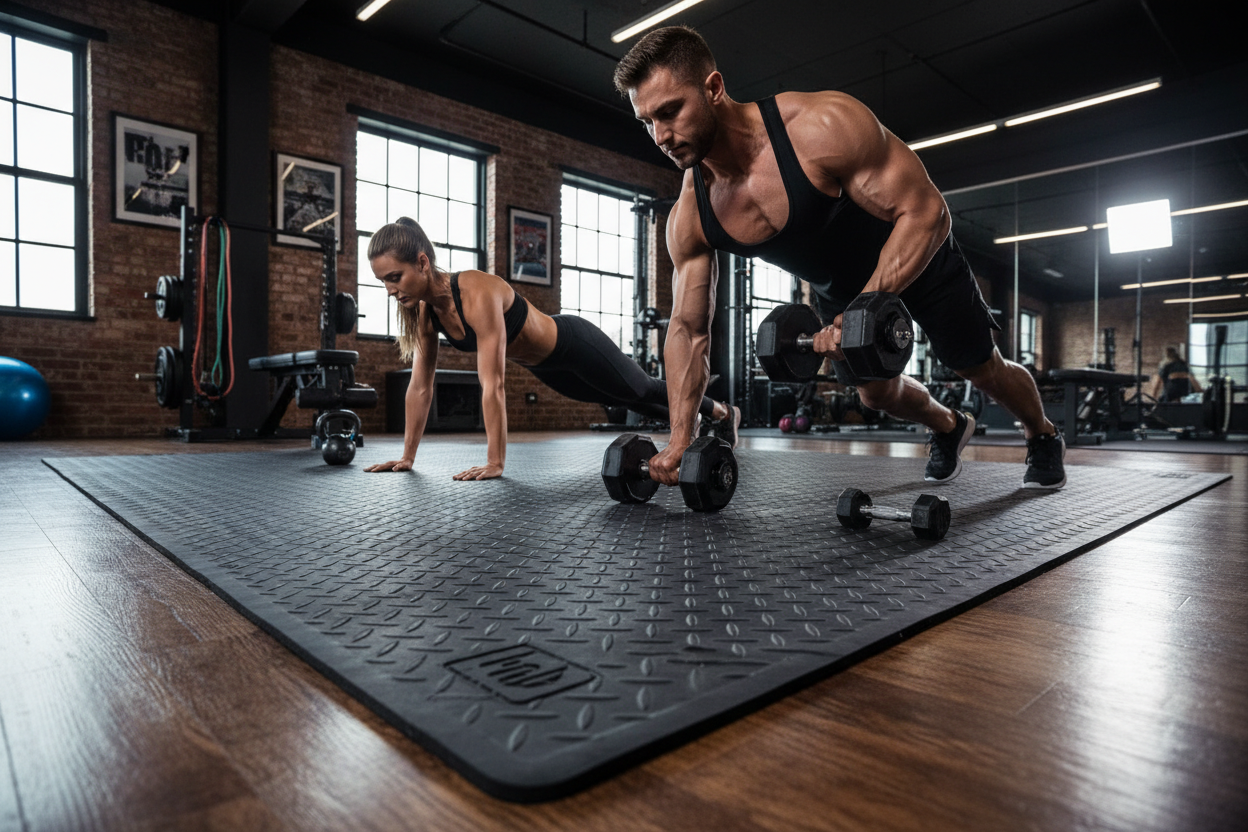
Rugs for Home Gym Setups: Stop Ruining Your Floors
If you have ever winced at the sound of a dumbbell crashing onto your hardwood floors, or slipped mid-lunge on a sweat-slicked surface, you already know the pain of inadequate flooring. Building a functional training space isn't just about buying the right squat rack or adjustable dumbbells; it is about building from the ground up. Choosing the right rugs for home gym setups is often the most overlooked step in protecting your property, your joints, and your sanity.
Whether you are outfitting a two-car garage or squeezing a yoga mat into a spare bedroom corner, the flooring you choose dictates how hard you can train. In this guide, we will walk through exactly what to look for so you can train heavy, move fast, and keep your floors pristine.
Key Takeaways
- Thickness matters: Aim for at least 8mm for general fitness and 3/4-inch for heavy barbell drops.
- Material is king: High-density vulcanized rubber outlasts EVA foam in nearly every strength training scenario.
- Traction prevents injury: A dedicated workout rug needs a textured top layer to prevent slipping during explosive movements.
- Maintenance: Look for closed-cell materials that will not absorb sweat, bacteria, or odors over time.
Choosing the Right Material for Your Space
Not all flooring is created equal. Dropping a 45-pound plate on cheap foam will leave a permanent crater, while doing burpees on bare concrete is a recipe for joint pain.
Rubber vs. Foam vs. Textile
For serious strength training, high-density rubber is the gold standard. It absorbs impact, dampens sound, and provides incredible grip. If your routine leans more toward bodyweight exercises, Pilates, or light dumbbells, a high-density EVA foam exercise rug might suffice and will save you some money. Avoid traditional textile rugs at all costs—they absorb sweat, slide dangerously on hard floors, and offer zero impact protection.
Sizing and Space Planning
Before you hit 'add to cart', you need to map out your footprint. The dimensions of your workout room rug will dictate the flow of your entire gym.
Garage Gyms vs. Spare Bedrooms
If you are in a garage, interlocking rubber tiles or large rolled rubber sheets are ideal for covering large, irregular concrete spaces. For a spare bedroom or apartment, a standalone workout rug (usually 4x6 or 6x8 feet) placed directly under your heavy equipment is often enough. Make sure to leave a 12-inch buffer zone around your bench or rack so your feet don't slip off the edge during a heavy lift.
From Our Gym: Honest Take
Over the last three years, we have tested dozens of flooring options in our uninsulated warehouse gym. I personally swapped out my cheap puzzle-piece foam mats for a 3/4-inch thick vulcanized rubber workout rug under my power rack. The difference was immediate. The aggressive grip kept my feet planted during heavy deadlifts, and I no longer worried about cracking the concrete when dropping heavy kettlebells.
That said, I will be completely honest about the downside: heavy-duty rubber mats smell strongly of sulfur for the first few weeks. If you are putting these in an enclosed basement or spare bedroom, you need to scrub them with a mild degreaser and leave the windows open for a few days to let them off-gas. It is a minor annoyance, but absolutely worth the lifetime durability.
Frequently Asked Questions
Can I use a regular area rug for my home gym?
No. Standard area rugs lack the density to protect your floors from heavy weights. Furthermore, they absorb sweat and lack the necessary grip, making them a slipping hazard during dynamic movements.
How thick should an exercise rug be?
For yoga and bodyweight exercises, 1/4-inch to 3/8-inch is sufficient. For general dumbbell and kettlebell workouts, aim for 1/2-inch. If you are dropping heavy barbells (like deadlifts or Olympic lifts), you need at least 3/4-inch thick rubber.
How do I keep my workout room rug from sliding?
Heavy rubber mats usually stay in place under their own weight. However, for lighter mats or smaller rugs on hardwood floors, use double-sided carpet tape or a non-slip rug pad underneath to lock it safely in place.


