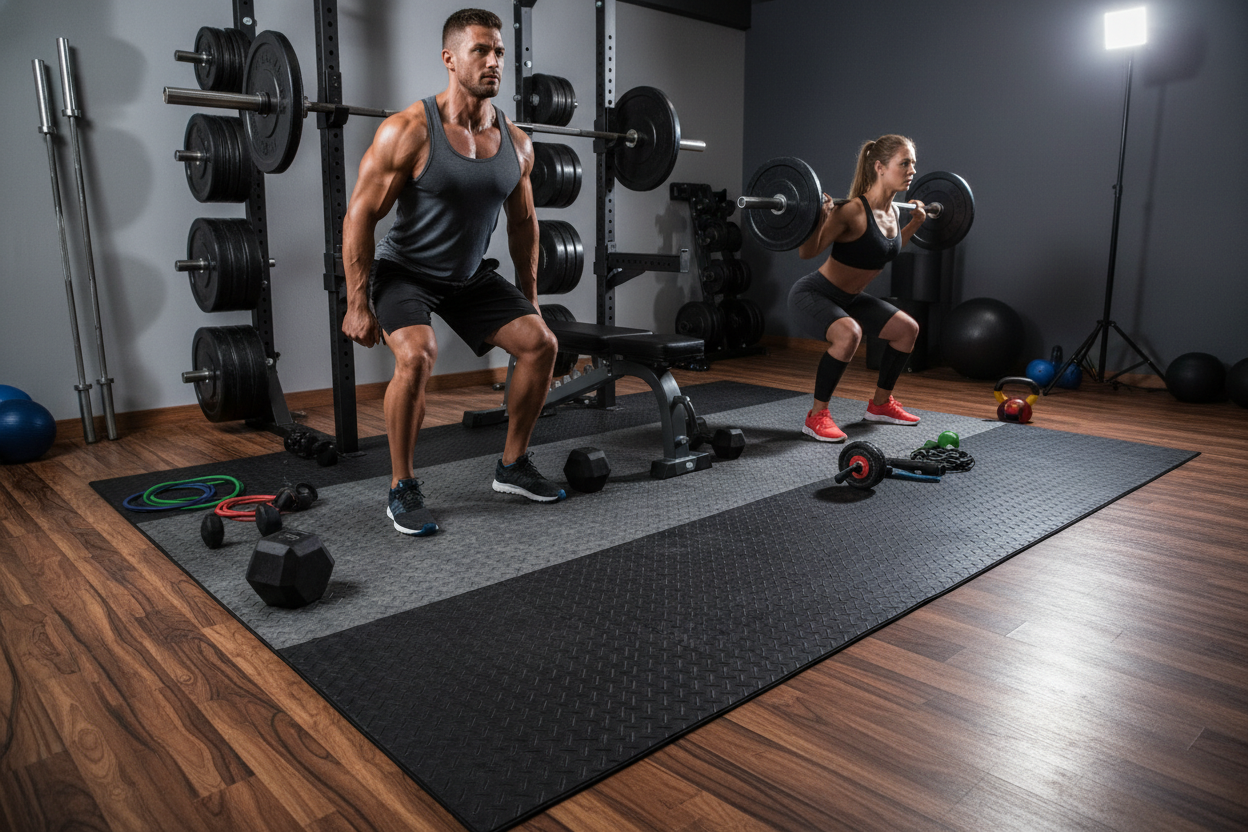
Rug for Home Gym: Stop Ruining Your Floors & Joints
Building your personal iron paradise is an exciting journey, but there is one crucial foundation many lifters overlook until it is too late: the floor. Whether you are dealing with echoing noise, freezing concrete, or the constant fear of cracking a tile during a heavy deadlift, finding the right rug for home gym setups is a total game-changer.
This is not just about aesthetics. The right flooring protects your joints during plyometrics, prevents your bench from sliding, and saves your subfloor from catastrophic damage. In this guide, we will break down exactly what to look for so you can train safely and confidently.
Key Takeaways
- Material Matters: High-density rubber or specialized low-pile synthetic fibers offer the best balance of grip and durability.
- Thickness Dictates Use: 8mm is standard for general fitness, while powerlifters need 3/4-inch thickness to absorb impact.
- Moisture Resistance: A proper gym rug must be non-porous or moisture-wicking to prevent mold from trapped sweat and humidity.
- Stability Over Softness: Squishy foam mats feel great on bare feet but create dangerous instability under heavy squats.
Choosing the Right Gym Rug Material
When shopping for a gym rug, your primary focus should be on material density rather than plushness. The surface you train on dictates the stability of your lifts and the longevity of your equipment.
Rubber vs. Synthetic Blends
Vulcanized rubber is the gold standard for heavy lifting, absorbing shock and rejecting moisture. However, if your space doubles as a yoga studio or a living area, a specialized synthetic low-pile rug for exercise room setups can bridge the gap. These hybrid rugs offer the visual appeal of traditional carpets but are woven tightly to resist crushing under heavy racks and benches.
Space Planning and Sizing
Before you hit checkout, you need to map out your equipment footprint. Nothing is more frustrating than a bench half-on and half-off a mat.
Garage Gyms vs. Spare Bedrooms
If you are outfitting a garage, wall-to-wall coverage might be overkill; instead, focus on an 8x10 foot area for your rack and deadlift zone. For spare bedrooms, a fitted rug for workout room dimensions can actually help soundproof the space, reducing the vibrations that travel to the rooms below. Leave at least a two-foot border around your primary lifting zone for safe plate loading.
Durability and Maintenance Considerations
Your gym floor will take a beating from dropped dumbbells, spilled pre-workout, and gallons of sweat. Maintenance should not be a workout in itself.
The Chalk and Sweat Factor
Avoid high-pile or fluffy rugs at all costs. They trap lifting chalk, dust, and moisture, quickly becoming a breeding ground for bacteria. Opt for a surface that can be easily vacuumed and mop-cleaned. If you choose a fabric-topped rug, ensure it is machine washable or easily spot-treated with an enzyme cleaner.
From Our Gym: Honest Take
When I first set up my basement gym, I tried to save money by using an old, plush living room rug. It was a disaster. Not only did my squat rack wobble dangerously on the soft pile, but the fabric also absorbed every drop of sweat, leading to a permanent locker-room smell within a month.
I eventually upgraded to a dense, low-profile hybrid gym rug under my kettlebell zone, paired with 3/4-inch stall mats for the power rack. The difference in stability was immediate. My stance felt locked in, and more importantly, my feet felt planted during heavy lifts. The only minor con? The hybrid rug shows white chalk dust a bit more easily than plain black rubber, so I have to run the vacuum over it twice a week. It is a small price to pay for a space that actually looks and functions like a premium facility.
Frequently Asked Questions
Can I use a regular living room rug for a home gym?
It is highly discouraged. Regular rugs lack the density required to support heavy equipment, creating an unstable lifting surface. They also trap sweat and odors, and their backing can easily tear under the lateral force of dynamic workouts.
How thick should a gym rug be for heavy lifting?
If you are dropping heavy barbells or dumbbells, you need at least a 3/4-inch (approx. 19mm) thick high-density mat or rug. For general cardio, yoga, and light dumbbell work, a 5mm to 8mm thickness provides adequate joint support without compromising stability.
Do gym rugs help with soundproofing?
Yes, significantly. A dense rug absorbs acoustic energy and minimizes impact vibrations. While it will not completely soundproof a room, it drastically reduces the sharp clanking noise of weights and the thud of jumping exercises.