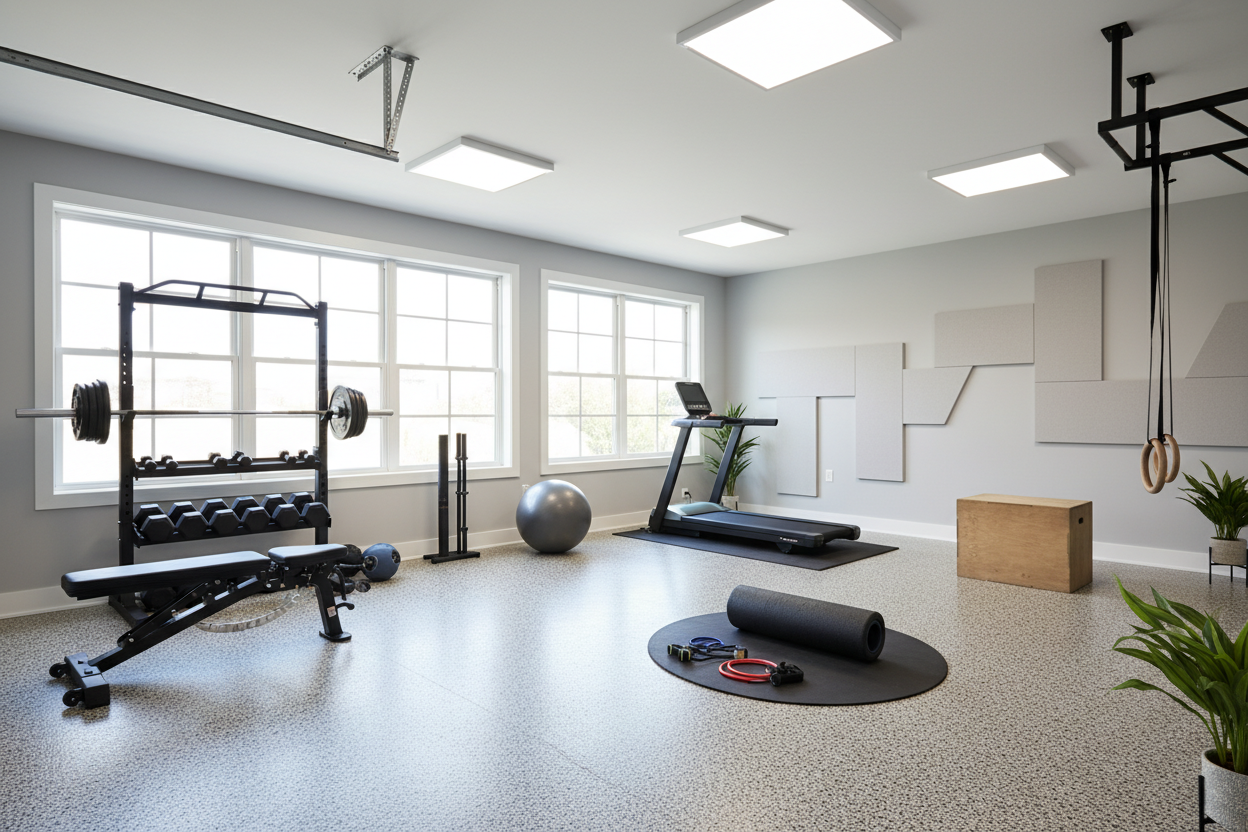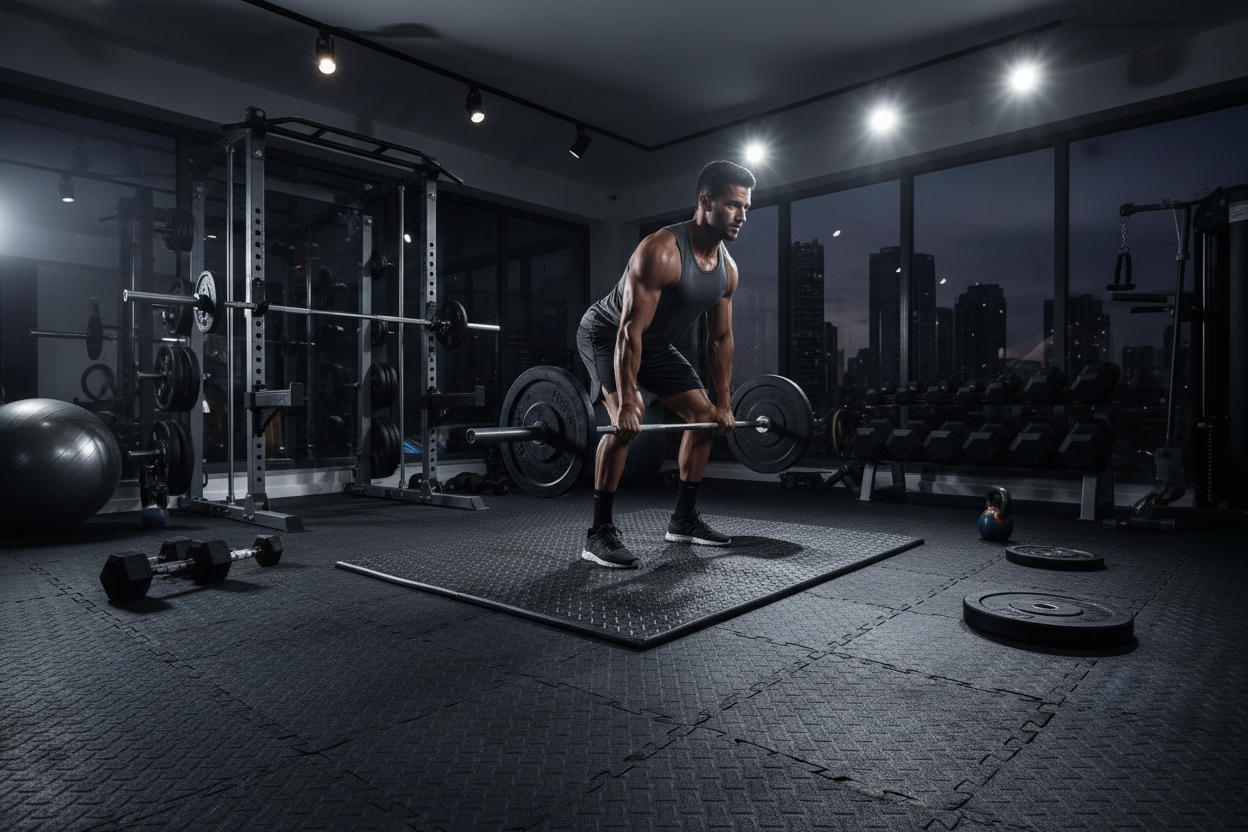
Rubbertile: The Secret to a Damage-Free Home Gym
Nothing ruins a heavy deadlift PR faster than the terrifying sound of a cast-iron plate cracking your concrete garage floor. For many home gym owners, the fear of foundation damage, echoing noise, and joint pain creates a massive barrier to effective training. Enter the mighty rubbertile. It is the unsung hero of strength training, providing the necessary shock absorption to protect both your equipment and your home's infrastructure.
Whether you are outfitting a damp basement corner or converting a two-car garage, choosing the right flooring is just as critical as picking your barbell. This guide will walk you through exactly what to look for, how to plan your layout, and why upgrading your gym's foundation is the smartest investment you can make this year.
Key Takeaways
- Thickness dictates function: 3/8-inch tiles are great for general fitness, while 1/2-inch to 3/4-inch tiles are required for Olympic lifting and heavy drops.
- Density matters: Vulcanized rubber is non-porous, resists bacterial growth, and handles heavy equipment better than recycled crumb rubber.
- Interlocking vs. Straight Edge: Interlocking tiles require no adhesive and are highly DIY-friendly, while straight-edge tiles offer a seamless, commercial look but often require glue.
- Odor mitigation: High-quality tiles will have a temporary 'new tire' smell that dissipates within a week of proper ventilation.
Choosing the Right Foundation
Not All Rubber Squares Are Equal
When shopping for gym flooring, it is easy to get overwhelmed by the options. The biggest mistake beginners make is buying cheap EVA foam puzzle mats, thinking they will hold up to a power rack. They will not. For actual strength training, you need dense rubber matting squares. If you are placing a 500-pound squat rack on your floor, commercial-grade hard rubber floor tiles are non-negotiable. They prevent the rack from shifting and ensure your heavy loads do not compress the flooring, which can lead to an unstable lifting surface.
The Role of Material and Texture
Look for tiles made from vulcanized rubber if budget allows. Unlike a porous rubber carpet tile designed for light commercial walkways, vulcanized rubber repels sweat and chalk, making it infinitely easier to mop. If you are on a budget, high-density recycled crumb rubber is a fantastic alternative, though it may require more frequent vacuuming to keep dust out of the pores.
Space Planning and Installation
Mapping Out Your Setup
One of the greatest advantages of using modular rubber flooring squares is adaptability. If you are setting up in a North American garage, you are likely dealing with a sloped concrete floor designed for water drainage. Because you are using individual rubber squares for floor coverage rather than a massive, unyielding 100-pound roll, you can easily shim underneath specific tiles to level out your squatting area.
When measuring your space, always order 10% more material than your square footage dictates. You will inevitably need to make custom cuts around support beams, drywall corners, or baseboards. These thick rubber floor panels can be trimmed to fit your exact room dimensions using a sharp utility knife and a metal straight-edge.
From Our Gym: Honest Take
When I first built out my two-car garage gym in 2019, I tried to save money by using horse stall mats. While durable, they were an absolute nightmare to move, weighing nearly 100 pounds each, and they never quite sat flush against each other. Two years ago, I swapped them out for 8mm interlocking rubbertile, and the difference is night and day.
The interlocking teeth on these rubber squares are precision-cut. Once tapped together with a rubber mallet, the seams practically disappear. My chalked grip feels completely grounded during heavy kettlebell swings, and I never worry about the mats sliding apart to expose the concrete underneath. The honest caveat? The initial off-gassing smell was strong. I had to leave the garage doors open with two box fans running for about five days before the 'tire shop' odor completely faded. But after 24 months of dropping bumper plates and parking a car on them during winter storms, they still look brand new.
Frequently Asked Questions
Do I need to glue down interlocking rubber tiles?
No. The weight of the tiles combined with the interlocking teeth keeps them firmly in place. This makes them perfect for home gyms, as you can easily pull them up if you ever move houses.
How do I clean my gym floor tiles?
For daily maintenance, a simple sweep or vacuum works perfectly. For a deep clean, use a damp mop with a mild soap-and-water solution or a pH-neutral cleaner. Avoid harsh chemicals like bleach, which can break down the rubber over time.
Can I park my car on these tiles?
Yes, provided you purchase high-density, commercial-grade tiles (usually 3/8-inch or thicker). However, keep in mind that studded winter tires or aggressively turning the steering wheel while the car is parked can cause surface wear over time.
What is the best way to cut rubber tiles to fit my room?
Use a heavy-duty utility knife with a fresh blade. Place a 2x4 under the cut line to create tension in the rubber, score it deeply 3 to 4 times using a metal straight-edge, and it will snap cleanly.