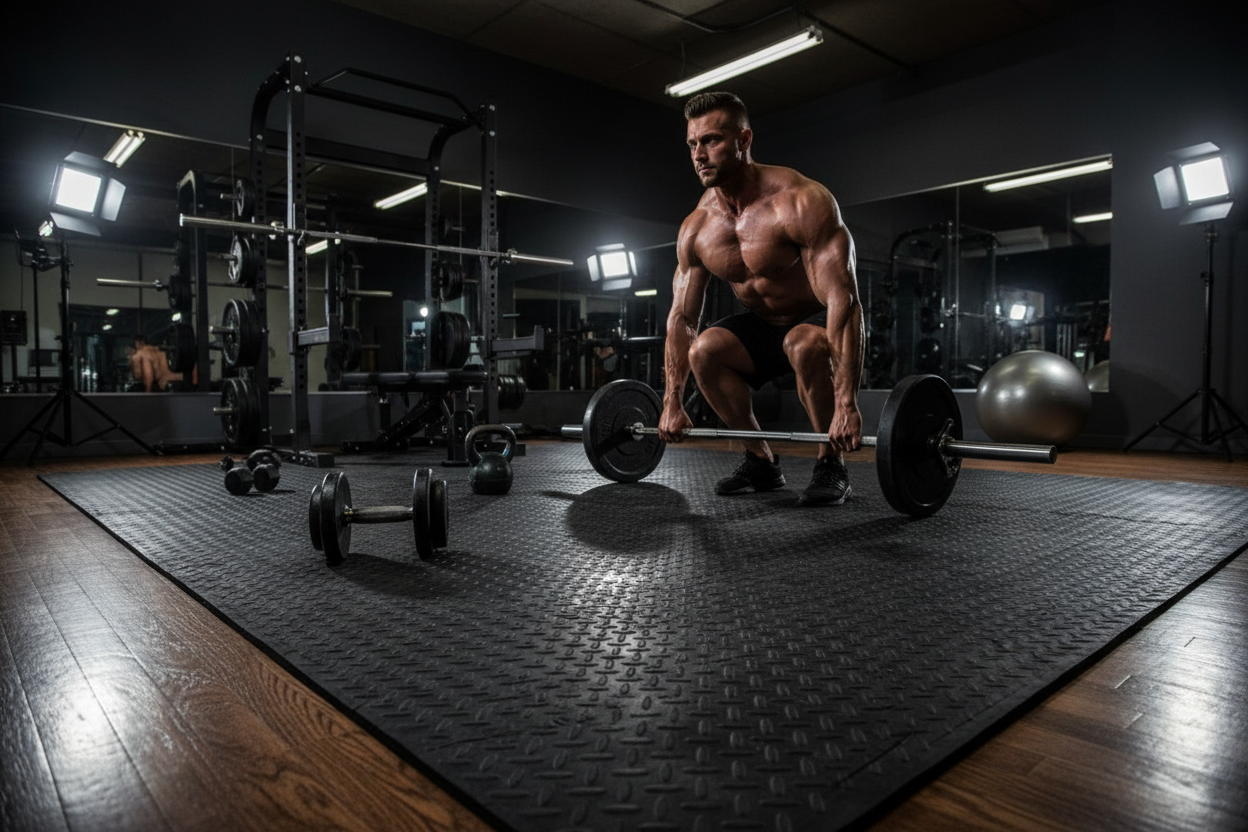
Rubber Utility Mat Explained: Stop Ruining Your Floors
Tired of wincing every time a dumbbell clatters against your garage floor, or worrying about cracking your basement tiles during deadlifts? You are not alone. Floor protection is often an afterthought in home gym planning, but it is the foundation of a safe, noise-controlled training space. Investing in a quality rubber utility mat is the single best preventative step you can take to protect both your equipment and your home's foundation.
In this guide, we will break down exactly what makes a gym mat worth the investment, how to choose the right thickness, and why this simple upgrade will completely transform your training environment.
Key Takeaways
- Thickness dictates function: A 1/4-inch mat is fine for cardio machines, but you need at least 1/2-inch to 3/4-inch for dropping heavy free weights.
- Material matters: Vulcanized rubber is denser, less porous, and more durable than cheap foam alternatives.
- Versatility: A high-quality multi purpose rubber mat can transition from a deadlift station to a kettlebell zone seamlessly.
- Noise reduction: Dense rubber significantly dampens acoustics, making your garage or basement gym quieter for the rest of the house.
Choosing the Right Thickness for Your Workouts
Not all mats are created equal. The biggest mistake home gym owners make is buying a thin, cheap mat and expecting it to absorb the shock of a 300-pound barbell drop.
Cardio vs. Heavy Lifting
If you are just looking to park a stationary bike or a rowing machine, a 1/4-inch or 3/8-inch mat will prevent floor scratching and catch sweat. However, if your training involves heavy kettlebells, dumbbells, or Olympic lifts, you need a 1/2-inch to 3/4-inch thick mat. This thickness absorbs kinetic energy, preventing the barbell's impact from transferring directly into your concrete or wooden subfloor.
Space Planning for North American Home Gyms
Whether you are outfitting a sprawling two-car garage or carving out a corner in a finished basement, planning your floor layout is crucial.
Garage Setups vs. Indoor Spaces
Standard utility mats often come in 4x6 foot dimensions. For a standard power rack setup, two 4x6 mats placed side-by-side create an 8x6 foot platform—perfect for rack clearance and a dedicated deadlift zone in front. If you are using your utility mat rubber indoors over hardwood, consider adding a thin moisture barrier underneath to prevent any condensation buildup or color transfer over time.
Durability and Long-Term Maintenance
A true heavy-duty mat is designed to take a beating for decades, but it still requires basic upkeep to stay hygienic and looking fresh.
Keeping Your Mat Clean
Because quality mats are non-porous, they do not absorb sweat or spilled pre-workout. A simple weekly mop with warm water and a pH-neutral cleaner (like mild dish soap) is all you need. Avoid harsh chemicals like bleach, which can degrade the rubber compounds over time.
From Our Gym: Honest Take
We have tested dozens of flooring options over the years, from cheap interlocking foam tiles to premium horse stall mats. When I finally upgraded our main lifting platform to a dedicated 3/4-inch rubber utility mat, the difference was night and day. During heavy deadlift sessions, the dense rubber provided a solid, unyielding grip for my lifter shoes—no squish, no sliding.
I will be honest about one minor con: fresh rubber mats have a distinct, tire-like odor when they first arrive. I had to let ours off-gas in the driveway for about three days and wash it down with a mild degreaser before bringing it into the basement. Once that initial smell faded, though, it became the most reliable piece of foundational gear in the room. I have dropped 80-pound dumbbells directly on it from waist height, and my concrete floor underneath remains completely flawless.
Frequently Asked Questions
Is a rubber utility mat better than foam puzzle tiles?
Absolutely. Foam tiles are too soft for heavy lifting; they compress under weight, creating an unstable surface that can lead to ankle injuries. A dense rubber mat provides the firm, flat stability required for squats and deadlifts while still offering impact protection.
Can I put a multi purpose rubber mat over carpet?
You can, but it is not ideal for heavy lifting. Placing a heavy rubber mat over plush carpet will still result in a squishy, unstable surface. If you must build over carpet, it is best to lay down a layer of 3/4-inch plywood first, then place the rubber mat on top to create a rigid platform.
How do I cut a rubber mat to fit my room?
You can easily trim a rubber mat to fit around pillars or baseboards using a sharp utility knife, a straight edge, and patience. Score the mat repeatedly rather than trying to cut all the way through in one pass. Placing a 2x4 board under the cut line helps separate the rubber as you slice, making the job much easier.