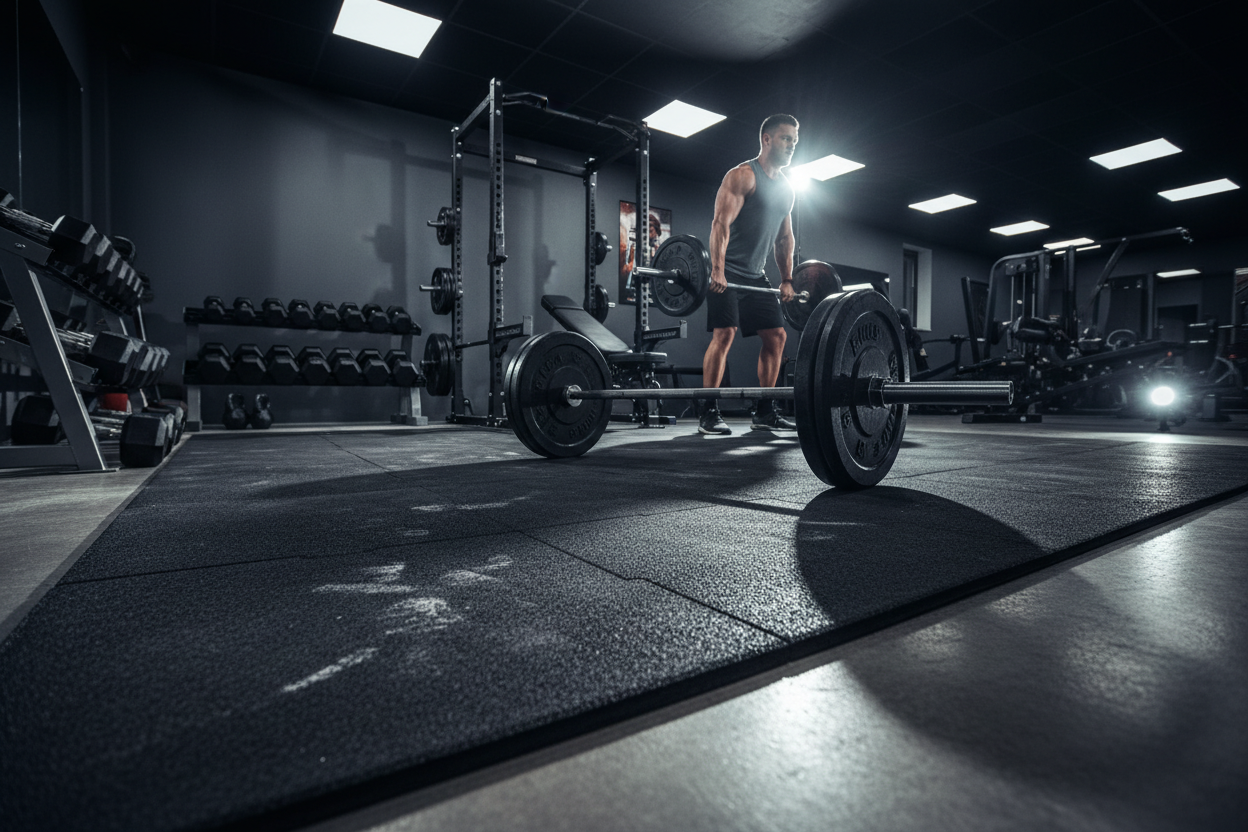
Rubber Safety Mat: What to Know Before You Drop Heavy Weights
We've all been there: you are grinding through the final rep of a heavy deadlift, your grip gives out, and bang. The barbell slams into the ground, sending a shockwave through your foundation. If you are lifting on bare concrete or thin foam puzzle pieces, you are risking expensive floor damage and cracked plates. Enter the rubber safety mat—the unsung foundation of any serious home gym.
In this guide, we will break down exactly what you need to look for to protect your space, your gear, and your joints, ensuring your next heavy drop is a safe one.
Key Takeaways
- Thickness matters: Aim for at least 3/4-inch thickness if you plan on dropping heavy barbells or dumbbells.
- Material dictates durability: Vulcanized rubber is non-porous and resists moisture, while recycled crumb rubber is more affordable but harder to clean.
- Odor control: Lower-quality mats will off-gas a strong sulfur smell; premium options mitigate this for indoor use.
- Versatility: These mats aren't just for lifting; they provide an excellent base if you need a rubber mat for safe storage of heavy equipment or steel storage units.
Buying Guide: Specs That Actually Matter
Finding the Right Thickness
Not all flooring is created equal. A 1/4-inch mat is fine for yoga or light dumbbell work, but if you are building a powerlifting or Olympic weightlifting sanctuary, you need heavy-duty protection. We strongly recommend a 3/4-inch thickness for high-impact zones. This thickness absorbs shock efficiently, preventing the barbell's kinetic energy from transferring directly into your concrete slab.
Vulcanized vs. Recycled Crumb Rubber
When comparing options, you will mostly see recycled crumb rubber and vulcanized rubber. Crumb rubber is made from shredded tires glued together. It is budget-friendly but porous, meaning it traps sweat, dust, and chalk. Vulcanized rubber undergoes a heat and pressure treatment, creating a solid, non-porous surface that will not absorb moisture and boasts a significantly higher tensile strength.
Space Planning for North American Homes
Garage and Basement Layouts
Most premium mats come in 4x6 foot dimensions, weighing upwards of 100 pounds each. When planning your garage or basement gym, measure your footprint carefully. A standard power rack requires at least an 8x8 foot space (four mats) to safely unrack and drop weights. If you have a multi-use space, heavy-duty mats are incredibly versatile. In fact, many homeowners repurpose an extra piece as a sturdy rubber mat for safe placement under heavy gun safes or tool chests to prevent floor gouging.
From Our Gym: Honest Take
Over the past five years, we have tested everything from cheap foam tiles to premium commercial flooring in our facility. Here is the reality: trying to save money on flooring will cost you more in the long run. When we first set up our garage testing space, we used 1/2-inch recycled mats. After six months of heavy deadlifts, the concrete underneath developed hairline cracks, and the mats themselves began to curl at the edges.
Upgrading to a 3/4-inch vulcanized rubber safety mat changed everything. The shock absorption is night and day—you can literally feel the difference in your joints when doing plyometrics. One minor caveat: even the high-end mats have a slight 'new tire' smell for the first week. Leave your garage door open and run a high-velocity fan; the odor dissipates quickly.
Frequently Asked Questions
Is a rubber safety mat worth the investment for a home gym?
Absolutely. It protects your foundation from cracking, extends the life of your bumper plates and dumbbells, and provides a slip-resistant surface that reduces injury risk during heavy lifts.
How do I clean my gym mats?
For non-porous vulcanized mats, a simple mop with warm water and a pH-neutral cleaner (like a few drops of mild dish soap) works perfectly. Avoid harsh chemicals like bleach, which can break down the rubber over time.
Do I need to tape or glue the mats down?
If you are using heavy 4x6 foot mats, their own weight will keep them in place for most workouts. However, if you are doing aggressive sled pushes or lateral drills, using double-sided carpet tape along the seams will prevent shifting without permanently altering your floor.