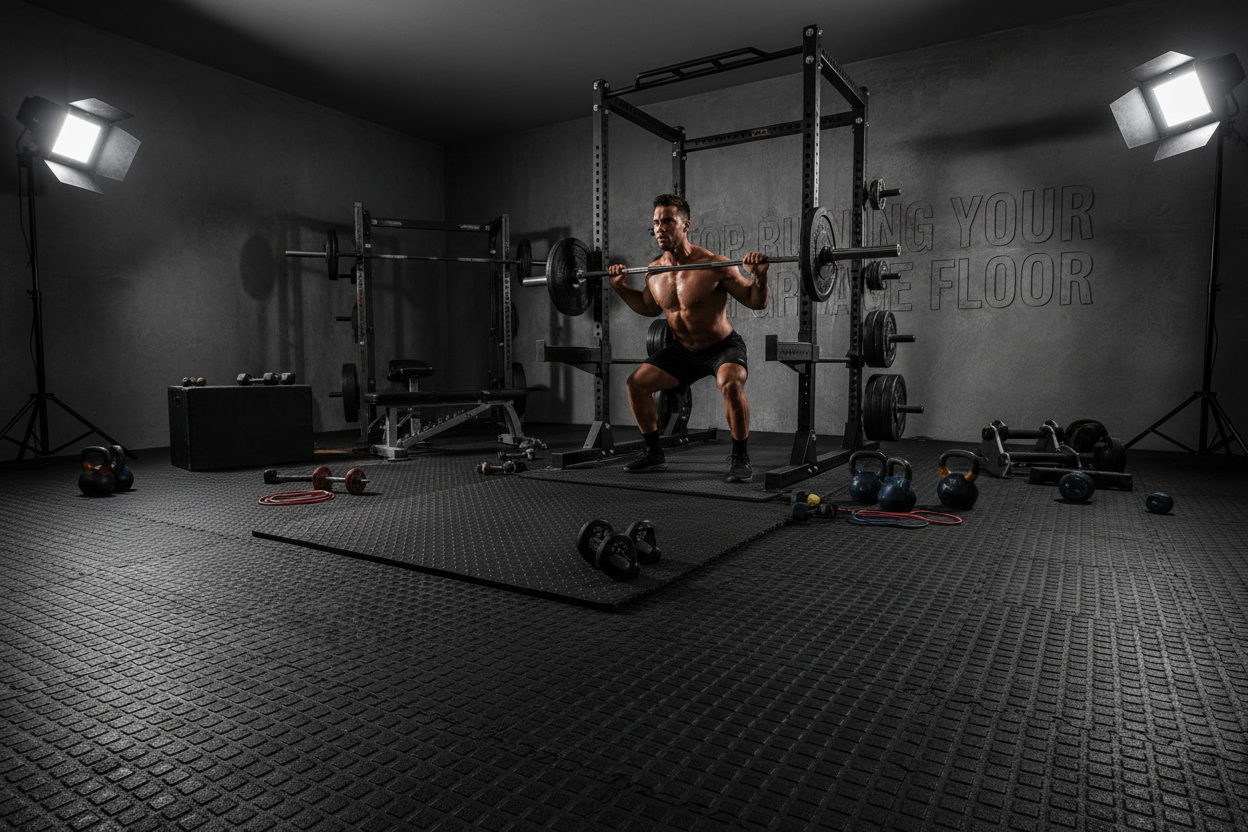
Rubber Mat Floor Tiles: Stop Ruining Your Garage Floor
Ever dropped a deadlift a little too aggressively and felt your soul leave your body as the concrete cracked? Protecting your foundation is step one of any serious home gym build. Investing in high-quality rubber mat floor tiles is the easiest way to save your floors, dampen noise, and protect your joints during heavy training.
Whether you are outfitting a tight basement corner or a two-car garage, choosing the right flooring can make or break your training experience. In this guide, we will break down exactly what you need to look for regarding thickness, material, and installation before laying down your gym's foundation.
Key Takeaways
- Thickness matters: 3/8-inch is standard for general fitness, but 1/2-inch to 3/4-inch is required for heavy barbell drops.
- Interlocking designs prevent shifting during lateral movements and heavy lifts.
- Vulcanized rubber offers superior durability and less odor compared to recycled crumb rubber.
- Always measure your space twice and account for a 5% waste margin when cutting edges to fit your room.
Finding the Perfect Thickness and Material
The 3/8-inch vs. 3/4-inch Debate
If you are doing yoga, light dumbbell work, or bodyweight exercises, standard 3/8-inch rubber mats tiles offer plenty of protection. However, if you are pulling heavy deadlifts or dropping Olympic lifts from overhead, you need at least 3/4-inch thickness to absorb the shock. Going too thin under a heavy barbell is a fast track to shattered concrete and damaged bumper plates.
Material Quality: Crumb vs. Vulcanized
Not all rubber is created equal. Vulcanized rubber is non-porous, meaning it will not absorb sweat or spilled water, making it ideal for humid basement setups. On the other hand, recycled crumb rubber floor mat squares are more budget-friendly and offer great shock absorption, but they can trap dust and emit a stronger "tire" smell initially.
Space Planning: Fitting Your North American Home Gym
Garages, Basements, and Spare Rooms
Most home gyms deal with uneven garage slopes or tight basement corners. The beauty of interlocking rubber floor mat tiles is their modularity. You don't need to haul a rigid, 100-pound horse stall mat down a flight of stairs. You can easily transport these tiles one by one and cut them with a sharp utility knife and a straight edge to fit perfectly around support columns, baseboards, or squat racks.
Performance and Safety Considerations
Prioritizing Traction
Sweat happens. When you are pushing through a heavy squat or dynamic HIIT circuit, losing your footing is dangerous. Opting for non slip rubber floor tiles with a textured surface ensures your bench stays planted and your feet remain locked in place, even during the most grueling summer garage sessions.
From Our Gym: Honest Take
I've installed just about every flooring option available in our testing facility. Last year, I outfitted my personal 400-square-foot garage gym with 1/2-inch interlocking tiles. The precision-cut teeth locked together so tightly that they look virtually seamless, and my chalked grip holds solid when planting my feet for heavy bench presses. However, here is the honest caveat: the initial off-gassing smell was intense. I had to leave the garage doors open with high-velocity fans running for nearly a week before the scent dissipated. If you are installing these in an enclosed basement, I highly recommend washing them outside with a mild degreaser first.
Frequently Asked Questions
Are rubber floor tiles better than horse stall mats?
Horse stall mats are incredibly durable but notoriously heavy (often 100+ lbs each), hard to move, and have straight edges that can separate over time. Interlocking tiles are much easier to install, transport, and keep locked together during dynamic workouts.
Can I put a power rack directly on rubber tiles?
Yes. High-density rubber tiles can easily support the weight of a commercial power rack and hundreds of pounds of plates without permanently compressing, provided your subfloor is solid and level.
How do I clean my rubber gym flooring?
Keep it simple. Vacuum up chalk and dust regularly, and mop with a pH-neutral cleaner or a simple mixture of warm water and a few drops of dish soap. Avoid harsh chemicals like bleach, which can break down the rubber over time.