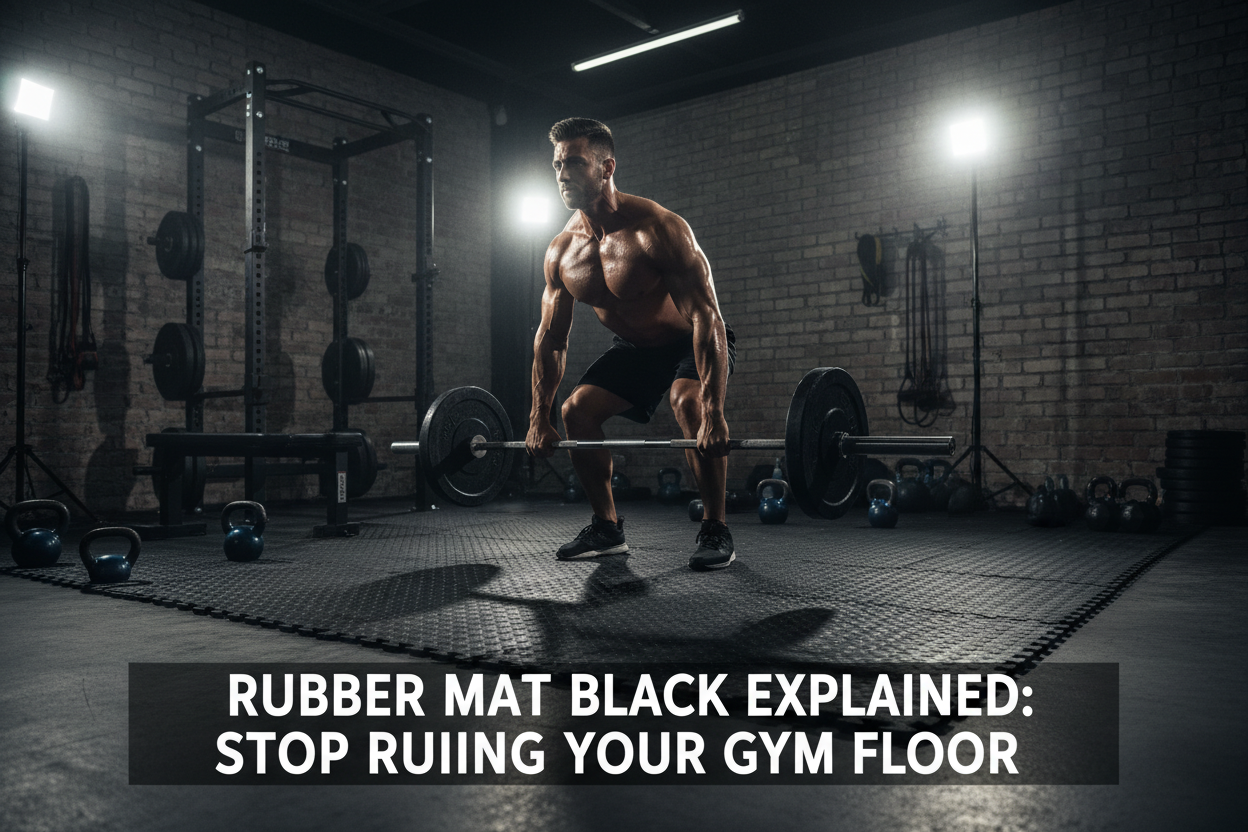
Rubber Mat Black Explained: Stop Ruining Your Gym Floor
There is nothing quite like the sinking feeling of dropping a loaded barbell and hearing the distinct crack of the concrete beneath your feet. Whether you are building out a two-car garage sanctuary or claiming a corner of your basement, your flooring is the literal foundation of your training. Yet, it is often the last thing people budget for.
If you want to protect your subfloor, prolong the life of your bumper plates, and dampen the neighborhood-waking noise of deadlifts, investing in a high-quality rubber mat black setup is non-negotiable. In this guide, we will break down exactly what you need to know before laying down your gym's first layer of defense.
Key Takeaways
- Thickness matters: A 3/4-inch mat is the gold standard for heavy barbell training, while 3/8-inch works for cardio and light dumbbells.
- Odor control: Vulcanized rubber off-gasses significantly less than bonded recycled rubber.
- Aesthetic longevity: A solid black finish hides tire marks, shoe scuffs, and dirt better than lighter colors.
- Moisture management: Proper subfloor prep is required to prevent mold, especially in unfinished basements.
Choosing the Right Thickness and Material
3/8-Inch vs. 3/4-Inch
The biggest mistake new home gym owners make is buying thin, interlocking foam or cheap 1/4-inch rubber. If you are dropping steel plates or heavy kettlebells, you need a 3/4-inch thick mat. This thickness absorbs the kinetic energy of dropped weights, preventing structural damage to the concrete or wood below. If your space is strictly for yoga, stationary bikes, or light dumbbell circuits, a 3/8-inch mat offers plenty of joint support without the added bulk.
Vulcanized vs. Recycled Rubber
Not all rubber is created equal. Standard recycled crumb rubber mats (like traditional horse stall mats) are budget-friendly and indestructible, but they are porous and can hold onto moisture and sweat. Vulcanized rubber is treated with heat and sulfur, creating a non-porous, highly durable surface that resists bacterial growth and carries a significantly milder scent.
Planning Your Garage or Basement Layout
Measuring and Cutting
Most commercial-grade mats come in 4x6 foot dimensions and weigh upwards of 100 pounds each. When planning your layout, calculate your square footage and add a 10% overage buffer. You will inevitably need to trim mats to fit around drywall pillars, squat rack base plates, or uneven corners. To cut them, you do not need heavy machinery—just a sharp utility knife, a straight edge, and a few spare blades. Score the mat repeatedly rather than trying to slice through it in one go.
Long-Term Care and Maintenance
Beating the New Rubber Smell
If you opt for budget-friendly stall mats, be prepared for the initial off-gassing. To expedite the process, leave the mats outside in the sun for a few days before bringing them indoors, and wash them down with a mild mixture of water and a pH-neutral cleaner. Once installed, routine maintenance is incredibly simple. A standard rubber mat black surface requires nothing more than a weekly sweep and an occasional mop to keep it looking pristine.
From Our Gym: Honest Take
When we first outfitted our 400-square-foot testing facility, we dragged in over twenty 4x6 rubber mats. It was a grueling weekend, but the investment paid off immediately. I regularly drop 400-plus pound deadlifts directly onto these mats without crash pads, and after two years, there is zero pitting in the concrete below. One honest caveat: while the solid black color perfectly masks the scuffs from my deadlift jack, it acts like a magnet for white lifting chalk. If you are a heavy chalk user, keep a damp mop handy, because every handprint will show up vividly against the dark rubber.
Frequently Asked Questions
Is a rubber mat black setup safe for hardwood floors?
Directly placing heavy rubber over finished hardwood is risky. The rubber can trap moisture, and the friction can dull the floor's finish. We highly recommend laying down a protective underlayment, like rosin paper or a thin layer of plastic sheeting, before placing your mats over hardwood.
How do I stop my mats from shifting?
If you are wall-to-wall, the sheer weight of the mats will keep them locked in place. If you are only building an 8x8 lifting platform, use double-sided carpet tape around the perimeter, or frame the mats in with 2x4 wooden boards to prevent them from drifting apart during explosive movements.
What is the weight limit on a 3/4-inch mat?
A true 3/4-inch vulcanized or high-density recycled rubber mat does not have a practical weight limit for human strength training. They are designed to withstand thousands of pounds of impact force, making them more than capable of handling your heaviest personal records.