Rubber Gym Tile Guide: Save Your Floors
There is nothing quite like the heart-stopping sound of a 45-pound bumper plate slipping from your grip and crashing directly onto an unprotected concrete floor. If you are building a garage gym or basement training space, your flooring is the literal foundation of your setup. Investing in a premium rubber gym tile is not just about aesthetics; it is about protecting your home's foundation, your expensive barbells, and your joints.
Whether you are lifting heavy or doing high-intensity intervals, the right gym flooring rubber mat setup can transform a cold, echoing room into a professional-grade training sanctuary. In this guide, we will break down exactly what you need to know to choose the perfect foundation for your home gym.
Key Takeaways
- Thickness dictates function: 3/8-inch is standard for general fitness, while 1/2-inch to 3/4-inch is required for heavy Olympic lifting.
- Interlocking vs. Straight Edge: Interlocking tiles are easier for DIY home installations and rarely require adhesive.
- Material matters: Vulcanized rubber offers superior durability and less odor compared to recycled crumb rubber.
- Protect your subfloor: A proper rubber fitness flooring setup prevents concrete cracking and moisture buildup.
Thickness & Material Breakdown
Not all sports flooring mats are created equal. The biggest mistake home gym owners make is buying cheap foam tiles or undersized rubber that cannot handle the impact of dropped weights.
Choosing the Right Thickness
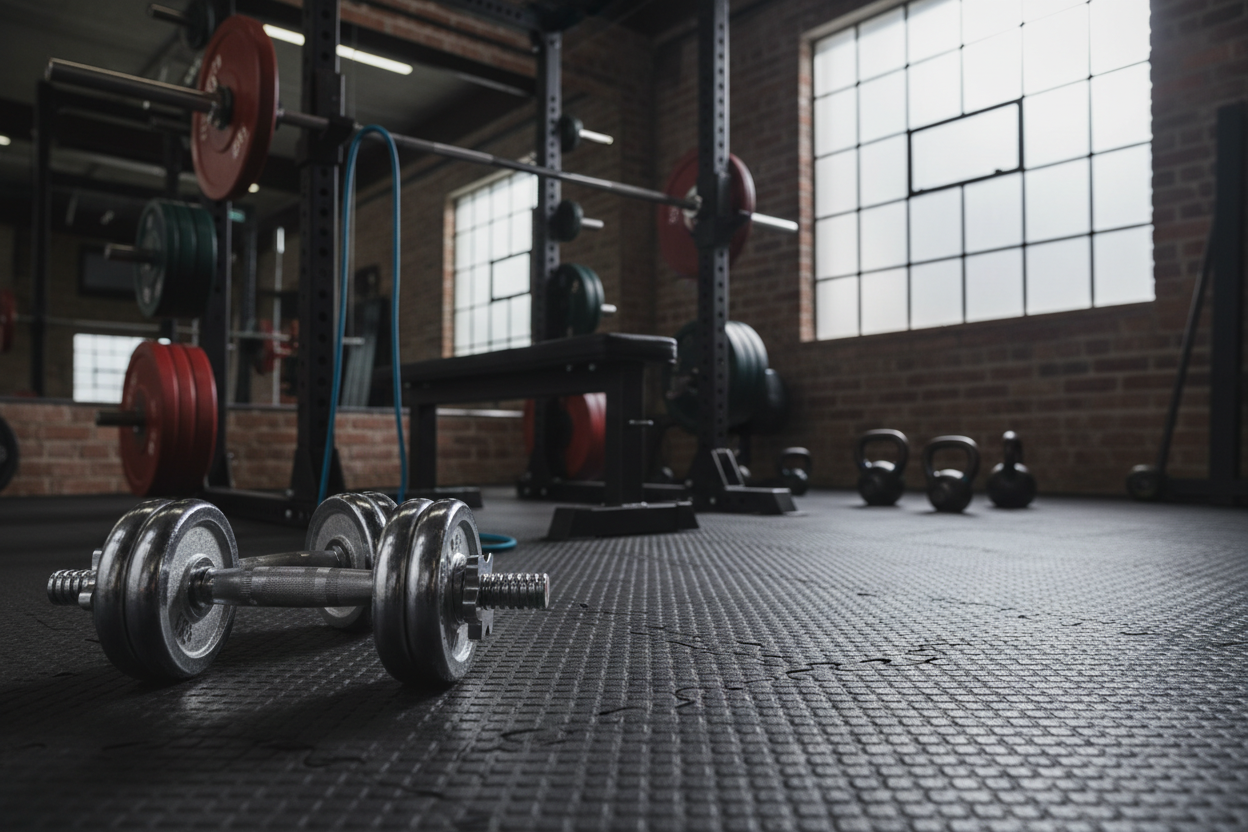
If your routine consists mostly of yoga, dumbbell work, and cardio, a 5/16-inch or 3/8-inch rubber gym tile will serve you perfectly. However, if you are pulling heavy deadlifts or dropping barbells, you need at least 1/2-inch to 3/4-inch thickness. These thicker rubber exercise tiles absorb the shock, preventing the kinetic energy from transferring into your concrete subfloor and causing microscopic fractures over time.
Planning Your Garage or Basement Setup
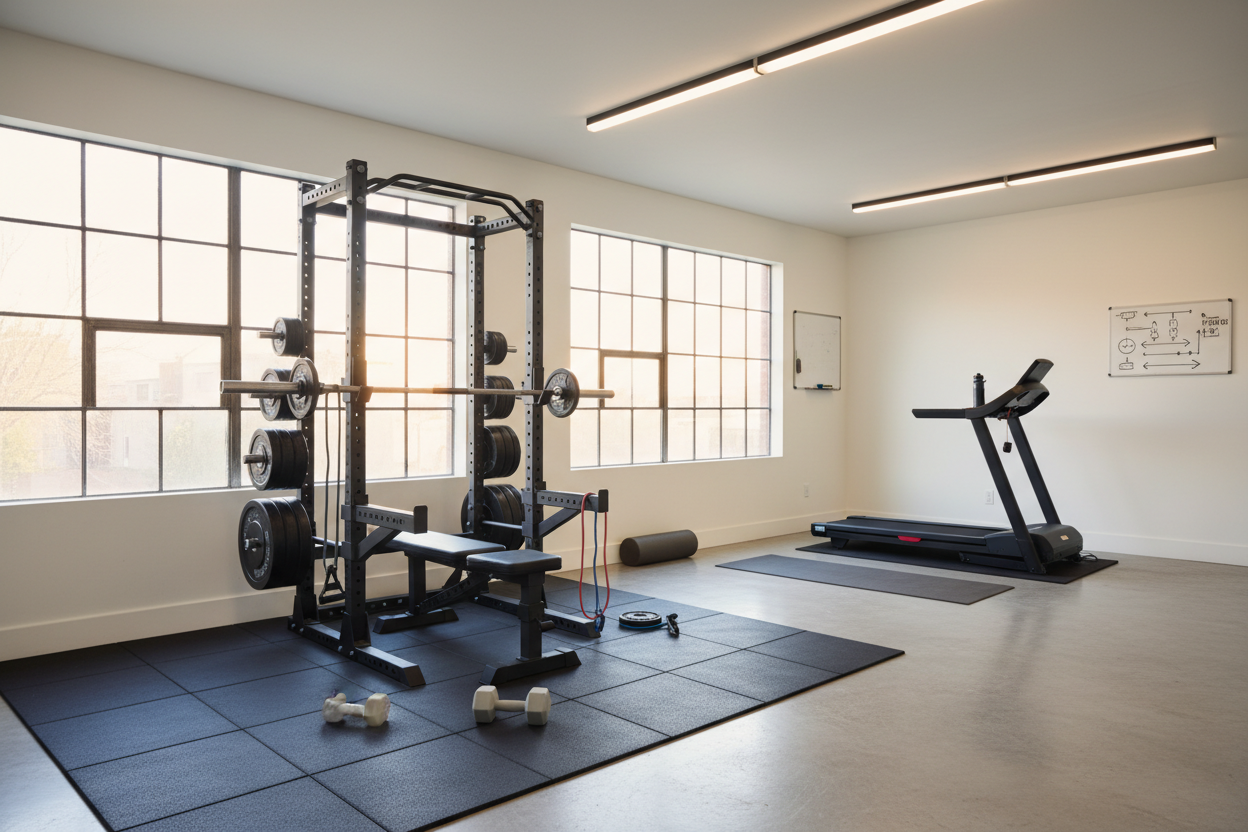
When mapping out your North American home gym, space is usually at a premium. You need to calculate not just the square footage, but how the flooring will interact with your power rack and bench.
Interlocking vs. Straight Edge Tiles
For most home setups, interlocking rubber workout tiles are the gold standard. They fit together like puzzle pieces, preventing shifting during explosive movements. Straight edge tiles offer a seamless, commercial look but often require double-sided carpet tape or heavy-duty adhesive to stay locked in place. If you are renting or might move your setup, stick to interlocking rubber matts for gym use.
From Our Gym: Honest Take
When we outfitted our testing garage last spring, we opted for 3/4-inch vulcanized rubber tiles. The density is incredible—my chalked grip feels completely grounded during heavy squats, and there is zero squish or instability when lifting. However, I have to be honest about the initial installation: the off-gassing odor was intense. Even with premium vulcanized tiles, it took about two weeks of leaving the garage door open with a box fan running before the 'new tire' smell faded. Once it did, though, the performance has been flawless. After 14 months of dropping heavy hex dumbbells, there is not a single gouge or tear in the surface.
Frequently Asked Questions
Is a rubber gym tile better than foam?
Absolutely. Foam compresses under heavy loads, creating an unstable lifting surface that can lead to injury. Rubber provides a firm, supportive base that absorbs impact without compromising your footing.
Do I need to glue down my rubber fitness flooring?
If you are using heavy, thick interlocking tiles (3/8-inch or thicker), gravity and the interlocking mechanism are usually enough to keep them in place. Straight edge tiles may require double-sided tape at the seams.
Can I put rubber exercise tiles over carpet?
It is not recommended. Placing heavy rubber over plush carpet creates a spongy, unstable surface. If you must build over carpet, lay down a rigid layer of plywood first to create a solid subfloor.