
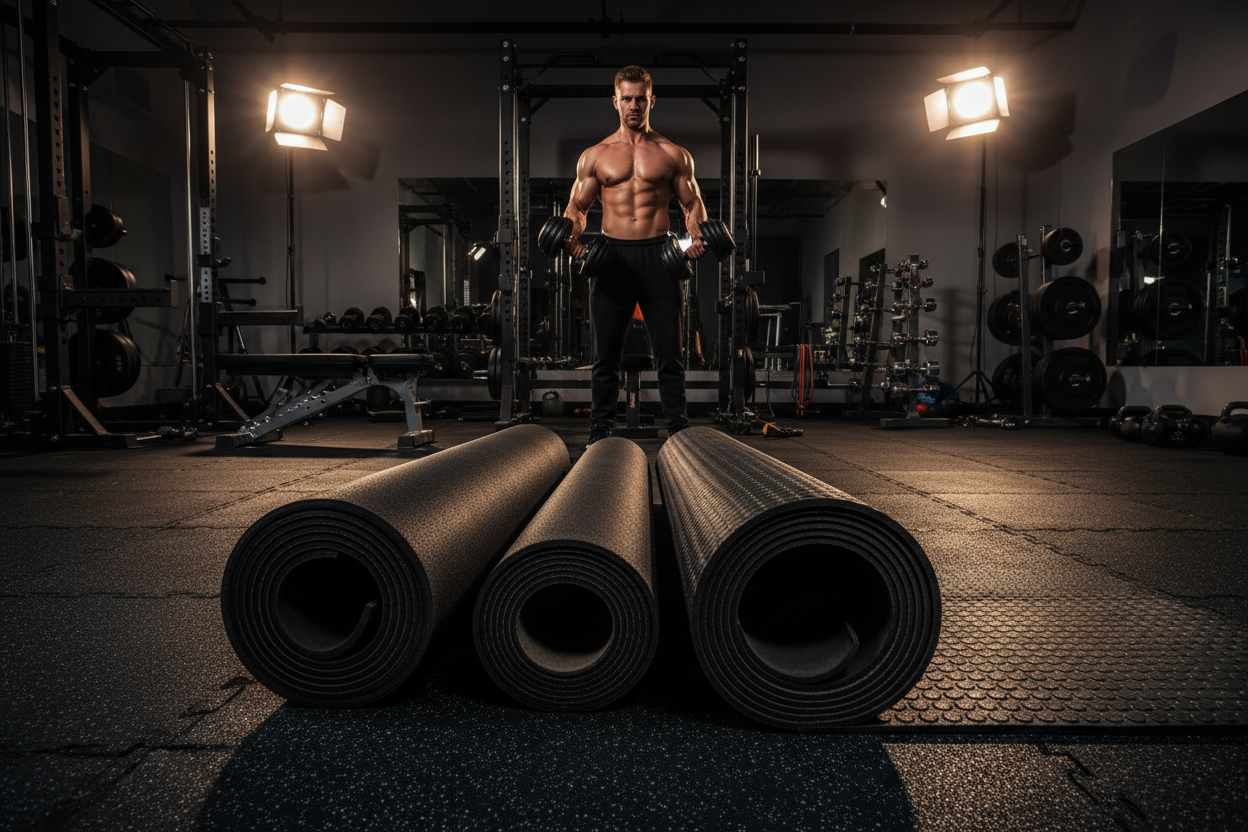
Rubber Flooring Rolls Explained: What to Know Before You Buy
Building a home gym in your garage or basement is exciting until you drop a 45-pound plate and hear the concrete crack beneath it. Whether you are dealing with a noisy workout space, a cold basement floor, or simply want to protect your expensive barbell, investing in rubber flooring rolls is one of the smartest foundational decisions you can make.
Many fitness enthusiasts overlook their flooring until it is too late. The truth is, the right rolled rubber flooring not only protects your property but also provides essential joint support and equipment stability. In this guide, we will cut through the marketing noise and help you decide exactly which type of rubber roll flooring is right for your specific training style.
Key Takeaways
- Thickness Matters: A 3/8-inch rubber gym mat roll is the gold standard for most home gyms, balancing cost and heavy-duty protection.
- Seamless Look: Unlike interlocking tiles, a roll out gym floor provides a smooth, nearly seamless surface that prevents tripping and moisture buildup.
- Material Quality: Recycled rubber flooring rolls offer incredible durability and are environmentally friendly, often sourced from recycled car tires.
- Installation is DIY-Friendly: With some double-sided carpet tape and a utility knife, rolled gym flooring can be installed in a weekend.
Decoding Thickness and Material Specs
Finding Your Perfect Fit
The most critical decision when shopping for rubber rolls for sale is the thickness. If you buy a thin rubber matting roll (typically 1/4-inch), it might be fine for a roll up exercise mat or a light cardio area, but it will not survive heavy deadlifts. For strength training, you need heavy duty rubber flooring rolls. The 3/8-inch thickness is the sweet spot for 90% of home lifters. It absorbs the shock of dropped dumbbells and stabilizes heavy power racks. If you are regularly dropping Olympic weights from overhead, you might want to step up to a 1/2-inch thick rubber roll matting.
Virgin vs. Recycled Rubber Roll
When comparing options, you will see virgin rubber and recycled rubber. Recycled rubber flooring rolls are the industry standard. They are incredibly tough, budget-friendly, and hide dirt well. Virgin rubber has less of that 'new tire' smell and offers brighter colors, but it comes at a premium floor mat roll price. For most garage setups, a black rubber matting roll made from recycled materials is the best value.
Planning Your Gym Space
Garage Gyms vs. Indoor Rooms
How you plan your space dictates the type of gym flooring rolls you need. For a garage gym, heavy duty rubber roll material is essential to combat temperature fluctuations and moisture. If you are setting up outdoors, look specifically for outdoor rubber flooring rolls, as standard indoor mats will degrade under UV light. For indoor spare rooms, a standard gym carpet roll or a roll out workout mat might suffice if you are only doing yoga and light dumbbell work. Always measure your square footage twice and order an extra 10% of rubber pad roll to account for cutting mistakes around corners.
Value and Budget Analysis
Where to Buy and What to Spend
If you are wondering where to buy rubber flooring rolls, you have several options ranging from local hardware stores to specialized online retailers. While you might be tempted by cheap rubber flooring rolls, beware of low-density options that compress under heavy racks. Brands offering commercial-grade rolled rubber, such as Rubber Flooring Inc rubber rolls, typically provide a better warranty and higher density. A quality home gym flooring roll is an investment that outlasts almost every piece of equipment sitting on top of it.
From Our Gym: Honest Take
When we first built out our 400-square-foot testing facility, we debated between interlocking foam tiles and a heavy duty rubber mat roll. We ultimately went with 3/8-inch rolled rubber flooring, and I am incredibly glad we did. Installing the 4-foot wide rubber rolls was a heavy, sweaty job—each roll weighed over 100 pounds. However, the seamless finish is incredible. I regularly drop 400-pound deadlifts directly onto the floor, and after two years, the concrete underneath is flawless. One caveat: the initial rubber smell was quite strong. We had to leave the garage doors open and run fans for about a week before the odor faded. If you are installing a rubber floor roll in an enclosed basement, wash it with a mild degreaser first to speed up the off-gassing process.
Frequently Asked Questions
Is a rubber mat roll better than horse stall mats?
Horse stall mats are thick and cheap, but they are notoriously difficult to align, have strong odors, and create dozens of seams. A rubber gym mat roll provides a much cleaner, professional look with far fewer seams to trap dirt and chalk.
How do you keep a roll out gym mat from sliding?
For a permanent setup, use double-sided carpet tape around the perimeter of the gym floor rubber roll. The sheer weight of the rubber rolls for gym floor, combined with your equipment, is usually enough to keep them perfectly in place.
Can I use a thin rubber flooring roll over carpet?
It is not recommended to place a thin rubber flooring roll directly over plush carpet, as the surface will remain unstable for heavy lifting. If you must build over carpet, lay down a rigid layer of plywood first, then place your rubber matt roll on top.


