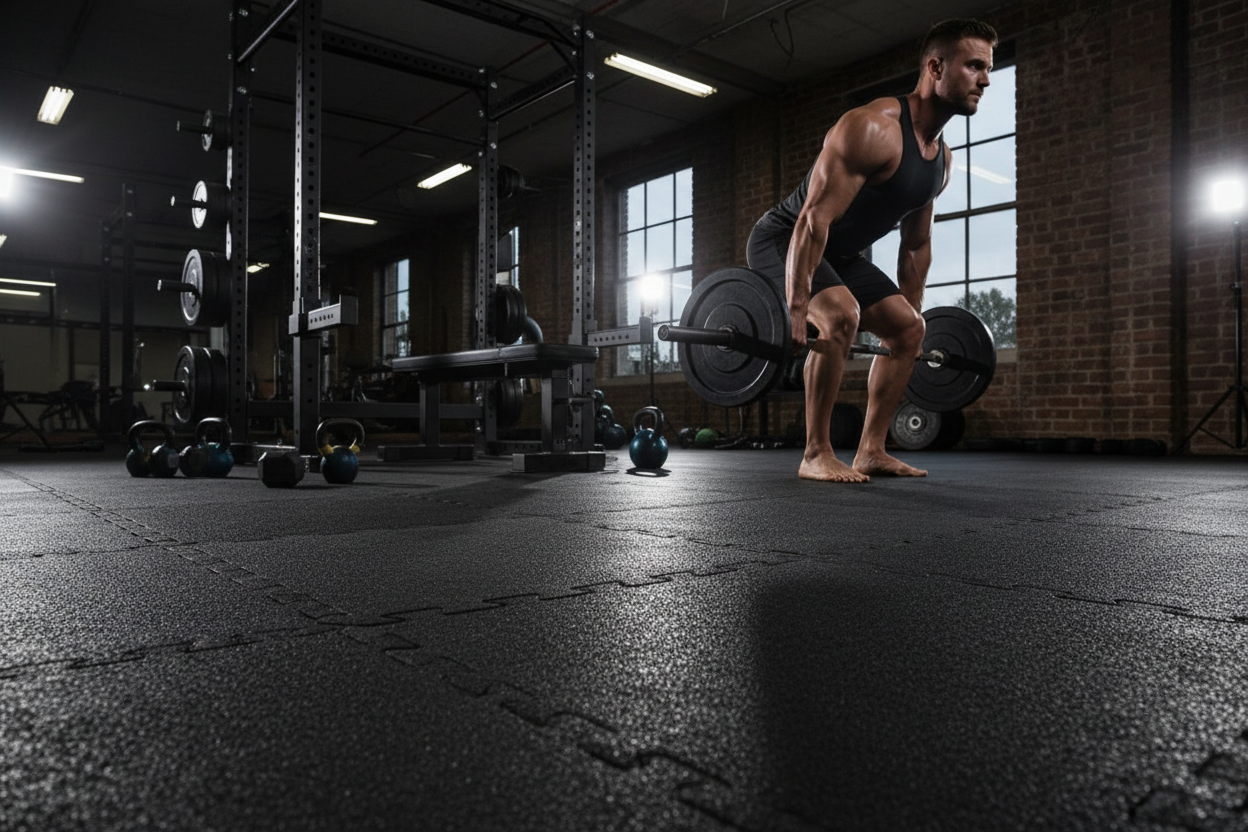
Rubber Floor Protector: What to Know Before You Buy
There is nothing quite like the heart-stopping panic of dropping a heavy dumbbell and hearing the sickening crack of the floor beneath it. Whether you are building out a garage sanctuary or a spare bedroom lifting setup, your foundation is everything. Investing in a high-quality rubber floor protector is the single most important step you can take before bringing heavy iron into your home.
Without the right foundation, you risk shattered concrete, ruined hardwood, and echoing noise that will drive your family (and neighbors) crazy. In this guide, we will break down exactly what you need to know to bulletproof your gym floor.
Key Takeaways
- Thickness dictates function: 3/8-inch is standard for general fitness, while 3/4-inch is required for heavy barbell drops.
- Vulcanized rubber offers superior durability and significantly less off-gassing odor than recycled tire alternatives.
- Interlocking tiles are best for irregular spaces, while rolled rubber provides a seamless, professional look.
- Always leave a small expansion gap near walls, as rubber expands and contracts with temperature changes.
Choosing the Right Thickness
Not all protective rubber mats are created equal. Buying a mat that is too thin will leave your subfloor vulnerable, while buying one that is too thick might drain your budget unnecessarily.
General Fitness vs. Heavy Lifting
For most home gyms focusing on dumbbells, kettlebells, and machine work, a 3/8-inch (8mm to 10mm) thickness is the sweet spot. It provides ample shock absorption and protects against scuffs. However, if you are deadlifting or performing Olympic lifts, you need heavy-duty rubber protection matting—typically 3/4-inch thick. This absorbs the massive kinetic energy of a dropped barbell, saving your concrete foundation from stress fractures.
Space Planning and Mat Styles
How you cover your floor depends entirely on the dimensions and shape of your room. Here is how to plan your North American home gym setup.
Interlocking Tiles vs. Rolled Rubber
If you are setting up in a spare bedroom or a basement with tricky corners, interlocking tiles are incredibly DIY-friendly. You can cut them easily with a utility knife to fit around baseboards. For a two-car garage gym, rolled rubber ground mats are the premium choice. They have fewer seams, which means less dust and chalk getting trapped underneath, though they are heavy and usually require two people to install.
Durability and Maintenance
A quality floor protector should last for decades, but it does require some basic upkeep to stay looking fresh.
Cleaning and Odor Control
Brand new rubber can have a strong 'tire shop' smell. To minimize this, look for vulcanized or virgin rubber options. If you do buy standard recycled mats, mop them with a mild soap and water solution, and keep your garage door open for the first few days. Avoid harsh chemicals like bleach, which can degrade the material and cause it to crumble over time.
From Our Gym: Honest Take
When we first set up our testing garage, we tried to cut corners by using cheap, 1/4-inch foam interlocking tiles under our power rack. Big mistake. Within a month, the foam had permanently compressed, and a dropped 50-pound hex dumbbell punched right through it, chipping the epoxy floor underneath.
We immediately upgraded to 3/4-inch horse stall mats for the lifting zone and 3/8-inch rolled rubber for the rest of the space. The difference in noise reduction and stability was night and day. One caveat: those 3/4-inch mats weigh about 100 pounds each. Moving them is a workout in itself, so I highly recommend grabbing a pair of locking pliers to grip the edges when dragging them into place.
Frequently Asked Questions
Is a rubber floor protector worth it for a home gym?
Absolutely. The cost of repairing a cracked concrete slab or replacing hardwood floors far exceeds the investment of proper flooring. It also provides essential grip and reduces impact on your joints during heavy lifts.
Can I put rubber mats directly over carpet?
It is not recommended for heavy lifting. Carpet creates a soft, unstable subfloor, which can cause the rubber mats to shift or separate at the seams. If you must build over carpet, lay down a layer of 3/4-inch plywood first to create a rigid foundation.
How do I stop rubber mats from sliding?
If you are using heavy 3/4-inch mats, their sheer weight usually keeps them in place. For lighter interlocking or rolled mats, double-sided carpet tape around the perimeter works perfectly to lock them down without permanently damaging the floor underneath.