
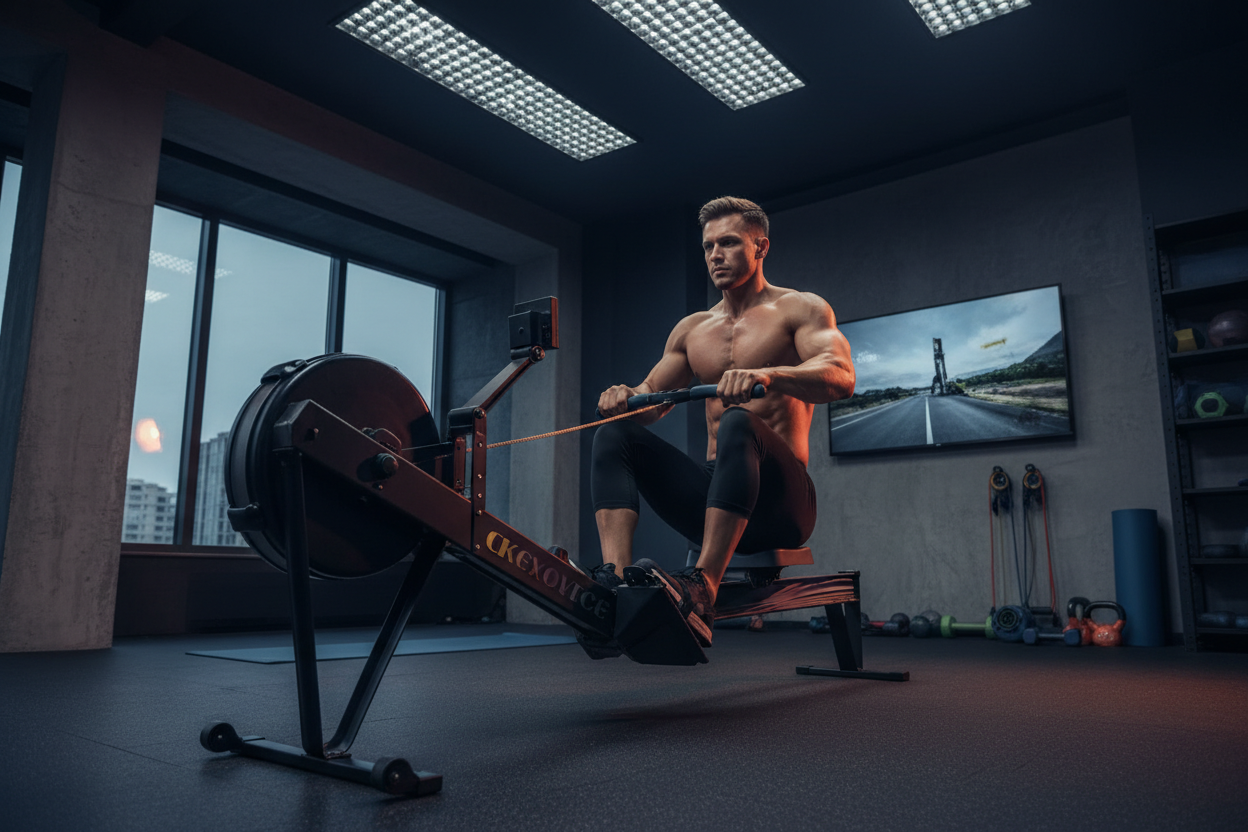
Rowing Machine Without Subscription: The Ultimate Buyer’s Guide
You bought the hardware. Why should you have to rent the software just to make it work? We have reached a saturation point with the subscription economy. Everywhere you look, fitness equipment manufacturers are locking basic functionality behind monthly paywalls. But here is the good news: the most effective cardio tool on the planet doesn't need Wi-Fi or a credit card on file.
Finding a high-quality rowing machine without subscription requirements isn't just a budget move; it is a commitment to performance over distraction. When you strip away the gamified leaderboards and the shouting instructors, you are left with the raw mechanics of the stroke. That is where the real fitness gains happen.
Key Takeaways: Quick Summary
- Performance Monitor is King: Without an app, the on-board monitor is your lifeline. Look for Bluetooth capabilities (to connect to third-party apps if desired) and accurate data tracking.
- Resistance Matters: Air and Water rowers provide dynamic resistance suitable for all levels, while Magnetic rowers offer silence but often lack the "on-water" feel.
- Resale Value: Subscription-free rowers (like the Concept2) hold their value significantly better than proprietary screened devices that become bricks if the company goes under.
- The "Smart" Compromise: You can still use apps like Zwift or EXR on your phone/tablet without locking the machine itself to a specific ecosystem.
The Case for the "Dumb" Rower
Let’s be clear: a rower without a built-in tablet isn't "dumb." It is focused. The primary reason athletes prefer a rower without subscription mandates is longevity. A machine dependent on a server to function has an expiration date. A mechanical rower relies on physics.
When you remove the subscription model, your money goes toward steel, chains, and flywheels rather than software development. This usually means you get a more durable machine for a lower price point compared to the "Peloton-of-rowing" alternatives.
Understanding Resistance Types
Since you won't have an instructor changing your settings remotely, you need to understand the mechanics of the machine you are buying.
Air Resistance: The Gold Standard
If you are looking for the best rower without subscription, air resistance is usually the answer. As you pull harder, the fan spins faster, increasing wind resistance. This is infinite scalability. It’s why Olympic rowers use air rowers. The downside? Noise. It sounds like a large fan, because that is exactly what it is.
Water Resistance: The Aesthetic Choice
Water rowers provide a smooth, swooshing sound that is meditative. The resistance is dynamic, similar to air. However, the monitors on water rowers are often less sophisticated regarding split times and force curves compared to air rowers.
Magnetic Resistance: The Silent approach
A rowing machine no subscription model often uses magnetic resistance if it's aimed at home users in apartments. It is whisper quiet. However, be careful here. Cheap magnetic rowers often have a constant resistance that doesn't change regardless of how hard you pull, which can lead to bad form and a lack of power development.
The Monitor: Your New Coach
Without a subscription service, the data monitor becomes your coach. You don't want a simple timer; you need metrics.
You should demand a monitor that tracks Split Time (500m pace), Stroke Rate (SPM), and Watts. If the monitor only shows "speed" in MPH, run away. That is a treadmill metric, not a rowing metric. A quality monitor allows you to program intervals (e.g., 500m work, 1 minute rest) directly on the device. This programmable feature is essential for progression without a digital trainer.
My Training Log: Real Talk
I want to share a specific moment that solidified my stance on this. A few years ago, I was testing a high-end magnetic rower that required a $39/month subscription. The internet in my garage was spotty. Mid-interval, the screen buffered. The resistance didn't change, but the data froze. I lost my pace, my rhythm, and my temper.
Contrast that with my experience on a Concept2 (the holy grail of subscription-free rowing). It was a humid Tuesday, 90 degrees in the garage. I was doing a 2k time trial. I remember the specific feeling of the handle—the plastic is hard, unpadded, and unforgiving. About 1,200 meters in, my sweat made the handle slick, and I had to adjust my grip on the recovery. There was no instructor cheering me on, no music, just the rhythmic whirrr-click of the chain and the burning in my lungs.
When I finished, I didn't get a digital badge. I just collapsed on the rail. But I knew exactly what my time was down to the tenth of a second, and I knew the machine would work exactly the same way ten years from now. That reliability is worth more than any live-streamed class.
Conclusion
Building a home gym is about investment. A rowing machine without subscription is an asset that retains value and functionality indefinitely. Whether you choose the tactile feedback of water or the precision of air, you are taking ownership of your fitness. You provide the power, you provide the motivation, and the machine provides the results.
Frequently Asked Questions
Can I still use rowing apps with a non-subscription machine?
Absolutely. Most modern monitors (like the PM5) have Bluetooth. You can connect your phone or tablet and use apps like Dual, Zwift, or Asensei. You simply pay for the app if you want it, but the machine works perfectly fine without it.
What is the best rower without subscription for beginners?
For beginners who want reliability without maintenance, an air rower is the top choice. It naturally adjusts to your strength level. If noise is a major concern for apartment living, a high-quality magnetic rower is a solid alternative.
Do I need internet to use a subscription-free rower?
No. This is the biggest advantage. These machines run on batteries (for the monitor) and mechanical physics. You can row in a basement, a garage, or a park without worrying about Wi-Fi signals.


