Rowing Machine: What Is It Good For Beyond Just Cardio?
You walk into the gym during peak hours. The treadmills are packed, the squat racks have a line, but that long machine with the flywheel sits empty in the corner. Most people skip it because they don't understand the mechanics, or they assume it’s purely an upper-body warmup tool. If you are asking the rowing machine what is it good for, you are about to discover the most efficient, underutilized tool in your fitness arsenal.
The rower isn't just for cooling down; it is a metabolic powerhouse that bridges the gap between heavy lifting and endurance running. Here is the honest truth about why this machine deserves a primary spot in your training rotation.
Key Takeaways: The Short Answer
- Total Body Recruitment: Unlike cycling or running, rowing activates approximately 86% of your body's muscles, including quads, hamstrings, glutes, core, and lats.
- Joint Preservation: It offers high-intensity output with zero impact, making it ideal for active recovery or those with knee issues.
- Hybrid Conditioning: It simultaneously trains aerobic endurance (VO2 max) and anaerobic power (sprinting).
- Postural Correction: Proper rowing mechanics counteract the "desk hunch" by strengthening the posterior chain.
The 86% Rule: Why It’s Not Just an Arm Workout
One of the biggest misconceptions is that rowing is an arm exercise. If your biceps are burning before your legs, your form is off.
When we look at what are rowing machine good for regarding muscle activation, we have to look at the breakdown of the stroke. The American College of Sports Medicine notes that a proper stroke is 60% leg drive, 20% core bracing, and only 20% arm pull.
The Kinetic Chain
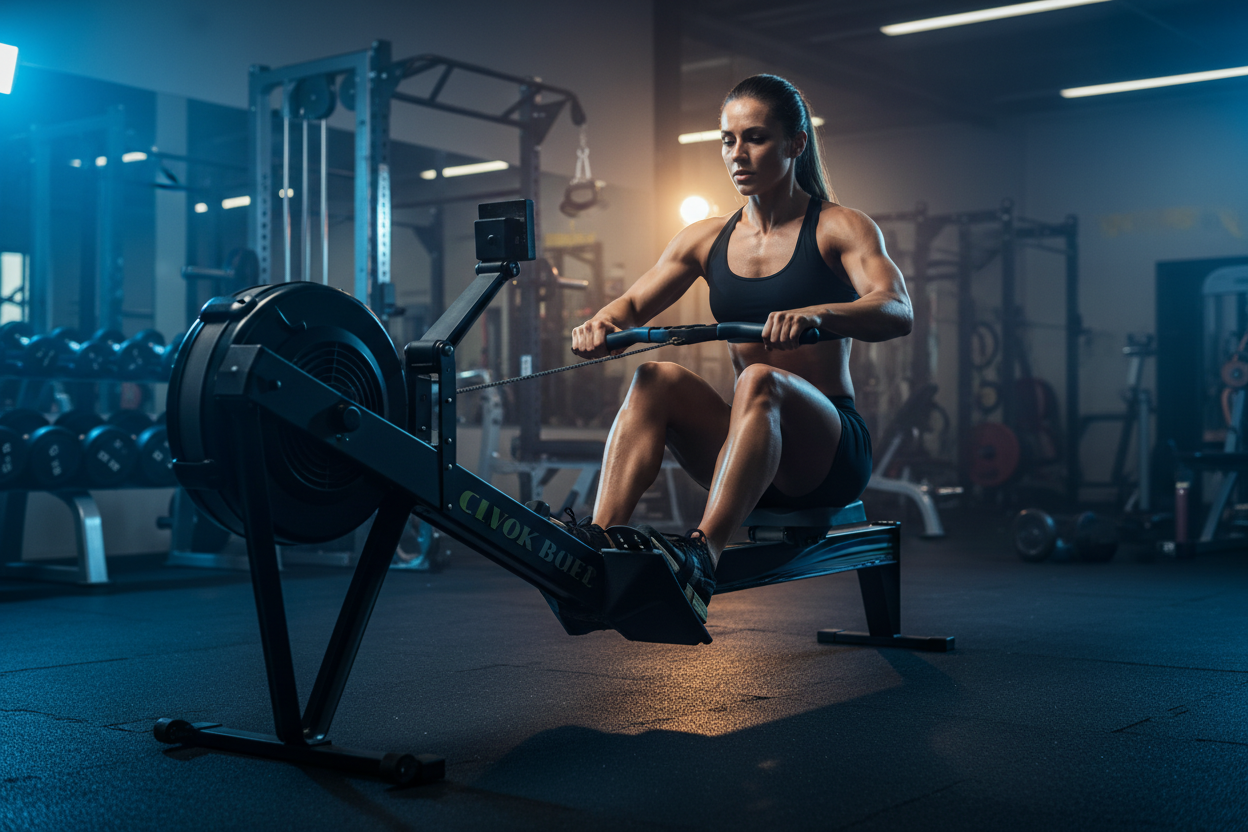
Think of the rowing motion like a deadlift turned horizontally. You drive through your heels to engage the glutes and quads. This massive energy transfer travels up through a rigid core and finishes with the lats and rear delts. This is why rowing machine good for weight loss—you are demanding oxygen for nearly every large muscle group in your body simultaneously.
Low Impact, High Output
Running is excellent, but the ground reaction force can be up to 2.5 times your body weight with every step. Over time, this wears down cartilage.
So, what is rower machine good for in terms of longevity? It allows you to redline your heart rate without the pavement pounding. Your feet are fixed to the footplates, creating a closed kinetic chain. This stability allows you to exert maximum force without the eccentric shock that causes shin splints or runner’s knee.
Metabolic Conditioning and Fat Loss
If you want to know what is rowing machine good for regarding calorie burn, the numbers are aggressive. Because of that 86% muscle recruitment, your body requires immense amounts of fuel to keep the flywheel moving.
A 185-pound person can burn roughly 300-400 calories in just 30 minutes of vigorous rowing. However, the real magic happens post-workout. High-intensity rowing triggers EPOC (Excess Post-exercise Oxygen Consumption), keeping your metabolic rate elevated for hours after you unstrap your feet.
Posture and the Posterior Chain
Modern life forces us into a forward slump—shoulders rolled forward, head down at a screen. This creates a weak back and tight chest.
The advantages of rowing extend to your skeletal health. Every stroke requires you to open the chest and retract the scapula (shoulder blades). By strengthening the rhomboids, lats, and spinal erectors, you are actively fighting gravity and correcting the imbalances caused by sitting at a desk all day.
My Training Log: Real Talk
I want to be transparent about my personal experience with rowing machine what is it good for regarding mental grit. The specs look great on paper, but the reality of the "pain cave" is different.
I remember my first attempt at a sub-7-minute 2,000-meter row. It wasn't the muscle fatigue that surprised me; it was the "Erg Cough." About 1,500 meters in, there is a specific, metallic taste that develops in the back of your throat when your lungs are scorching dry air in and out rapidly. It lingers for about 20 minutes after the session.
Also, forget about your hands looking pretty. I don't care what gloves you wear; if you row consistently, you will develop calluses specifically on the top of your palms, right under the fingers. There is also a very specific, unglamorous numbness—often called "rower's bum"—that sets in around the 30-minute mark if you don't adjust your seating position. It’s not a comfortable machine, but that grit is exactly why it works.
Conclusion
So, how is rowing good for you? It is the great equalizer. It doesn't care if you are a bodybuilder or a marathon runner; it will humble you while building a bulletproof engine. It builds legs like a cyclist, a back like a gymnast, and lungs like a swimmer. Stop walking past it. Strap in, drive with your heels, and respect the flywheel.
Frequently Asked Questions
Can rowing machines reduce belly fat?
Yes, but you cannot spot-reduce fat. Benefits of rowing for exercise include high caloric expenditure and muscle building. As you build muscle in the legs and back, your resting metabolic rate increases, which helps burn overall body fat, including the belly area, when combined with a caloric deficit.
Is rowing good for a bad back?
Generally, yes, but form is non-negotiable. What rowing machine good for includes strengthening the posterior chain, which supports the spine. However, if you round your back (slouch) during the stroke, you risk injury. If you have existing disc issues, consult a physical therapist before rowing.
How long should I row for a good workout?
You don't need hours. Because of the intensity, 20 to 30 minutes is often sufficient for cardiovascular benefits. For high-intensity interval training (HIIT), even 15 minutes of sprint intervals can provide a massive stimulus.