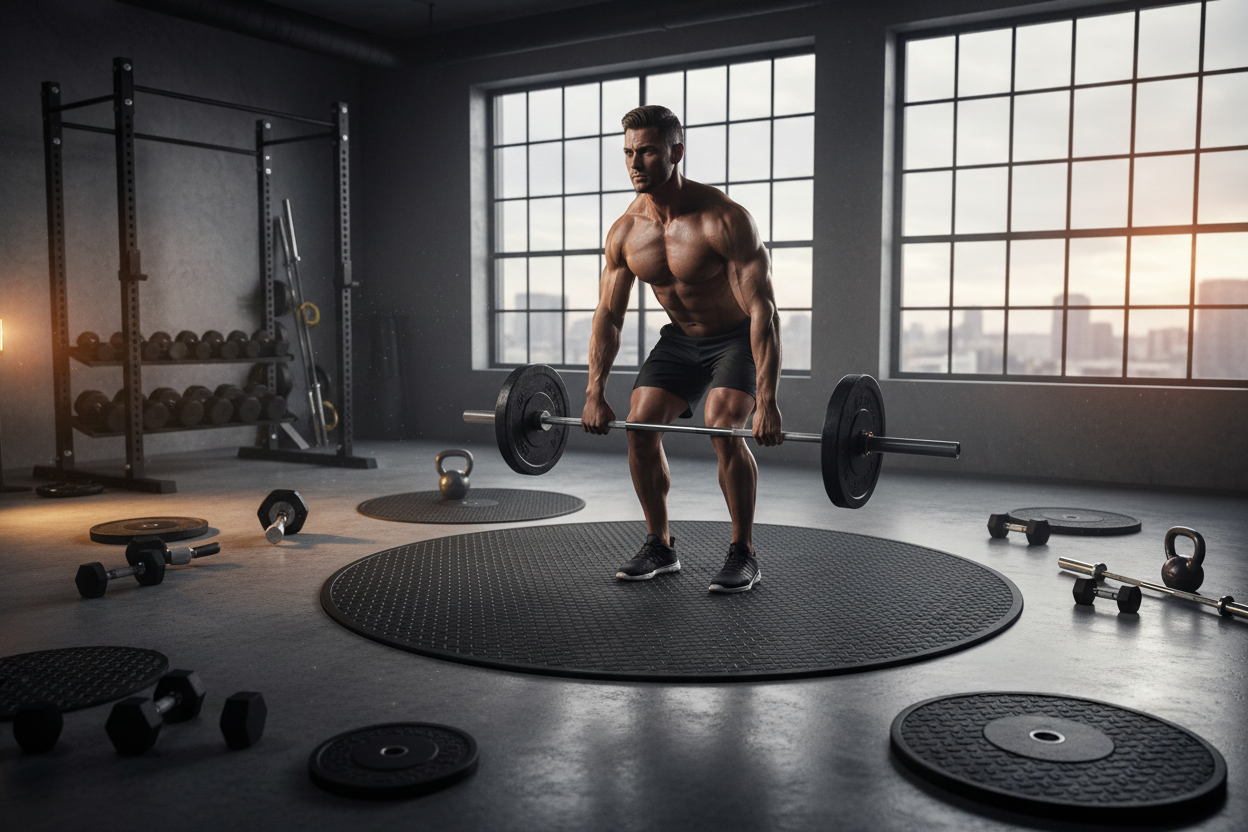
Round Rubber Mat: What to Know Before You Buy One
Setting up a home gym often means battling with limited space and the constant fear of cracking your garage floor. Whether you are dropping heavy kettlebells or setting up a compact punching bag, finding the right flooring is critical. That is where a high-quality round rubber mat comes into play. In this guide, we will break down exactly why these specialized mats are a game-changer for protecting your home gym, silencing noise, and optimizing your workout space.
Key Takeaways
- A quality rubber circle mat absorbs impact, protecting concrete or hardwood from heavy weights.
- Circular designs are space-efficient, perfect for under heavy bags, kettlebell stations, or cycle trainers.
- Thickness matters: Aim for at least 8mm for general use and 3/4-inch for heavy barbell drops.
- Avoid cheap round plastic floor mats if you need serious durability and slip resistance.
Sizing Your Mat for Your Gym Space
Finding the Right Diameter
When outfitting a basement or garage gym, footprint is everything. A circular rubber mat offers a targeted drop zone without the need to wall-to-wall mat your entire room. For compact setups, a 24 round rubber mat is ideal for a single kettlebell station or a standing heavy bag. If you are doing dynamic movements like Turkish get-ups or need space for a stationary bike, upgrading to a large round rubber mat (4 to 6 feet in diameter) provides the necessary clearance.
Material Matters: Rubber vs. Plastic
Why Heavy-Duty Rubber Wins
It is tempting to save a few dollars by picking up round plastic floor mats, but they simply do not offer the shock absorption required for fitness. A genuine round rubber floor mat is dense, heavy, and will not slide across your concrete when you pivot. Look for vulcanized or recycled crumb rubber. These materials not only dampen the jarring sound of a dropped dumbbell but also provide a high-traction surface that keeps you grounded during explosive lifts.
Maintenance and Odor
New circular rubber mats often have a distinct gym smell. To mitigate this, wash the mat with a mild soap and water solution and let it off-gas in a well-ventilated garage for a few days. Once settled, they require zero maintenance beyond a quick sweep or mop.
From Our Gym: Honest Take
We have tested dozens of flooring solutions in our North American test facility, and the transition to targeted circular rubber mats for our accessory stations was a revelation. I personally use a heavy 4-foot rubber circle mat under my 80lb heavy bag. Before, the base would slowly creep across the slick concrete during intense striking sessions. The grip of the dense rubber locked it in place immediately. One caveat: they are incredibly heavy to move once unrolled. If you plan on shifting your layout frequently, you might need a second pair of hands to drag it.
Frequently Asked Questions
Is a round rubber mat better than square tiles?
It depends on your setup. Square interlocking tiles are great for covering an entire room, while a large round rubber mat is perfect for creating dedicated, aesthetic workout zones or placing underneath specific equipment like heavy bags without dealing with peeling edges.
How thick should my circular rubber mats be?
For cardiovascular equipment or light dumbbells, 1/4-inch to 3/8-inch is sufficient. If you are dropping heavy kettlebells or using it as a specialized deadlift zone, invest in a mat that is at least 1/2-inch to 3/4-inch thick to prevent subfloor damage.
Can I use these mats outdoors?
Yes, most high-quality vulcanized rubber mats are UV and water-resistant. However, if left in direct sunlight, they may absorb a lot of heat and fade slightly over time.