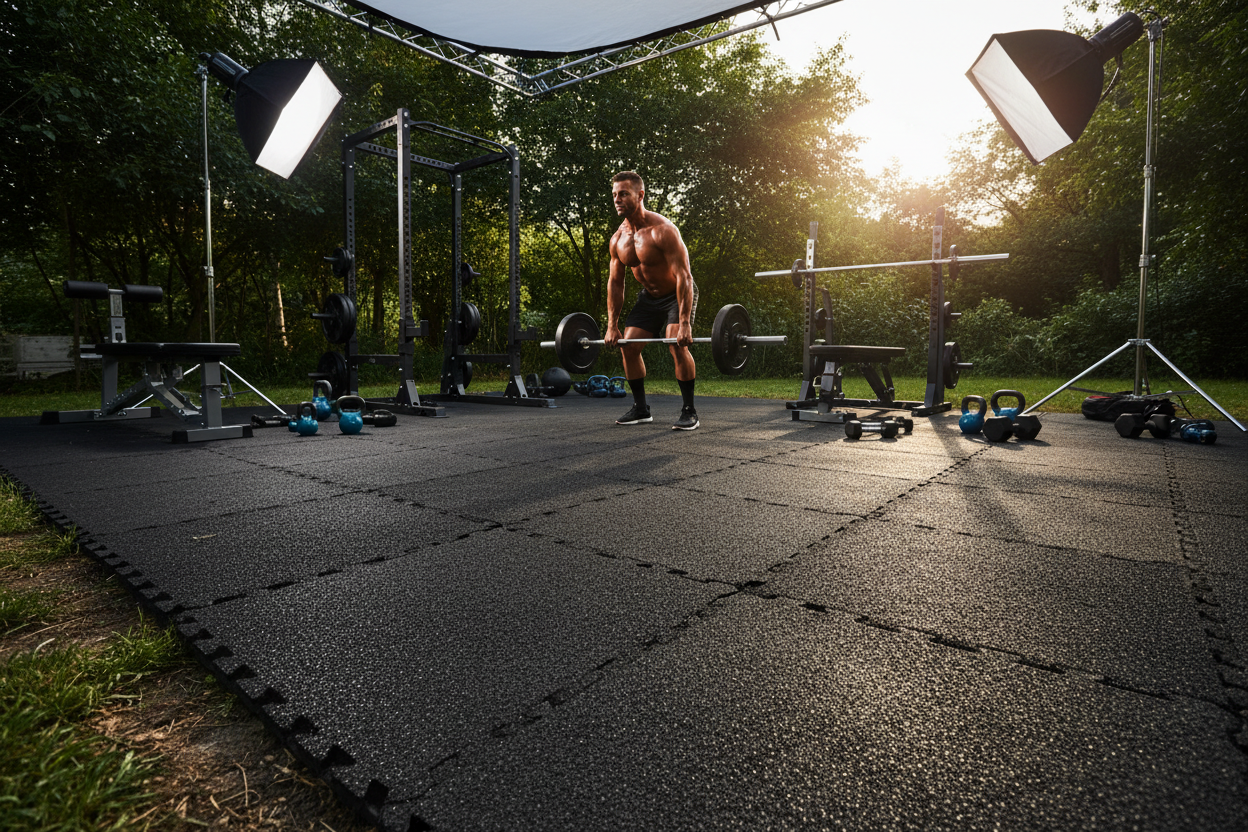
Recycled rubber mats for outdoors: The Truth Before You Buy
Building a backyard gym or patio workout space sounds like a dream until you drop a 45-pound bumper plate on your concrete slab. Standard indoor foam or stall mats simply cannot survive the harsh North American elements. If you want to train under the sun without destroying your joints or your patio, you need recycled rubber mats for outdoors. In this guide, we will break down exactly what makes an outdoor mat weather-proof, how to properly install them, and what to avoid so your investment does not crumble after one harsh winter.
Key Takeaways
- Outdoor mats require adequate drainage channels to prevent mold and pooling water.
- UV-treated recycled rubber prevents fading and cracking under direct sunlight.
- A minimum thickness of 3/4-inch is recommended for dropping heavy weights on concrete or asphalt.
- Proper sub-base preparation is critical to prevent shifting during freeze-thaw cycles.
Essential Specs for Outdoor Rubber Flooring
Thickness and Impact Absorption
When you move your training outside, the sub-floor is usually unforgiving concrete, asphalt, or compacted gravel. For general fitness and dumbbell work, a 1/2-inch mat provides decent joint relief. However, if you are doing Olympic lifts or heavy deadlifts, you need at least 3/4-inch to 1-inch thick mats. This thickness absorbs the shock of dropped barbells, protecting both your equipment and the foundation underneath.
UV Resistance and Water Drainage
Indoor mats bake and crumble when exposed to UV rays. True outdoor-rated mats are vulcanized and treated to withstand direct sunlight. Additionally, look for mats with a waffle or channeled underside. These channels allow rainwater to flow out from under your lifting area, preventing stagnant water, mold growth, and foul odors.
Space Planning and Installation Tips
Prepping Your Backyard Base
You cannot just throw rubber mats over uneven grass and expect a stable squatting surface. For the best North American home gym setups, install your mats over a slightly sloped concrete patio for optimal drainage. If you are building on a lawn, excavate a few inches, lay down a weed barrier, and pack down crushed limestone or gravel to create a level, well-draining base before placing your mats.
From Our Gym: Honest Take
Last spring, we set up an outdoor squat stand on a 10x10 patio grid using commercial recycled rubber mats outdoor. Living in the Midwest, these mats saw torrential rain in April and 90-degree UV baking in July. The grip was surprisingly solid even when slightly damp during morning dew sessions. However, I will note that the initial tire smell was strong for the first two weeks—though being outdoors, the wind carried it away much faster than in a basement gym. One pro tip: if you do not sweep the autumn leaves off them, the drainage channels underneath can get clogged. Maintenance matters, even outside.
Frequently Asked Questions
Can recycled rubber mats outdoor survive freezing winter temperatures?
Yes, high-quality vulcanized rubber expands and contracts naturally without cracking in freezing temperatures. However, you should avoid using harsh ice-melt chemicals on them, as the salt can degrade the rubber binder over time.
Do I need to glue down my outdoor gym mats?
Usually, no. Heavy 3/4-inch mats weigh over 40 lbs each and stay put under their own weight. If you are worried about shifting, use heavy-duty double-sided outdoor tape or frame the perimeter with treated lumber to lock them in place.
How do you clean outdoor rubber flooring?
A simple leaf blower works wonders for daily debris. For a deep clean, use a stiff-bristle push broom, a garden hose, and a mild pH-neutral soap. Avoid harsh chemicals like bleach, which can strip the UV protection.