Quit Skipping Leg Day: How to Build Massive Quads and Hamstrings in Your Living Room
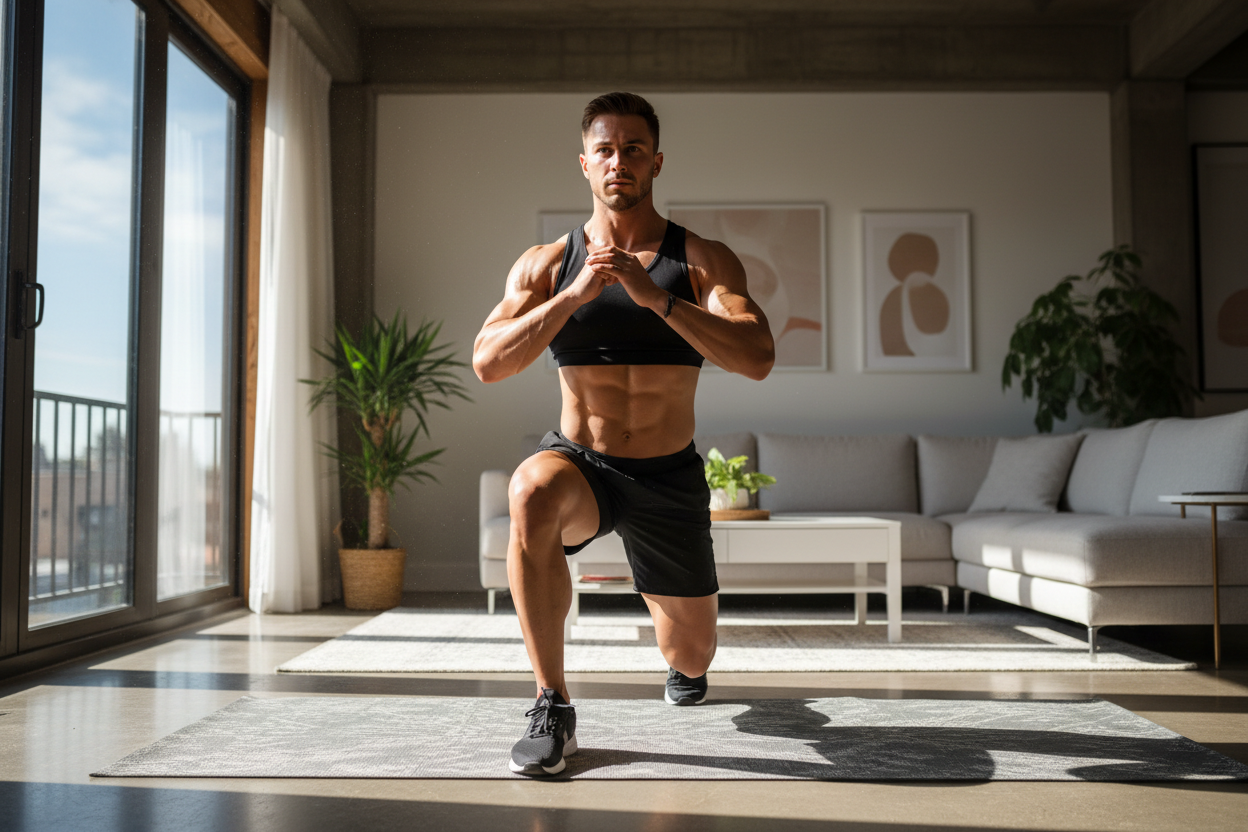
You do not need a squat rack, a leg press machine, or hundreds of pounds of iron to build impressive legs. Many people fall into the trap of thinking that effective lower body development is impossible without a commercial gym membership. That is simply not true. You can build significant muscle mass and strength right in your living room by focusing on intensity, unilateral movements, and proper form.
The secret to effective weight exercises for legs at home lies in how you apply tension to the muscle. Since you likely don't have a 300-pound barbell lying around, you have to make lighter weights feel heavier. You accomplish this by slowing down your repetitions, minimizing rest time, and focusing heavily on single-leg movements. This approach isolates the muscle, corrects imbalances, and provides enough stimulus for growth without requiring a spotter or heavy machinery.
My Real-World Lesson in Home Leg Training
I learned the hard way that heavy metal isn't the only path to growth. A few years back, I was stuck in a remote cabin for a month with nothing but a pair of adjustable dumbbells and a sturdy chair. Before that trip, I was obsessed with heavy back squats. I was convinced that without a heavy bar on my back, my legs would shrink.
I was wrong. I spent that month obsessively perfecting Bulgarian Split Squats and stiff-legged deadlifts. By the time I returned to civilization, my legs weren't just the same size—they were more defined, and my stabilizing muscles were rock solid. The soreness I experienced from those sessions rivaled anything I’d felt under a heavy barbell. It shifted my entire perspective on what constitutes an effective workout. You don't need a gym; you need effort and gravity.
Setting Up: What You Actually Need
Before diving into the movements, let’s talk about gear. You can get a lot done with bodyweight, but to keep progressing, you need external resistance. The best weights for legs at home are adjustable dumbbells or kettlebells. They occupy minimal space and allow you to increase the load as you get stronger. If you are on a tight budget, a sturdy backpack filled with books or water jugs serves the same purpose. The muscles can't tell the difference between a fancy chrome dumbbell and a heavy bag of sand; they only recognize tension.
The Essential Home Leg Movements
To structure a solid routine, you need to hit the quads, hamstrings, glutes, and calves. Here are the most effective movements that maximize limited equipment.
1. The Goblet Squat
This is the foundation of weight lifting for legs at home. Holding a weight at chest level forces you to keep your torso upright, which engages the core and protects the lower back. It also allows for greater depth than a traditional back squat.
Stand with feet slightly wider than shoulder-width. Hold your dumbbell or kettlebell against your chest. Lower yourself until your elbows touch the inside of your knees. Pause at the bottom. Drive back up through your heels. Because the weight is front-loaded, your quads have to work overtime to keep you from falling forward.
2. The Bulgarian Split Squat
If you want to know the definition of a love-hate relationship, meet the split squat. This is arguably the most effective movement for weight training legs at home because it puts 100% of the load on one leg. A 40-pound dumbbell feels like 80 pounds of pressure on that working quad.
Place one foot on a bench or chair behind you. Step the other foot out far enough so that when you descend, your front shin stays relatively vertical. Lower your back knee until it almost touches the floor. Push back up. This exercise exposes weaknesses quickly and builds incredible balance.
3. Romanian Deadlift (RDL) with Dumbbells
You cannot neglect the posterior chain. The RDL targets the hamstrings and glutes. Hold a weight in each hand. Keep your legs relatively straight, with just a soft bend in the knees. Hinge at the hips, pushing your butt backward as if you are trying to close a door with it. Lower the weights toward your shins until you feel a deep stretch in your hamstrings. Squeeze your glutes to pull your torso back to standing.
Structuring Your Home Routine
Randomly doing a few squats won't get you far. You need a plan. A good session of leg weights exercises home training should follow a specific order: compound movements first, followed by isolation work.
Try this circuit. Perform 3 to 4 rounds, resting 60 seconds between rounds:
- Goblet Squats: 12-15 reps (Control the descent, taking 3 seconds to go down).
- Bulgarian Split Squats: 10-12 reps per leg (No rest between legs).
- Dumbbell RDLs: 12-15 reps (Focus on the stretch).
- Walking Lunges: 20 steps total (holding weights at your sides).
- Calf Raises: 20 reps (standing on a step or block for full range of motion).
Progressive Overload Without Heavy Plates
In a gym, you add a 5lb plate when things get easy. At home, you might not have that luxury. So, how do you ensure you keep making gains? You change the variables.
Increase the time under tension. Instead of just bobbing up and down, lower the weight for a count of four seconds. Pause at the bottom for two seconds. Explode up. This makes a light weight feel incredibly heavy and induces more metabolic stress, which signals muscle growth.
Another method is increasing volume. If 12 reps feel easy, go to 15 or 20. Decrease your rest periods. If you usually rest 90 seconds, cut it to 45. These techniques ensure that your weight exercises for legs at home remain challenging month after month.
The Mental Aspect of Home Training
Training at home requires a different mindset. There is no environment of other people pushing you. It is just you and your furniture. It is easy to cut a set short or skip the last rep because no one is watching. Discipline becomes your most valuable asset.
Treat your living room workout with the same respect you would a gym session. Put on your workout clothes. Play your music loud. Put your phone on 'Do Not Disturb.' The intensity you bring to the workout determines the result, not the logo on the equipment.
Final Thoughts on Consistency
Building legs takes time. It is a large muscle group that requires significant energy to repair and grow. Do not get discouraged if you don't see changes in a week. Stick to the basics. Master the squat, the hinge, and the lunge. Use whatever resistance you have available and push until you can't push anymore. If you do that consistently, your legs will grow.
Frequently Asked Questions
How often should I train legs at home?
For most people, training legs twice a week is the sweet spot. This frequency allows for enough volume to stimulate growth while providing adequate recovery time (usually 48 to 72 hours) between sessions to prevent overtraining.
Can I build leg muscle with just dumbbells?
Absolutely. Dumbbells allow for a greater range of motion and unilateral training, which can actually be superior for muscle symmetry. As long as you are applying progressive overload by adding reps, weight, or slowing down your tempo, you will build muscle.
What if I don't have a bench for split squats?
You can use almost any stable elevated surface. A sturdy couch, a dining chair, or even a low coffee table works perfectly. Just ensure the object won't slide across the floor when you apply pressure to it.