Pull Up Machine For Home: Is It Worth The Floor Space?
If you have ever watched a tension-mounted bar rip the trim off your doorframe, you already know the struggle of training your back outside of a commercial gym. Lat pulldowns are fantastic, but nothing builds a wide, dense back quite like strict pull-ups. Whether you are a beginner trying to achieve your first unassisted rep or an advanced lifter focusing on weighted volume, investing in a dedicated pull up machine for home use can completely transform your upper body programming.
However, bringing a full-sized rig into your house is a major commitment of both budget and square footage. In this guide, we will break down exactly what you need to know before buying, how to measure your space correctly, and which features actually matter for your home workouts.
Key Takeaways
- Ceiling clearance is critical: You need at least 18 to 24 inches of clearance above the machine's max height to perform a full repetition safely.
- Assistance adds versatility: An assisted pull-up machine for home is the best choice for multi-user households with varying strength levels.
- Stability over features: A dedicated pull up bar machine with a wide base and heavy steel gauge will always outperform a flimsy multi-station tower.
- Weight capacity matters: Always look for a minimum static weight rating of 300 lbs to ensure long-term durability and safety.
Fitting a Pull Up Machine Home Setup
The Ceiling Clearance Rule
The most common mistake people make when buying a pull ups machine for home is forgetting about their own head. If your machine is 84 inches tall and you have standard 96-inch (8-foot) basement ceilings, you only have 12 inches of clearance. Depending on your height and arm length, your head will likely hit the ceiling before your chin clears the bar. Always measure the height of the machine, add your torso length above the grip point, and leave a few extra inches for safety.
Footprint and Floor Space
Standalone machines require a dedicated footprint. Unlike folding squat racks, a pull up machine home setup is permanent. You will need a floor space of roughly 4 feet by 4 feet just for the machine, plus an additional 2 feet of buffer zone around it so you can step on and off comfortably without kicking a wall or another piece of equipment.
Key Features to Compare
Assisted vs. Unassisted Models
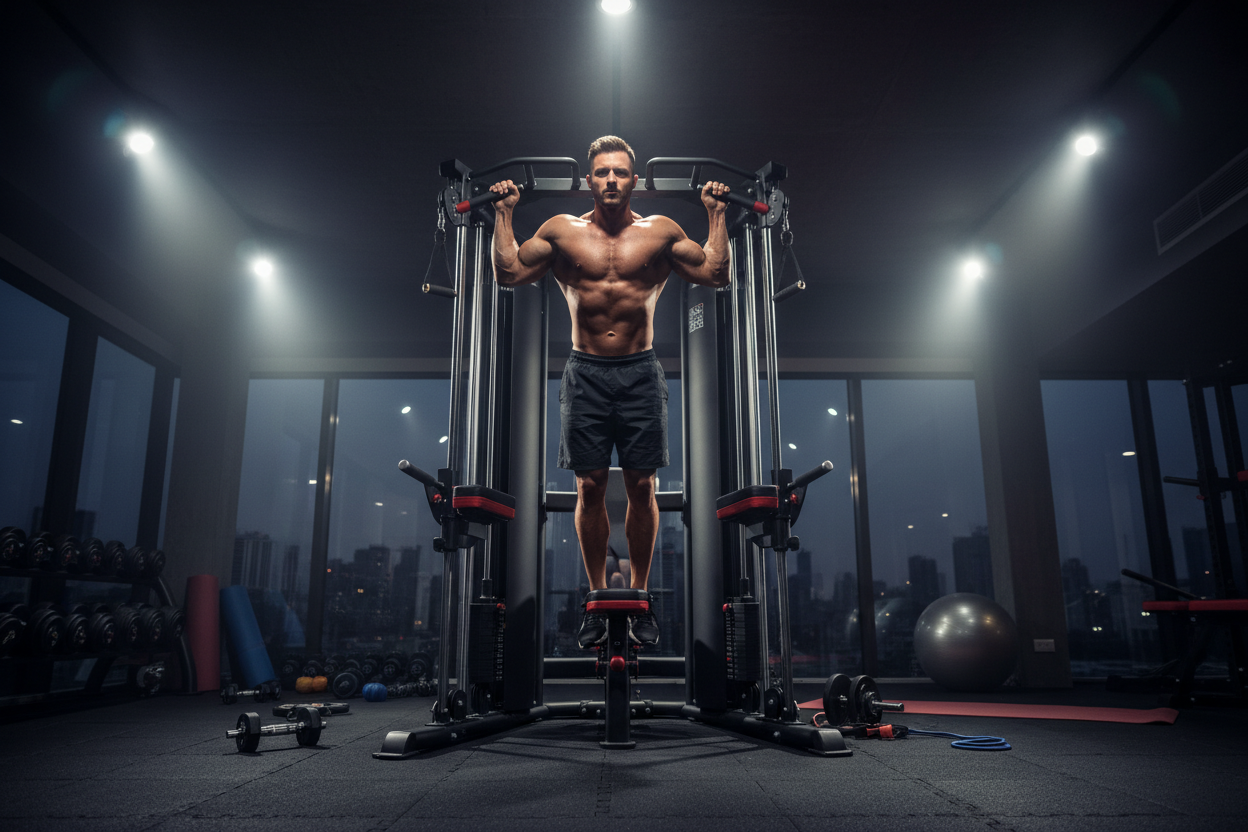
If you are the only one using the gym and you can already do 10+ strict pull-ups, a standard power tower or rack attachment might suffice. However, if you share the gym with family members, an assisted pull-up machine for home is a game-changer. The counterweight system allows users to offset their body weight, making it possible to train the exact movement pattern of a pull-up with perfect form, regardless of current strength levels.
Build Quality and Stability
Look for frames made of 11-gauge or 12-gauge steel. Cheaper models use 14-gauge steel, which tends to wobble and sway when you perform explosive movements or add weight belts. A high-quality pull up bar machine should feel as rock-solid as the ones at your local commercial gym. Pay attention to the base—H-shaped bases generally offer better anti-tip stability than U-shaped ones.
From Our Gym: Honest Take
When we first added a commercial-grade assisted pull-up machine to our garage gym, I severely underestimated the top-plate clearance. At 6'2", I found my head grazing the garage door tracks on every single rep. We ended up having to rotate the machine 90 degrees and place it exactly between the ceiling joists just to get a full range of motion.
That said, it has been one of the best investments we have made. The knurling on the multi-grip handles is aggressive enough to hold chalk well without tearing up my hands, and the 200-pound weight stack glides flawlessly. The biggest unexpected benefit? My wife, who previously avoided back day, used the assisted kneeling pad to build her strength over six months and just hit her first strict, unassisted pull-up last week. It takes up a lot of space, but the programming value is undeniable.
Frequently Asked Questions
Is a pull up machine worth it for a home gym?
Yes, if you have the floor space and prioritize back development. It offers unparalleled stability compared to doorway bars and provides a safer, more effective way to perform high-volume back training or learn the movement from scratch.
How much weight can a home pull up machine hold?
Entry-level models typically support 250 to 300 lbs, while mid-tier to commercial-grade machines can easily support 400 to 600 lbs. Always check the manufacturer's static and dynamic weight ratings before purchasing.
Can beginners use a home pull up machine?
Absolutely. In fact, an assisted model is arguably the best tool for a beginner. By using a counterweight system or heavy resistance bands, beginners can train the exact neuromuscular pattern of a pull-up without being limited by their current bodyweight-to-strength ratio.