Pull Machines Explained: What to Know Before You Buy
Building a complete back at home usually involves endless barbell rows and pull-ups. But if you've hit a plateau or struggle with lower back fatigue, you already know the missing ingredient: constant cable tension. Adding dedicated pull machines to your setup changes the game, offering the precise isolation and variable resistance required for serious hypertrophy and strength.
Whether you are outfitting a two-car garage or cramming gear into a spare bedroom, this guide will help you navigate the specs, avoid common buying mistakes, and choose the right equipment for your specific fitness goals and spatial constraints.
Key Takeaways
- Versatility: A dedicated pulling exercise machine allows for targeted back, bicep, and rear delt isolation that free weights simply cannot match.
- Resistance Types: Plate-loaded models save money and utilize your existing gear, while selectorized weight stacks offer faster drop sets and unmatched convenience.
- Space Requirements: Expect to need at least 82 to 85 inches of ceiling clearance for a standard pull gym machine.
- Pulley Quality: Aluminum pulleys paired with sealed bearings provide a noticeably smoother pull than standard nylon alternatives.
Decoding the Pull Weight Machine: What to Look For
Weight Stacks vs. Plate-Loaded
Choosing the right pull weight machine ultimately comes down to your budget and existing gear. If you already own a massive collection of Olympic plates, a plate-loaded system provides incredible value and a high weight ceiling. However, if you perform a lot of supersets or share the gym with a partner of different strength levels, the speed and convenience of a selectorized weight stack is easily worth the premium.
Evaluating Pulley Ratios
Not every gym machine pull mechanism feels the same, and understanding pulley ratios is critical. A 1:1 pulley ratio means lifting 100 lbs feels like exactly 100 lbs—this is ideal for heavy lat pulldowns and low rows. A 2:1 ratio, which is often found on functional cable trainers, means that same 100 lbs provides 50 lbs of actual resistance. While great for fast, explosive movements, a 2:1 ratio might cause you to max out the weight stack too quickly on heavy back days.
Space Planning for Pulling Gym Equipment
Height Clearances
The single biggest mistake home gym owners make is underestimating vertical space. Most standard lat pulldown towers require at least 82 to 85 inches of clearance. If you are building out a basement gym with low ceilings, soffits, or ductwork, you will need to seek out a specialized short-tower pull exercise equipment model to ensure full range of motion without scraping the ceiling.
Footprint and Cable Reach
Always consider the functional footprint, not just the dimensions of the machine itself. The tower might only be 30 inches deep, but if you are doing seated low rows, your legs and torso will extend another 3 to 4 feet into the room. Always measure your active workout space to ensure you have room to stretch out.
From Our Gym: Honest Take
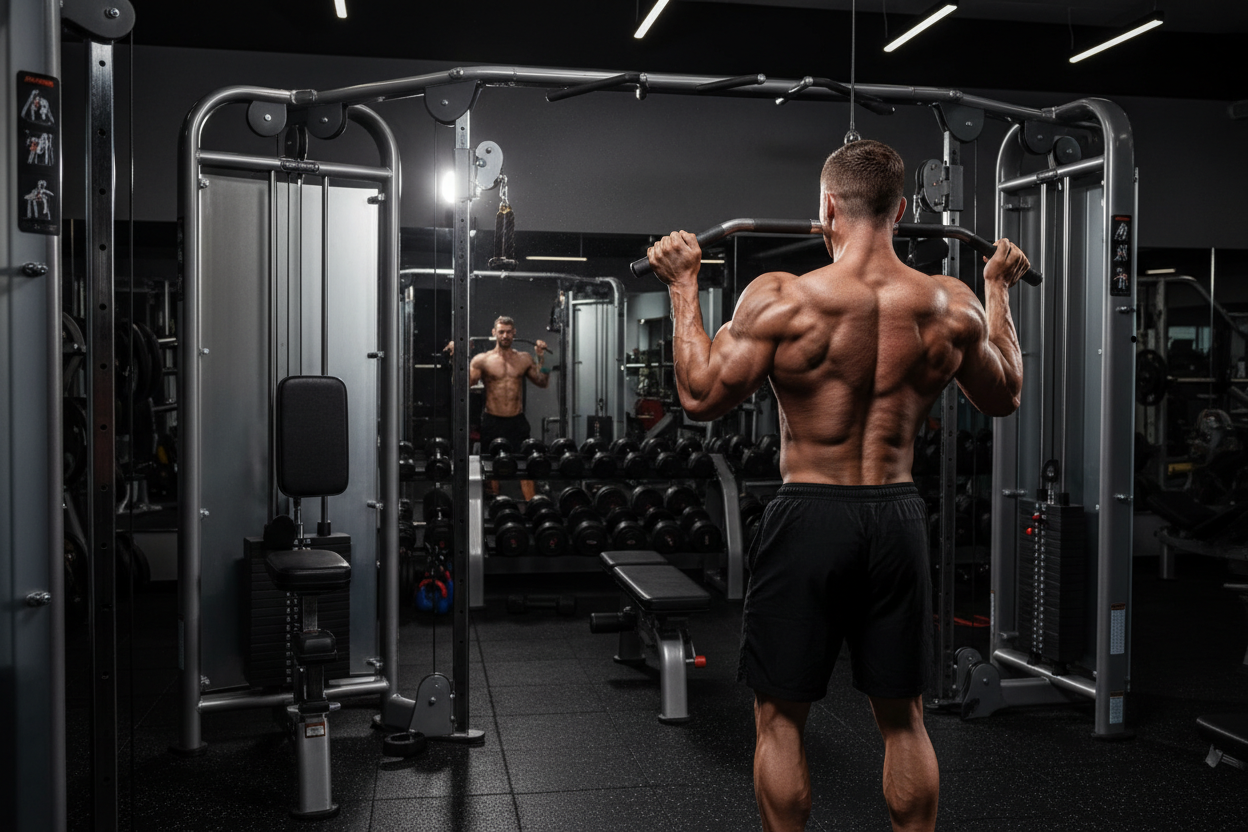
Over the past four years of outfitting my own garage gym, I've tested everything from budget pulley cables that strap to a pull-up bar to commercial-grade towers. When I finally upgraded to a dedicated selectorized lat pulldown and low row combo, it completely transformed my back training. The constant tension allowed me to build my lats without taxing my lower back the way heavy barbell rows do.
Here is my honest caveat: if you decide to go with a lighter, plate-loaded model to save cash, you absolutely must bolt it to your lifting platform or floor. I learned this the hard way. During a heavy set of 225 lb low rows, the entire machine tipped forward, nearly taking out my shins. Additionally, pay close attention to the guide rods. I clean and lubricate my solid steel guide rods with a silicone-based spray once a month, which ensures the glide stays buttery smooth even in a humid, uninsulated garage environment.
Frequently Asked Questions
Is a dedicated pull machine worth it for a home gym?
Yes, especially if back hypertrophy and joint longevity are priorities for you. While barbells and dumbbells are excellent for compound strength, a cable-based pulling machine provides constant tension throughout the entire range of motion, significantly reducing lower back strain during heavy rows.
How much weight capacity do I need?
For most intermediate to advanced lifters, a weight capacity of 250 to 300 lbs on a 1:1 ratio machine is more than enough for lat pulldowns and seated rows. Beginners can start with lower capacities, but it is always more cost-effective to buy a higher-capacity machine once than to upgrade later when you outgrow it.
Can I use standard 1-inch plates on a plate-loaded machine?
Many entry-level plate-loaded machines come with 1-inch weight horns but include 2-inch Olympic adapter sleeves in the box. Always check the manufacturer specifications before buying to ensure your existing plates will fit snugly without rattling during your sets.