Powerful Chest Workout Routines Every Football Player Needs
For football players, chest strength isn’t just about aesthetics — it directly impacts performance on the field. From blocking and tackling to absorbing physical contact, having a strong and well-conditioned chest can make a tangible difference in your game. A football-focused chest workout should emphasize explosive power, functional strength, and durability to help athletes excel under intense physical demands.
Why Chest Strength Matters in Football
The chest plays a critical role in upper body movements that involve pushing, protecting the ball, and staying balanced during collisions. Strong pectorals help stabilize the shoulder joints, improving control during tackles and giving players more power when driving opponents back. Developing your chest strength also contributes to better posture, which can reduce injury risks over a long season.
Key Principles for a Football Chest Workout
Unlike bodybuilding routines that focus on isolating muscle groups for size, a football chest workout should integrate multi-joint exercises, high-intensity power moves, and stability challenges. The aim is to create functional strength that translates into game situations.
- Prioritize compound lifts that engage multiple muscle groups.
- Include plyometric or dynamic movements for explosive power.
- Train chest within the context of overall upper body stability.
- Incorporate resistance variations to adapt to game-specific demands.
Sample Football Chest Workout Routine
Here is a workout regimen tailored for football players, focusing on strength as well as functional movement:
1. Barbell Bench Press
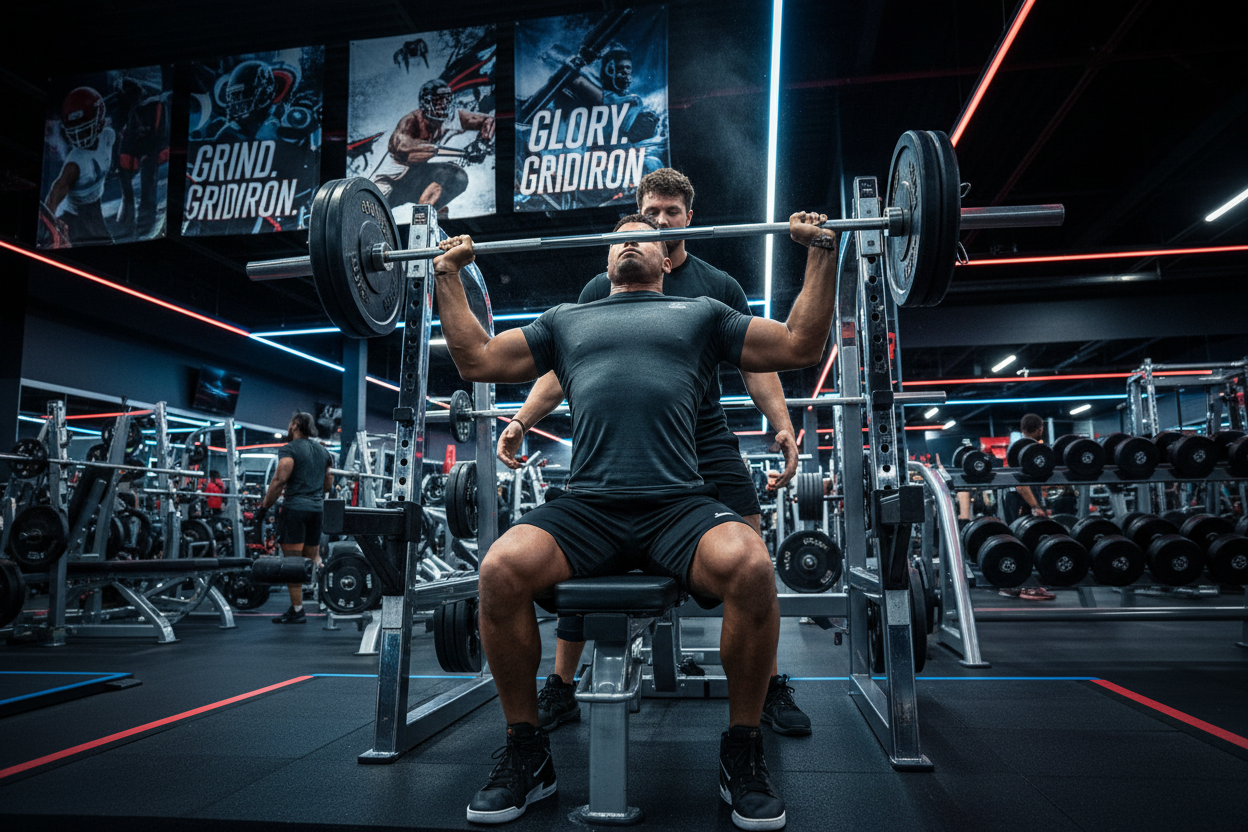
The bench press is a foundational lift for building pressing strength. Football players should emphasize controlled yet explosive reps, aiming for 4–6 repetitions per set with heavy weight to build maximal strength.
2. Plyometric Push-Ups
These are excellent for developing explosiveness in your chest and triceps. From a push-up position, push off the ground with enough force for your hands to leave the floor, then land softly and immediately go into the next rep.
3. Incline Dumbbell Press
Targets the upper chest and shoulders, aiding in upward pushing movements like stiff-arms or catching high passes. Maintain good form and perform 8–10 reps per set.
4. Medicine Ball Chest Pass
A functional drill that mimics rapid pushing in football. Stand with your feet shoulder-width apart, hold the medicine ball at chest height, and explosively throw it forward to a partner or against a wall.
5. Stability Ball Push-Ups
This adds an element of core activation and shoulder stability, crucial for controlling body position during plays. Place hands on the ball, maintain balance, and perform slow, controlled push-ups.
Recovery and Injury Prevention
Football demands high levels of training intensity, so recovery should never be overlooked. Proper stretching, mobility work, and adequate rest between heavy sessions help keep your chest muscles and surrounding joints healthy. Ice therapy and myofascial release techniques, like foam rolling, can alleviate soreness and improve circulation.
Nutrition Tips for Muscle Growth and Performance
Developing a powerful chest requires not only consistent training but also proper nutritional support. Focus on high-quality protein sources, complex carbohydrates for energy, and healthy fats for hormone regulation. Staying hydrated and timing your meals around workouts can enhance muscle recovery.
Personal Experience on the Field
During my time playing semi-professional football, I realized how much upper body power influenced my game. One season, I committed to a dedicated chest training routine combining heavy lifts and explosive drills. Not only did tackles become more dominant, but I also felt more stable when holding the ball under pressure. The confidence that came from improved chest strength was as important as the physical benefits.
Putting It All Together
A football chest workout should aim to combine strength, explosiveness, and stability. The exercises above can be performed two times per week during the off-season and maintained with lighter variations during the competitive season. Consistency and progressive overload are key — start with manageable weights and gradually challenge your chest with new stimuli. The result will be a stronger, more resilient upper body ready to meet the demands of competitive football.