Please Stop Doing 50-Rep Shoulder Workouts for Cutting
I remember staring at my 50lb dumbbells like they were the enemy. I was six weeks into a brutal cut, my morning coffee wasn't hitting anymore, and I almost convinced myself that 'toning' meant doing sets of 30 with the light weights. It is a trap we all fall into when the calories get low and the ego gets bruised by a heavy barbell. You feel weak, so you change the rules of the game to make yourself feel productive.
If you are looking for shoulder workouts for cutting, you have probably seen the high-rep 'burn' circuits on Instagram. Stop. You do not need more reps; you need more reason for your body to keep its muscle while you starve it of fat. Here is the reality of how you actually carve out delts without looking like a deflated balloon by the time you hit the beach.
- Heavy pressing is non-negotiable for muscle retention.
- Lateral raises provide the visual 'width' that makes a cut look impressive.
- Volume should decrease as recovery capacity drops in a deficit.
- You cannot spot-reduce fat; the 'cut' look comes from low body fat and high muscle density.
The Biggest Lie About Getting Shredded Shoulders
The fitness industry loves the idea of 'toning' with high reps. They want you to believe that if you feel the burn, you are melting fat off that specific muscle. Biomechanically, that is nonsense. Fat loss is systemic, and muscle retention is a result of mechanical tension. When you switch to light weights because you are on a diet, you are signaling to your body that it no longer needs those expensive-to-maintain muscle fibers. Your body is looking for any excuse to burn muscle for energy during a deficit; do not give it one.
You should stop doing shoulder workouts for cutting like this immediately if you have been prioritizing 'the pump' over the load. If you want to know how to get deltoid cut definition, you have to keep the weight heavy enough to scare your body into keeping the muscle. Your diet handles the fat loss; your training handles the hardware. If you drop the intensity, your body will happily cannibalize your delts to fuel your morning cardio.
Why Heavy Pressing Stays When the Calories Drop
The Overhead Press (OHP) is the foundation of a shoulder cut body. Whether it is a barbell or heavy dumbbells, the goal is to maintain your strength floor. If you were pressing 185 lbs for 5 reps before the cut, and you suddenly drop to 135 lbs for 20 reps because you are 'cutting,' you are going to lose size. I have seen guys lose two inches off their shoulder circumference simply because they stopped lifting heavy when the calories got low.
The challenge is that a calorie deficit makes your joints feel like they are made of dry plywood. This is where you have to be smart about your warm-ups and stability. I often incorporate static exercises for shoulder health to prime my rotator cuffs before I ever touch the heavy rack. It keeps the joint stable when my energy is low and my glycogen is depleted. Focus on perfect, explosive concentric movements and controlled eccentrics. Do not ego lift, but do not turn your press into a cardio session either. If you can't hit your top weight, stay within 10% of it, but never sacrifice the load for the sake of sweating.
Isolating the Lateral Head for the 'Capped' Look
If you want a shoulder cut body, the lateral deltoid is your best friend. This is the muscle that gives you that 'capped' look and creates the V-taper illusion. When your waist gets smaller from the diet, popping these lateral heads makes the visual impact twice as strong. This is how to get deltoid cut looks that actually stand out in a t-shirt. Most people focus too much on the front delt, which already gets smashed during chest day, and they leave the lateral head as an afterthought.
I have found that strict lateral raises—no swinging, no momentum—are the secret. I like to do them with a slight forward lean or using cables to keep constant tension throughout the entire range of motion. This isn't about moving the heaviest weight in the gym; it is about making the 20lb dumbbells feel like 50s. When you hit that side-on pose in the mirror and see that deep separation between the delt and the tricep, that is the lateral head doing its job. During a cut, I actually increase the focus here because the metabolic cost is low but the visual payoff is massive.
A Garage-Proof Cutting Routine You Can Actually Recover From
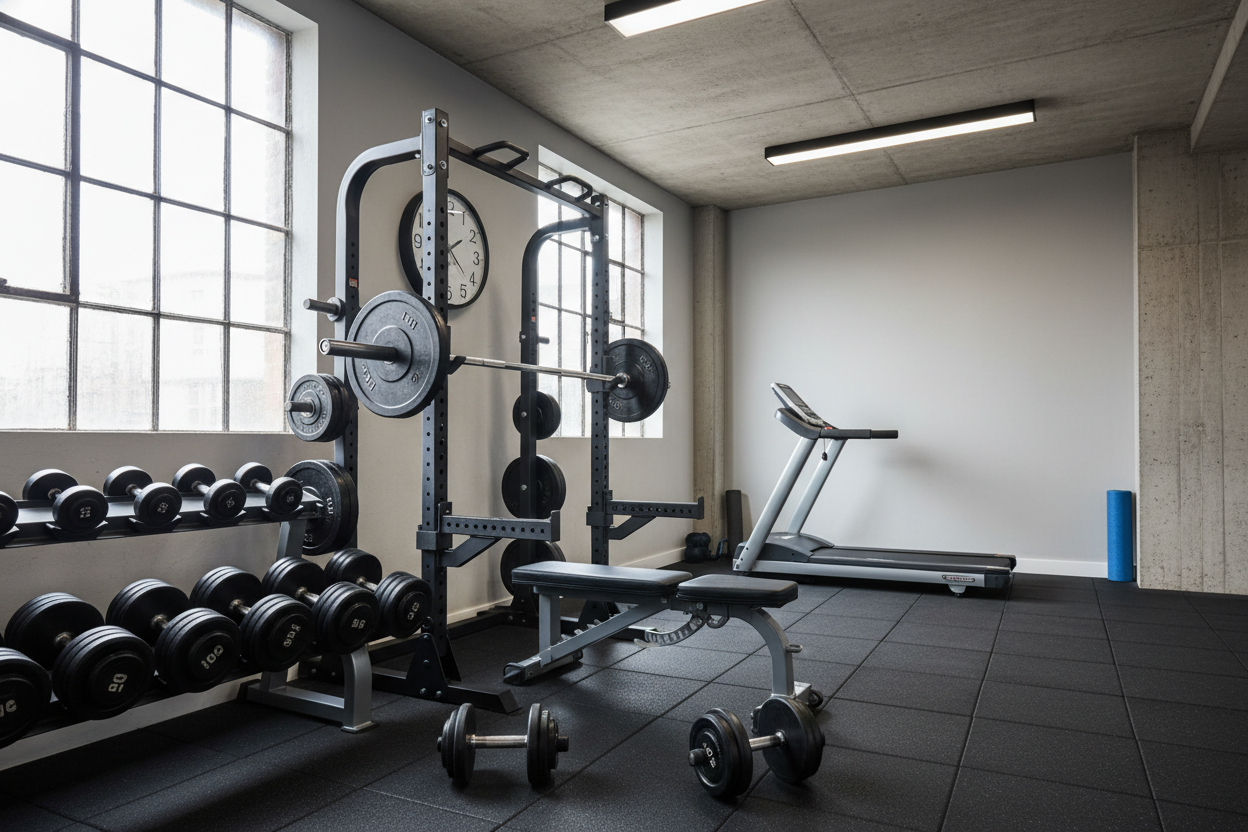
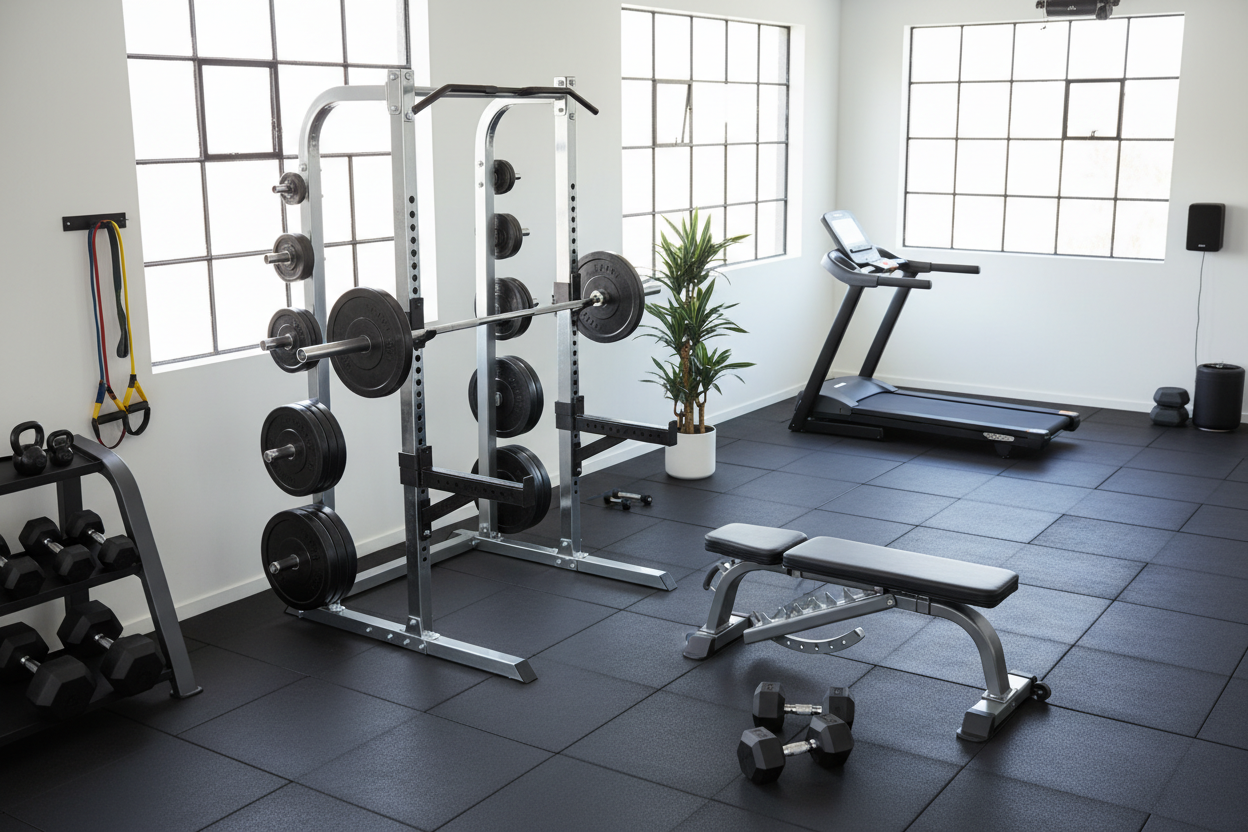
In a garage gym, you do not have twenty different machines. You have a rack, some weights, and maybe some cables. That is all you need. The key during a cut is to cut the 'junk volume.' If it is not building strength or hitting a specific head of the delt with high intensity, it is just wasting recovery energy you do not have. I limit my shoulder-specific work to about 6-8 total high-intensity sets per workout.
My go-to routine is simple: Heavy Overhead Press (3 sets of 5-8), Strict Lateral Raises (3 sets of 12-15), and Rear Delt Flyes (2 sets of 15-20). If I am doing kneeling Z-presses to take the legs out of the movement and force more core stability, I always make sure I am on a solid 6x8ft exercise mat. Having a non-slip, firm surface is vital when you are pushing for that last rep in a fatigued state. You do not want your knees sliding or your footing to feel mushy when 155 lbs is locked out over your head. Recovery is the bottleneck here, so get in, hit it hard, and get out.
Nutrition vs. Training: The Hard Truth About Striations
You can do the most perfect workout on the planet, but if your body fat is at 18%, you are not going to see a 'cut' shoulder. Striations are the result of having large muscle bellies and very little fat covering them. The training keeps the muscle belly large; the diet removes the cover. Do not fall for the 'metabolic conditioning' trap where you are gasping for air between sets of shoulder presses. Save the cardio for the treadmill or the pavement. In the weight room, your job is to stay strong and keep the muscle you worked so hard to build.
Personal Experience: The Deflated Balloon Mistake
A few years ago, I decided I wanted to get 'shredded' for a trip. I cut my weights in half and tripled my reps, thinking I was 'sculpting' the muscle. By the time I hit the beach, I was lean, sure, but I looked like I had never lifted a weight in my life. I lost over an inch on my arms and my shoulders looked flat and narrow. My 1RM overhead press dropped by 25 pounds in two months. Now, I never drop the weight. I might drop a set or two to manage my recovery, but the intensity stays high. I would rather do 5 heavy, meaningful reps than 50 useless ones that just make me tired.
FAQ
Can I get shoulder striations without being at a low body fat?
No. You can have the most developed delts in the world, but if they are covered by a layer of fat, they will just look round and bulky. Striations only appear when your skin is thin enough to show the muscle fibers underneath.
How many times a week should I train shoulders on a cut?
Twice a week is the sweet spot. One day focused on heavy pressing and one day focused on lateral and rear delt isolation. This allows for recovery while maintaining high frequency.
Are machines better than dumbbells for cutting?
Not necessarily, but cables offer constant tension which can be great for isolation. In a home gym, dumbbells and a barbell are your bread and butter and will do 95% of the work.