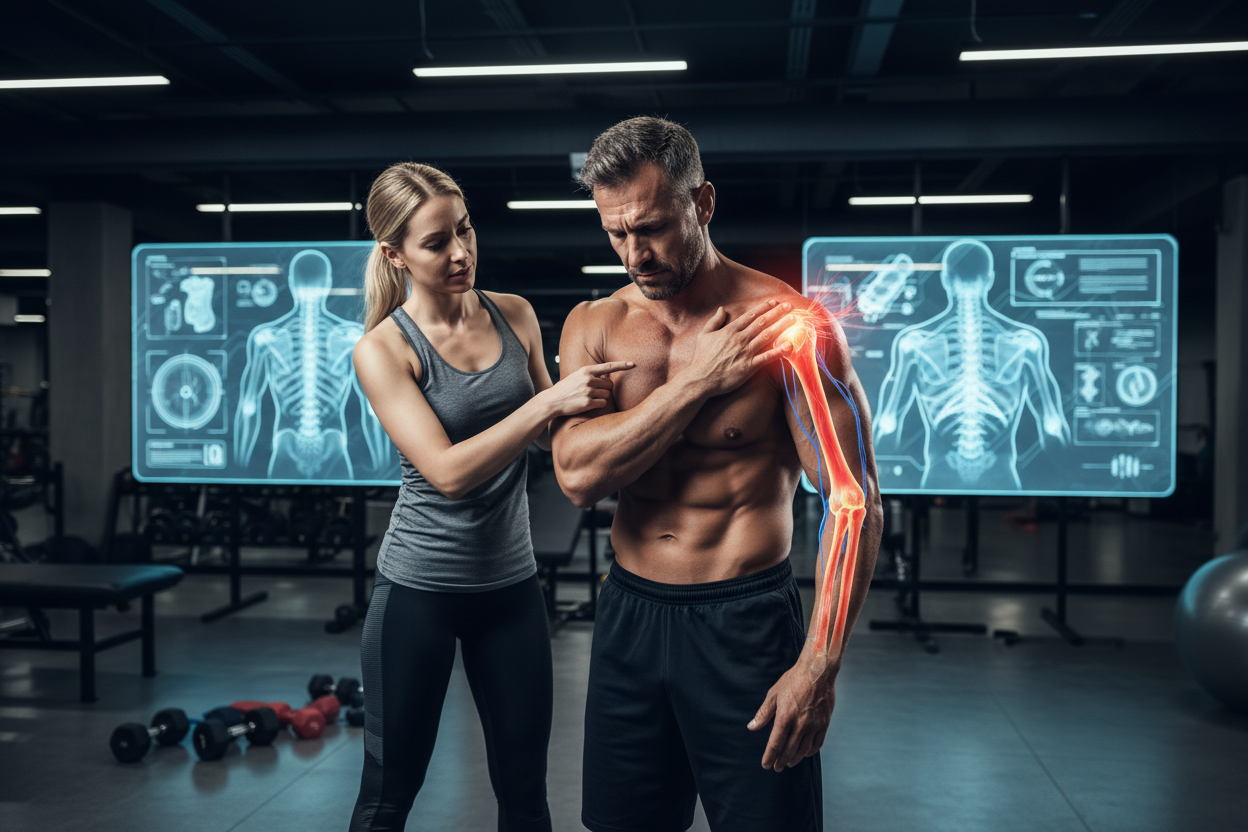
Pathologies of the Shoulder: A Comprehensive Guide to Recovery
The shoulder is an engineering marvel, offering a wider range of motion than any other joint in the human body. But there is a trade-off: this incredible mobility comes at the cost of stability. Whether you are an athlete or simply someone trying to lift groceries without wincing, understanding the complex pathologies of the shoulder is the first step toward reclaiming your movement.
Key Takeaways: Quick Summary
- Rotator Cuff Tears: The most common cause of pain, often resulting from repetitive overhead motion or acute trauma.
- Adhesive Capsulitis: Also known as "Frozen Shoulder," characterized by severe stiffness and restriction.
- Instability: Occurs when the head of the upper arm bone is forced out of the shoulder socket.
- Osteoarthritis: A degenerative condition wearing down the cartilage that cushions the joint.
- Impingement: Soft tissue gets compressed against bone during arm elevation.
Understanding the Anatomy of Vulnerability
To understand which condition affects the shoulder, you have to look at the mechanics. The shoulder is a ball-and-socket joint, but the socket (glenoid) is shallow. Think of it like a golf ball sitting on a tee. This design relies heavily on soft tissues—muscles, tendons, and ligaments—to keep everything in place.
When we discuss shoulder disorders, we are usually talking about a failure in this soft tissue support system or a degradation of the joint surfaces themselves. The balance between the deltoid pulling up and the rotator cuff pulling down is critical. When that balance is lost, pathology begins.
Soft Tissue Pathologies: The Usual Suspects
Rotator Cuff Tendinopathy and Tears
Among the various shoulder conditions, rotator cuff issues are prevalent. The rotator cuff isn't just one muscle; it's a group of four that stabilizes the humerus. Tendinopathy occurs when collagen breaks down due to chronic overload.
Unlike a sudden tear, this is often a slow burn. The tendon attempts to heal but fails due to continued stress, leading to a disorganized tissue structure that is weaker and painful. If ignored, this fraying can lead to a full-thickness tear.
Shoulder Impingement Syndrome
This is often the precursor to more severe shoulder pathology. It happens when the subacromial space (the gap between the rotator cuff and the bone above it) narrows. Every time you raise your arm, the tendon rubs against the acromion bone. It creates a vicious cycle: friction causes swelling, swelling reduces space, and reduced space causes more friction.
Structural and Degenerative Diseases
Osteoarthritis
While often associated with knees, diseases of the shoulder like osteoarthritis are debilitating. This involves the wearing away of the articular cartilage. Without this smooth gliding surface, the bone-on-bone friction leads to crepitus (that grinding sound), stiffness, and deep aching pain.
Adhesive Capsulitis (Frozen Shoulder)
This is one of the most frustrating disorders of the shoulder. The joint capsule—the connective tissue surrounding the joint—thickens and tightens. The process is poorly understood but often follows three stages: freezing (painful), frozen (stiff but less painful), and thawing (recovery). It can take up to two years to resolve fully.
Instability and Dislocation
Shoulder disorders list often includes instability, particularly in younger, active populations. If the ligaments are stretched or torn (often the labrum), the shoulder may slip out of the socket partially (subluxation) or completely (dislocation). Once the static stabilizers are compromised, the muscles have to work overtime to prevent recurrence, leading to fatigue and further injury risk.
My Personal Experience with Pathologies of the Shoulder
I’ve spent years analyzing biomechanics, but nothing teaches you about shoulder diseases quite like living through one. A few years back, I developed supraspinatus tendinopathy from excessive overhead pressing with poor scapular control.
The textbooks tell you about the "painful arc," but they don't describe the specific, nagging reality of it. It wasn't the heavy lifting that broke me; it was the mundane stuff. I vividly remember the sharp, electric pinch every time I tried to reach back for the seatbelt in my car. It was a very specific angle of internal rotation and extension that would just shut my arm down.
Rehab wasn't glamorous. It was months of doing "wall slides" and external rotations with a pathetic-looking 2-pound pink dumbbell. The hardest part was the ego check—feeling the wobble in my shoulder joint when holding a plank, realizing that my big "prime mover" muscles were strong, but the tiny stabilizers were shot. That specific feeling of instability, like the joint was just loosely hanging in the socket, is something you don't forget.
Conclusion
Navigating shoulder pathologies requires patience and a strategic approach. Whether you are dealing with degenerative shoulder diseases or acute injuries, the path to recovery almost always involves restoring the balance between mobility and stability. Don't push through the "bad" pain. Consult a specialist, respect the biology of healing, and build a foundation that lasts.
Frequently Asked Questions
Which condition affects the shoulder the most frequently?
Rotator cuff tendinopathy and impingement are generally considered the most common shoulder pathologies, particularly in adults over 40. They are often caused by age-related wear and tear combined with repetitive overhead activities.
What is the difference between shoulder disorders and shoulder diseases?
While the terms are often used interchangeably, "diseases" usually refers to systemic or degenerative conditions like rheumatoid arthritis or osteoarthritis. "Disorders" is a broader term that encompasses injuries, mechanical issues, and structural problems like instability or tears.
How do I know if my shoulder pain is serious?
If you experience sudden, sharp pain accompanied by a "pop," an inability to lift your arm, significant swelling, or deformation of the joint, seek medical attention immediately. These are signs of acute trauma requiring professional intervention.