Outdoor Mat Explained: Build Your Exterior Gym
Taking your workout to the driveway or patio is a fantastic way to break through a training plateau, but training on bare concrete is a fast track to ruined equipment and aching joints. Whether you are dropping heavy kettlebells or doing plyometrics in the sun, finding the right outdoor mat is the foundation of any functional exterior gym setup.
This guide will help you navigate the noise, avoid cheap foam knockoffs, and choose a surface that can actually survive the elements while protecting your gear.
Key Takeaways
- Material matters most: Vulcanized rubber is the gold standard for weather resistance and impact absorption.
- Thickness dictates usage: Opt for at least 3/4-inch thickness if you plan on dropping weights.
- Drainage is critical: Look for mats with channeled undersides to prevent water pooling and mold.
- UV resistance: Ensure your mat is UV-treated to prevent crumbling and fading in direct sunlight.
- Weight is a feature: A heavy mat won't curl at the edges or blow away during a storm.
Choosing the Right Material for the Elements
When you place a floor mat outside, it faces a completely different set of challenges than your basement gym flooring. Temperature swings, UV rays, and moisture will destroy standard EVA foam within a single season.
Rubber vs. Foam
For true exterior matting, vulcanized rubber is non-negotiable. Unlike standard recycled rubber, vulcanized options are non-porous. This means your outdoor weather mats won't absorb rain, sweat, or morning dew. Avoid puzzle-piece foam mats at all costs; they will warp in the sun and separate during dynamic movements like burpees or sled pushes.
Sizing Your Exterior Space
Planning your outdoor footprint requires a bit of strategy. Unlike an indoor room with clear boundaries, a patio or driveway setup can be as expansive or compact as you need.
Driveways, Patios, and Decks
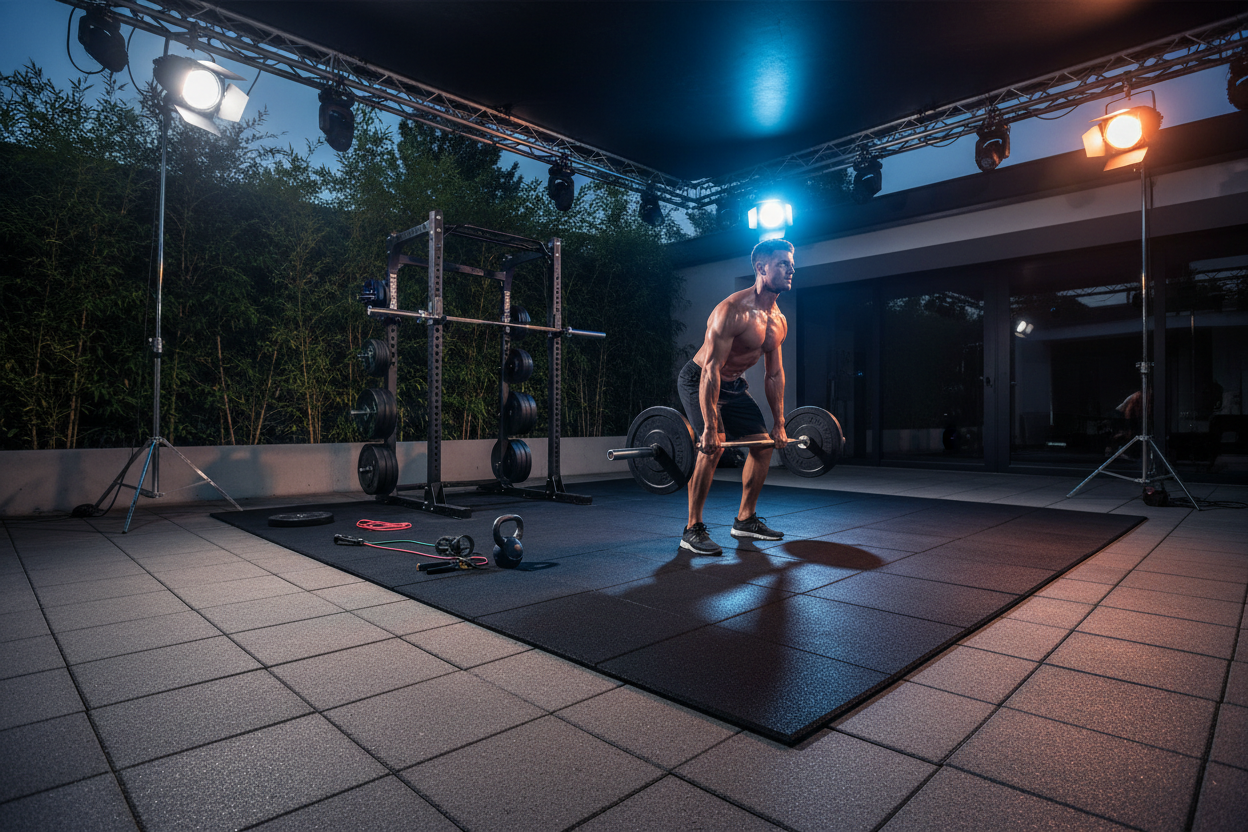
If you are setting up a permanent lifting station, a large outdoor floor mat (typically 4x6 feet or larger) provides ample space for a barbell and your stance. For more dynamic, mobile workouts, you might prefer a modular outdoor ground mat system that you can pack away. Remember to measure your clearance; if you are lifting on a deck, ensure the underlying structure can support both the weight of your exterior floor mats and your heavy lifts.
Durability and Maintenance
Investing in a floor mat outdoor setup means committing to a little bit of maintenance to extend its lifespan.
Weathering the Storm
A high-quality outdoor utility mat is designed to take a beating, but debris can still cause issues. Sweep your floor mat for outdoor use weekly to prevent small rocks from embedding into the rubber. If your exterior mat doesn't have built-in drainage channels, you may need to occasionally lift it to let the concrete underneath dry out.
From Our Gym: Honest Take
We've tested dozens of surfaces in our facility's back lot, and I can tell you firsthand that not every outdoor floor mats are created equal. Last summer, I set up a heavy kettlebell station on rough asphalt using a dense outdoor floor pad. The 3/4-inch vulcanized rubber completely neutralized the uneven ground, and my chalked grip stayed secure because the mat didn't shift a single millimeter during heavy swings.
However, here is the honest caveat: solid black rubber gets incredibly hot in the afternoon sun. If you are doing floor work or stretching on your at home outdoor mats, you will absolutely need to lay down a towel or train in a shaded area. It's a minor trade-off for the extreme durability, but something most product pages conveniently forget to mention.
Frequently Asked Questions
Can I leave my outdoor mat outside year-round?
Yes, provided it is made of high-density, non-porous vulcanized rubber and is UV-treated. Standard gym mats will degrade, but purpose-built outdoor floor mats are engineered to withstand snow, rain, and intense heat without crumbling.
How thick should an exterior floor mat be?
If you are doing yoga or bodyweight exercises, 8mm to 3/8-inch is sufficient. However, if you are dropping dumbbells or kettlebells, you need a minimum of 3/4-inch thickness to protect both your equipment and the concrete below.
How do I clean my outdoor ground mat?
Maintenance is simple. Use a stiff-bristled broom to remove dirt and leaves. For a deeper clean, a mild dish soap and a hose work perfectly. Avoid harsh chemicals or power washers on high settings, as they can degrade the rubber's surface over time.