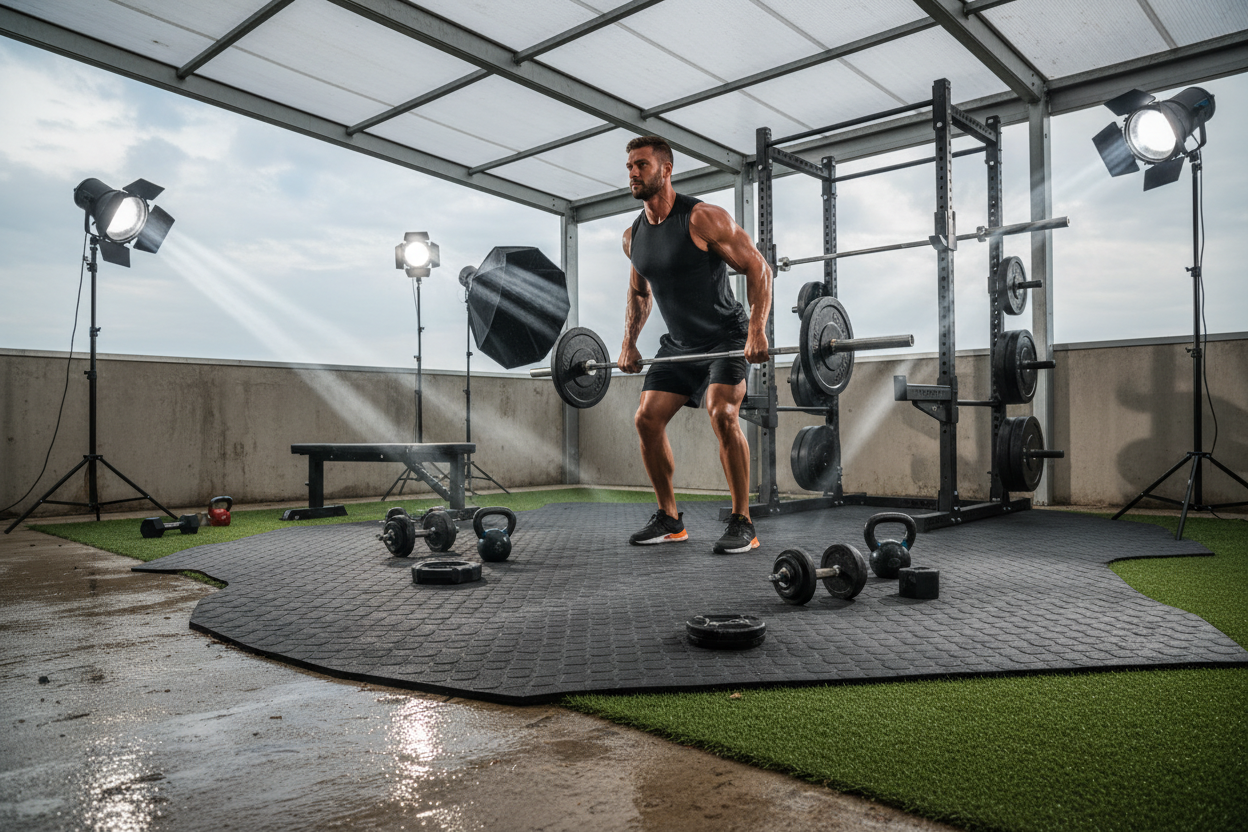
Taking your workout to the driveway or patio is liberating—until you have to do burpees on hot concrete or accidentally drop a kettlebell on your wooden deck. If you want to train outside without destroying your joints or your property, you need a dedicated, weather-resistant surface. Investing in an outdoor all weather mat is the single best way to upgrade your exterior training space and keep your gear safe.
Whether you are building a complete garage gym that spills out into the driveway or just need a reliable spot for morning yoga on the balcony, this guide covers exactly what you need to know before rolling out your new flooring.
Key Takeaways
- Impact Protection: Cushions your joints during high-impact movements and protects underlying concrete or wood from dropped weights.
- Element Resistance: UV-resistant and waterproof materials prevent cracking, fading, and mold growth.
- Thickness Matters: Ideal thickness ranges from 8mm for general fitness to 3/4-inch for heavy lifting.
- Low Maintenance: Requires significantly less upkeep compared to standard indoor gym flooring.
Why Your Driveway Needs Specialized Flooring
The Problem with Standard Rubber
It is tempting to drag your indoor yoga mat or cheap foam puzzle tiles outside, but standard indoor gym flooring acts like a sponge. When exposed to morning dew or heavy rain, porous rubber absorbs moisture, leading to mold, foul odors, and rapid degradation. Furthermore, non-UV treated mats will quickly bake, harden, and crumble in the summer sun.
Built for the Elements
A true outdoor weather mat is specifically vulcanized. This manufacturing process makes the rubber completely non-porous, allowing it to repel water and withstand extreme temperature fluctuations. You can leave it out in a blizzard or a heatwave, and it will retain its shock-absorbing properties.
Crucial Buying Specs for Exterior Gyms
Thickness and Density
Your training style dictates your mat thickness. If your routine consists mostly of bodyweight exercises, stretching, or light dumbbell work, an 8mm thick mat provides plenty of joint relief. However, if you are doing heavy kettlebell swings or Olympic lifts, you need at least a half-inch to 3/4-inch of high-density, vulcanized rubber to prevent shock from transferring to your concrete patio.
Drainage and Texture
Look for a textured surface—like a diamond-plate or wire-mesh finish. When it rains, smooth rubber becomes a dangerous ice rink. Some premium mats also feature channeled undersides that allow rainwater to flow underneath, preventing puddles from forming around your workout zone.
From Our Gym: Honest Take
We tested a 4x6 foot heavy-duty outdoor mat on our south-facing concrete patio for six months, leaving it exposed through blistering summer heat and heavy autumn rain. The grip on my cross-training shoes was phenomenal during lateral bounds, and water pooled and evaporated without leaving any funky, stagnant smells.
However, I have to be honest about one drawback: heat retention. The black rubber gets incredibly hot in direct afternoon sun. I had to throw a towel down for any bare-handed floor work like push-ups or planks. If you train at 2 PM in July, I highly recommend placing your mat in a shaded area or opting for a lighter color fleck if the manufacturer offers it.
Frequently Asked Questions
Can I leave my outdoor all weather mat outside year-round?
Yes. High-quality vulcanized rubber mats are designed to survive freezing winters and hot summers without cracking or curling at the edges.
How do I clean an outdoor weather mat?
Maintenance is incredibly simple. A quick hose down and a stiff-bristle push broom will remove dirt and debris. For chalk and sweat buildup, a mixture of warm water and mild dish soap works perfectly.
Will it blow away in high winds?
It depends on the thickness and size, but generally, no. A standard 4x6 foot mat at 1/2-inch thickness weighs over 50 pounds. For extreme weather areas, you can use outdoor-grade double-sided tape for extra security.