No Spotter? Safe Resistance Training for Women Over 60 at Home
I recently watched a neighbor, a woman in her early 60s, walk into a local big-box gym, stare at the sea of complex cable machines and aggressive teenagers, and turn right back around. It wasn't that she lacked the motivation to get strong; she just didn't want to risk a trip to the ER because some 19-year-old was hogging the only squat rack with safety bars. resistance training for women over 60 is often marketed as something that should be 'pink and light,' but the reality is that building bone density and muscle requires lifting real weight. You just need to do it without the constant fear of getting pinned under a bar.
- High-traction rubber flooring prevents the slips that lead to catastrophic falls.
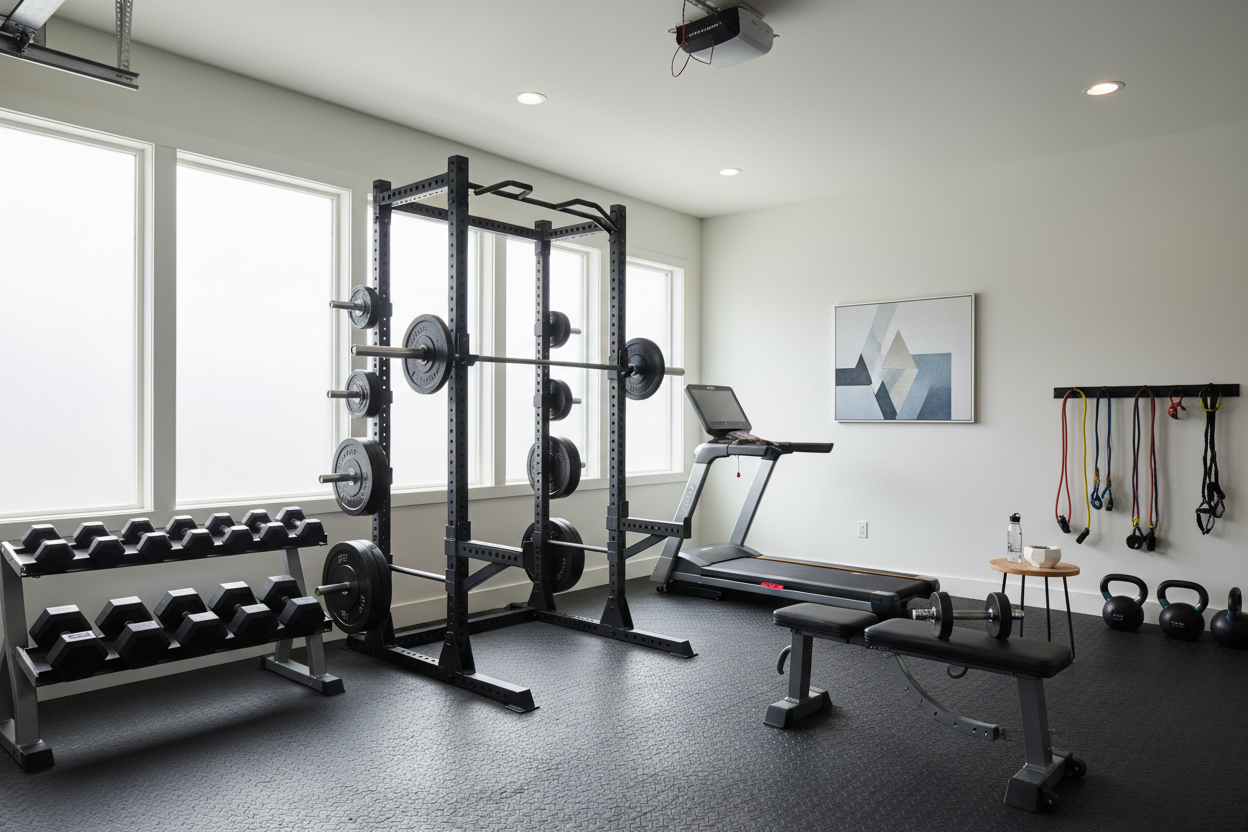
- Adjustable safety pins in a power rack act as a mechanical spotter that never gets distracted.
- Adjustable dumbbells are safer to 'bail' from than a fixed barbell during solo sessions.
- Grip aids like lifting straps ensure your back and legs get a workout even if your hands are tired.
The Real Danger Isn't Heavy Weight—It's Your Setup
Commercial gyms are often designed for the young and the invincible. They have slick floors, poorly maintained equipment, and a culture that prizes intensity over safety. For many, the intimidation factor isn't about the ego; it's about the physical risk. If you are training alone, the environment is your first line of defense. You can't afford a 'oops' moment when there isn't a staff member within earshot.
Building a home gym allows you to dictate every variable. You choose the lighting, you choose the equipment spacing, and you choose the safety specs. When you remove the chaos of a public gym, you can actually focus on the lift itself. Most injuries in the 60+ demographic don't happen because a weight was 'too heavy'—they happen because of a loss of balance or a piece of equipment failing. A controlled home environment is the only way to train with the intensity required to see real results without the unnecessary gamble.
Building a 'Bail-Friendly' Lifting Zone
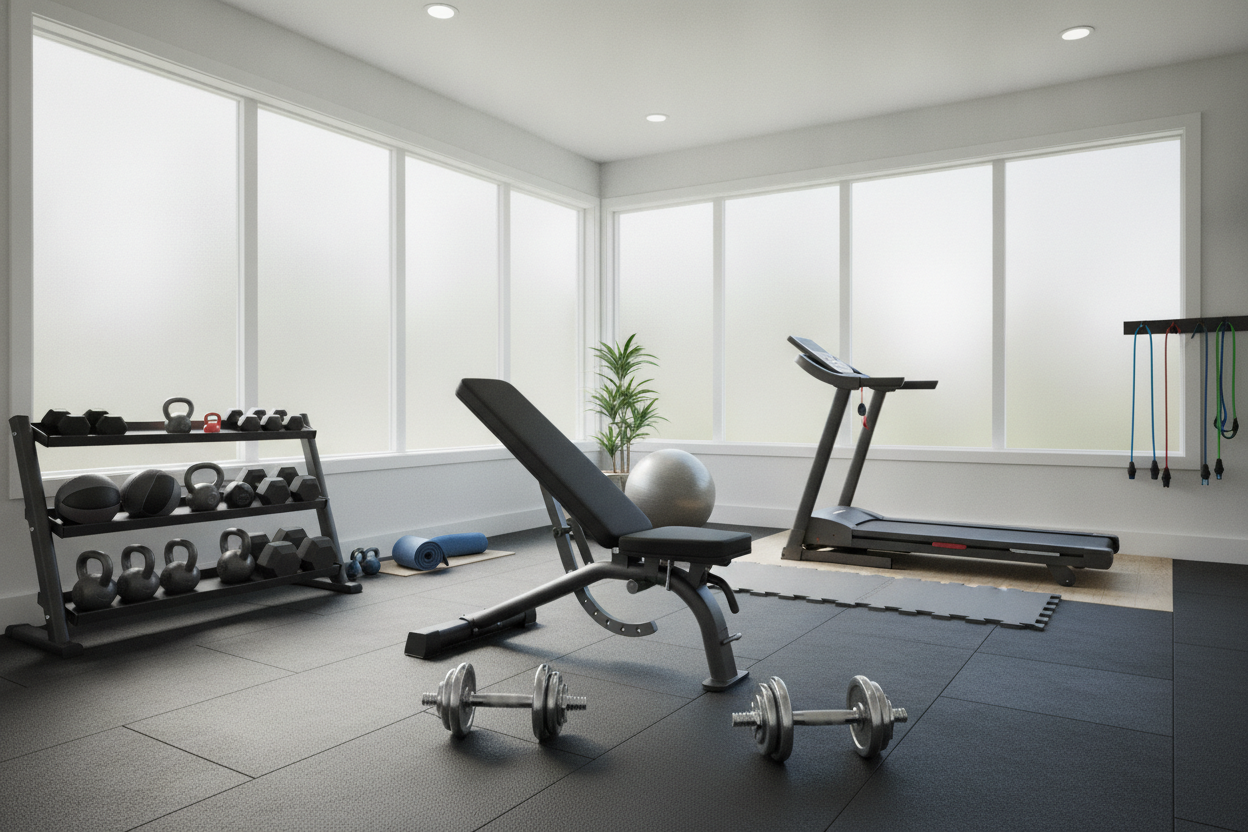
Before you buy a single plate or dumbbell, look at your floor. I've seen too many people try to lift on plush basement carpet or slick garage concrete. Carpet bunches up and creates a trip hazard; concrete gets slippery the second a drop of sweat or humidity hits it. You need a foundation that grips back. I always recommend installing heavy-duty gym flooring for home workouts before you bring in the heavy metal.
A proper 7mm to 10mm rubber mat does two things: it protects your joints by absorbing micro-vibrations, and it gives your lifting shoes something to bite into. If you lose your balance during a lunge, you want a floor that helps you recover, not one that turns into a slide. Furthermore, a 'bail-friendly' zone means you can drop a dumbbell without cracking the foundation of your house. That mental peace of mind lets you push closer to your limits because you know the floor can handle the impact if you have to let go.
The Only Gear You Actually Need to Lift Alone
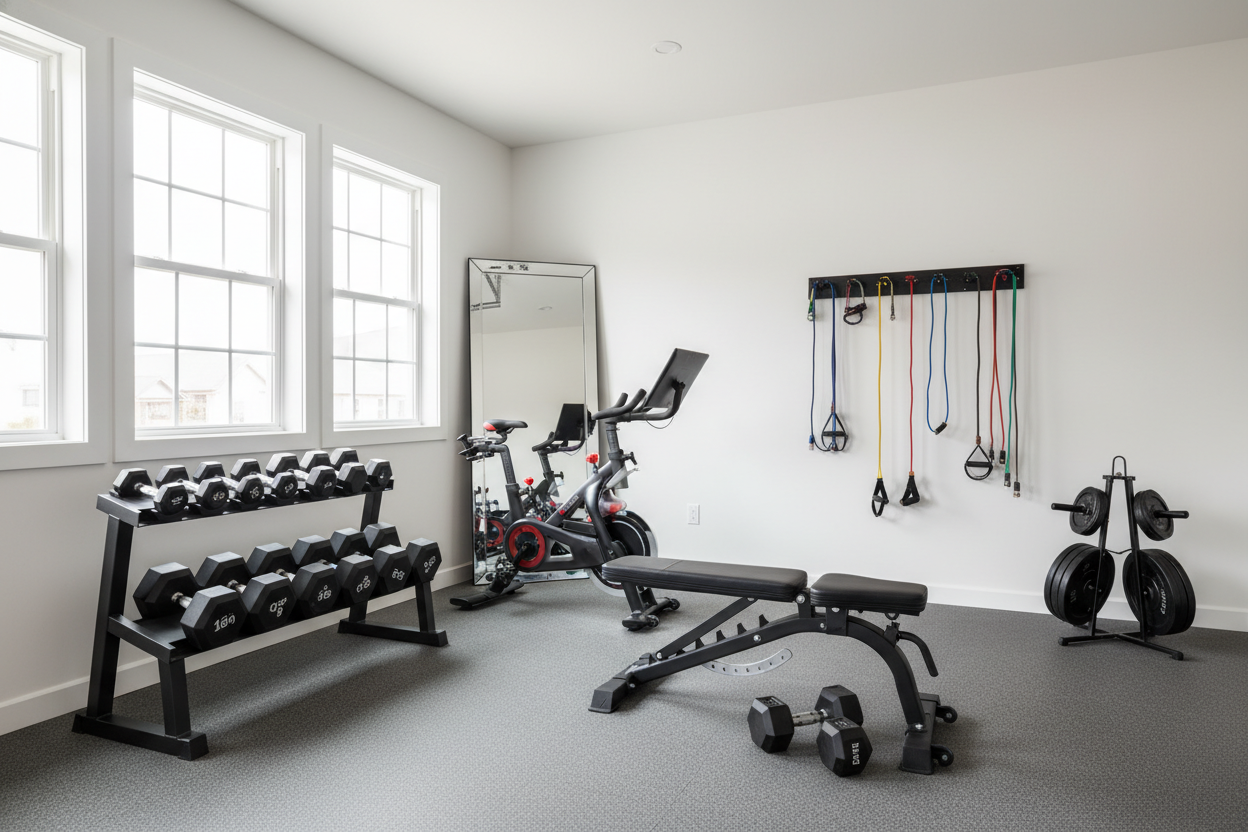
You don't need a 20-station cable jungle. You need three things: a solid bench, adjustable weights, and a rack. When you're looking for reliable home strength equipment, prioritize the weight rating over the 'extra features.' A bench that wobbles when you sit on it is a total non-starter. Look for a tripod-style bench or one with a wide base that won't tip if you sit on the very edge.
For the weights, adjustable dumbbells are the gold standard for home use. They save space and, more importantly, they are easy to drop safely if a rep goes south. However, if you want to move into barbell work, a power rack is mandatory. Never, ever bench press or squat with a barbell at home without a rack that has adjustable safety pins. If you're following a guide to equipment for resistance training, you'll notice that safety arms are the difference between a failed rep and a trip to the hospital. Set those pins just an inch below your chest on the bench press; if you can't get the bar up, you simply set it down on the steel pins and crawl out from underneath.
Protecting Your Grip When Lifting Heavy
As we age, grip strength often declines faster than our leg or back strength. It’s incredibly frustrating to feel like your legs have five more reps in them, but your fingers are literally uncurling from the bar. This is where people usually give up and go back to the light weights, which is a mistake. Instead, you should use useful strength training accessories to bridge the gap.
Lifting straps are not 'cheating.' They are a tool that allows you to continue strength training women over 60 without being limited by arthritis or hand fatigue. Wrap them around the bar or dumbbell handle to lock your hand in place. This allows you to focus entirely on the target muscle. I also suggest keeping a block of gym chalk or a small bottle of liquid chalk nearby. Keeping your palms dry is a simple, low-tech way to ensure a weight doesn't slip out of your hands mid-set.
How to Push Hard Without a Spotter Hovering
The biggest myth in senior fitness is that you should never strain. If you don't challenge the muscle, it won't grow. But how do you strain safely alone? You use 'limited range' movements and dumbbell variations. For example, instead of a traditional bench press, do a floor press. By lying on the floor, the ground acts as a natural stop for your elbows, making it impossible to get pinned. It’s a brilliant way to build chest and tricep strength with zero risk.
Another tip: stop handing seniors 2lb weights and start using the 'step-off' method with dumbbells. If a squat feels unstable, you can simply open your hands and let the dumbbells fall to your sides. You can't do that with a barbell on your back. By choosing exercises that have an easy 'exit strategy,' you can train with the intensity needed to fight osteoporosis and sarcopenia while remaining completely in control of your safety.
Is it safe to lift heavy if I have osteoporosis?
Usually, yes—in fact, it's one of the best ways to improve bone density. However, you must focus on 'axial loading' movements like squats and presses with perfect form. Always clear it with your doctor first, but the goal should be to safely increase the load over time.
What is the most important safety feature for a home gym?
Mechanical safety stops. Whether it's the pins in a power rack or the 'spotter arms' on a squat stand, these are the only things that will catch a falling barbell. If you are lifting alone, they are non-negotiable.
How often should a woman over 60 lift weights?
Two to three times a week is the sweet spot. Recovery takes longer as we get older, so giving your muscles 48 to 72 hours of rest between sessions is just as important as the lifting itself.