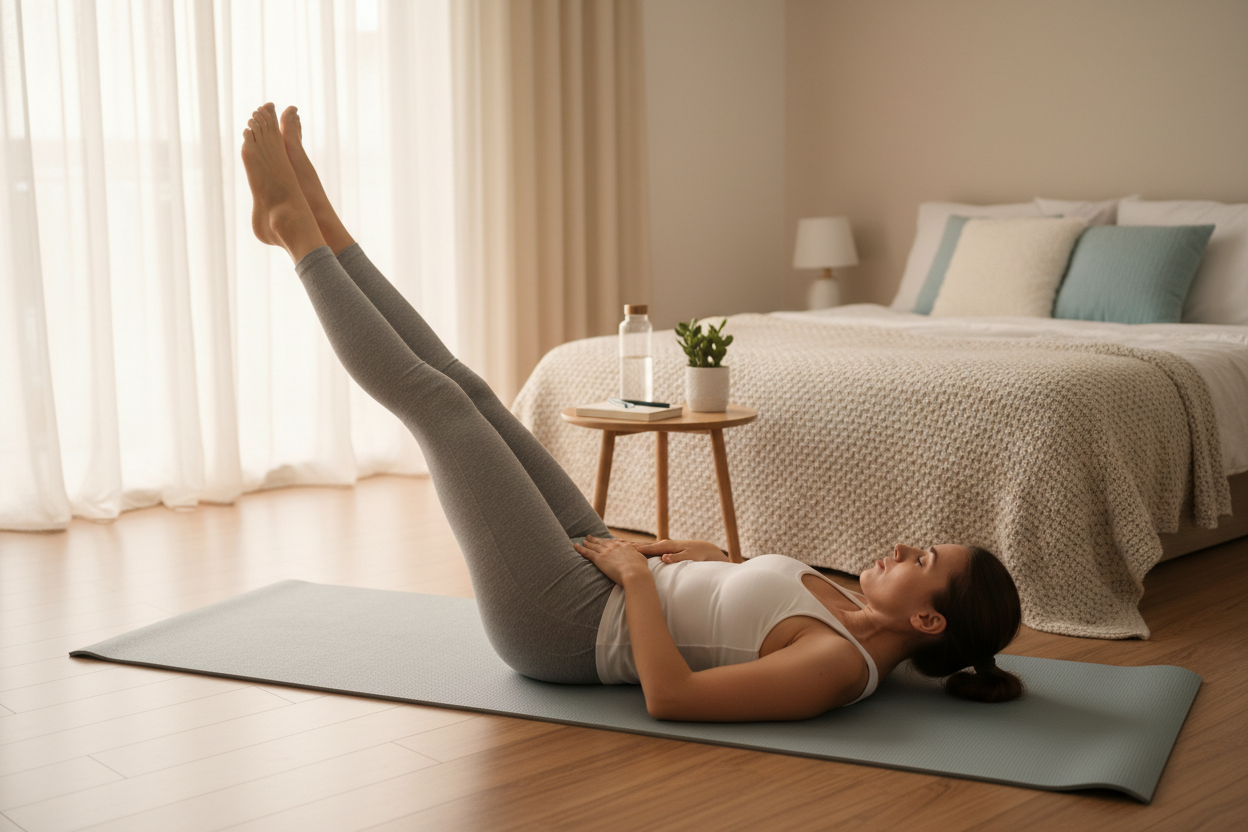
No Gym Required: The Ultimate Guide to Sculpting Glutes from Your Living Room Floor
You do not need a squat rack, a leg press machine, or a heavy barbell to build strong, shapely glutes. While heavy lifting has its place, floor exercises for glutes are arguably the most effective way to isolate the muscle group, establish a mind-muscle connection, and correct imbalances without putting excessive stress on your spine or knees. The most effective approach involves high-repetition sets focusing on time under tension and peak contraction at the top of every movement.
I learned this lesson the hard way a few years ago. After a minor lower back injury sidelined me from heavy deadlifts, I felt frustrated and worried I’d lose all my progress. I was forced to retreat to a yoga mat in my living room. I started experimenting with high-volume floor glute exercises, slowing down the tempo and really squeezing at the top of the movement. To my surprise, the muscle activation was more intense than what I felt during my heavy compound lifts. My glutes were on fire in a way weights hadn’t achieved in years, and my lower back pain actually subsided because I was strengthening the support system without the compressive load.
Why Floor Work is a Game Changer
Many people underestimate the power of bodyweight movements, assuming that "floor work" is just for warm-ups or beginners. This is a massive misconception. A well-structured floor glute workout targets the glutes from angles that standing exercises often miss. When you squat, your quads and lower back take over a significant portion of the load. When you are on the floor, you can manipulate your leverage to ensure the gluteus maximus, medius, and minimus are doing 90% of the work.
Floor bum exercises are particularly good at targeting the gluteus medius—the upper/side part of the butt that gives it a round shape and stabilizes the hips. Neglecting this area is a common reason for knee pain and poor posture. By taking gravity and heavy loads out of the equation, you can focus entirely on the contraction.
The Essential Floor Routine
To get the most out of these movements, focus on form over speed. Rushing through these will only shift the tension to your lower back or hamstrings. We want the fire in the glutes.
The Glute Bridge and Its Variations
The bridge is the foundational movement for any floor glute workout. Lying on your back with knees bent and feet flat, peel your hips off the floor by driving through your heels. The magic happens at the top. Don't just lift your hips; try to posterior pelvic tilt (tuck your tailbone) slightly as you rise. This prevents your lower back from arching and ensures the glutes are fully shortened.
Once the standard bridge feels too easy, switch to the single-leg variation. This is one of the premier floor butt exercises for correcting asymmetry. If you notice your left side is weaker than your right, the single-leg bridge will expose it immediately and help you fix it.
Quadruped Hip Extensions (Donkey Kicks)
Get on your hands and knees. This position offers a unique range of motion. Keeping your knee bent at 90 degrees, drive your foot up toward the ceiling. Imagine you are trying to stomp a footprint on the roof. The key here is to keep your core braced tight. If your lower back sags or arches every time you kick up, you aren't using your glutes; you're using your spine.
These floor exercises for bum toning are highly effective when done with high volume. Try doing 20 reps on one side without letting your knee touch the floor between reps. The constant tension creates metabolic stress, which is a key driver for muscle growth.
Fire Hydrants and Side-Lying Abductions
We cannot talk about floor exercises for buttocks shaping without addressing width. The gluteus medius is responsible for moving your leg away from your body. Fire hydrants involve lifting your knee out to the side while in a tabletop position. It looks deceptively simple, but after 15 reps, the burn is undeniable.
Alternatively, lie on your side for leg raises. Turn your toe slightly downward to disengage the hip flexors and isolate the side glute. These glute floor exercises are crucial for hip health and adding that "shelf" look to the upper glutes.
Structuring Your Routine for Results
Consistency beats intensity when it comes to floor work. Since you aren't tearing down muscle fibers with heavy iron, you can perform these floor workouts for glutes more frequently. A routine performed 3 to 4 times a week is ideal. Aim for 3 sets of 15 to 25 reps for each exercise. Rest periods should be short—around 30 to 45 seconds—to keep the intensity high.
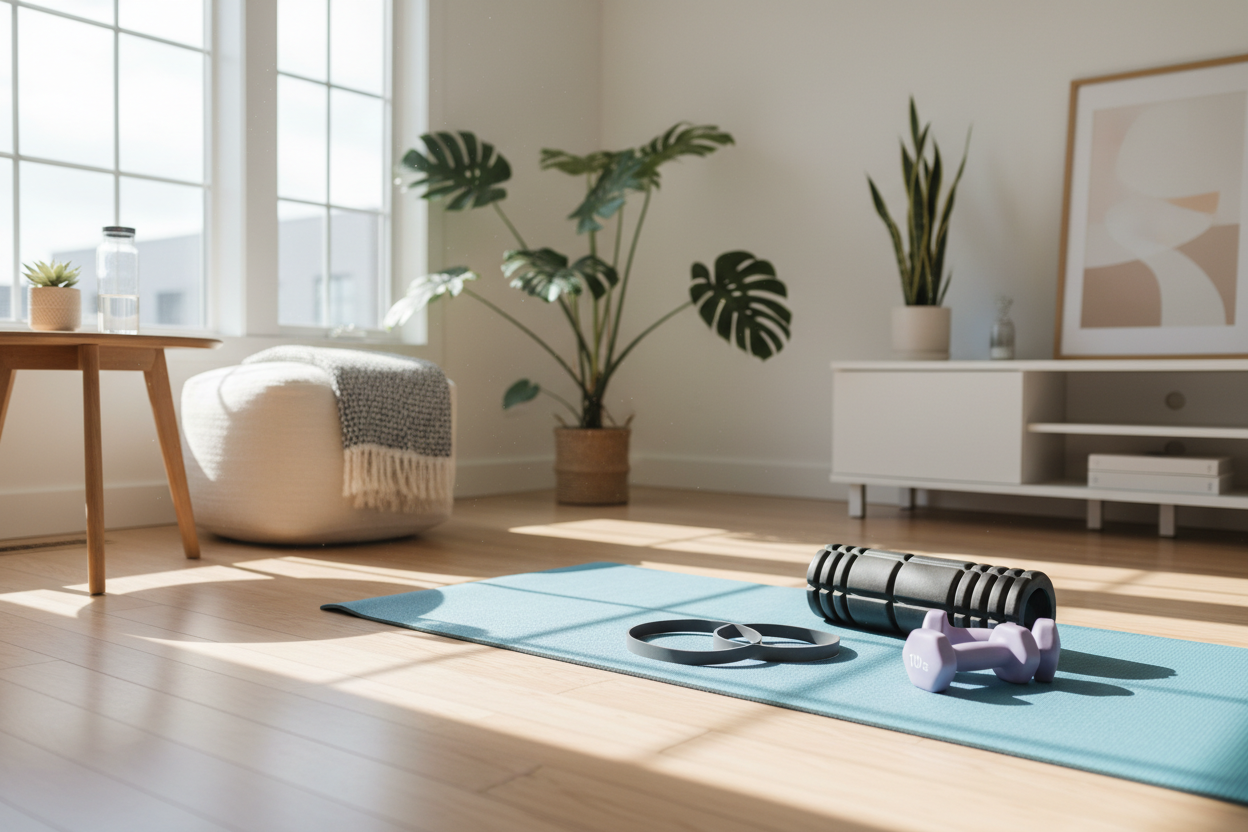
If you find the bodyweight versions becoming too easy, you don't necessarily need weights. Adding a simple resistance loop band above your knees can drastically increase the difficulty of almost all floor exercises for the bum. The band forces you to constantly push your knees outward, engaging the glute medius throughout the entire workout.
Common Pitfalls to Avoid
The most frequent error in floor exercises for glutes is using momentum. Swinging your leg up might feel like you are working harder, but you are actually robbing the muscle of the tension it needs to grow. Control the eccentric phase (the way down). Lower your leg slowly. This control is where the strength is built.
Another issue is lack of core engagement. Think of your torso as a concrete pillar. It shouldn't move. Only your hips should be mobile. If your torso is twisting or your back is arching, reset your position. Quality reps will always yield better results than sloppy high-volume sets.
Frequently Asked Questions
Can I really build muscle with just floor exercises?
Yes, especially if you are a beginner or intermediate trainee. While heavy weights are useful for maximum strength, floor exercises create hypertrophy (growth) through metabolic stress and high volume. To continue growing, you must progressively make the exercises harder by increasing reps, slowing down the tempo, or adding resistance bands.
How long does it take to see results from a floor glute workout?
If you are consistent with your routine 3-4 times a week and eating enough protein, you can expect to feel strength differences within 2 weeks and see visible changes in shape within 6 to 8 weeks. Glutes are large muscles and respond relatively quickly to high-frequency training.
Why do I feel these exercises in my lower back instead of my glutes?
This usually indicates that your core isn't engaged or you are hyperextending (arching) your back to get the leg higher. Reduce your range of motion; only lift your leg as high as your glutes can take it without your back moving. Focusing on a posterior pelvic tilt (tucking your tailbone) can also fix this immediately.