My Barebones Setup Taught Me the Real Rules of Strength Training
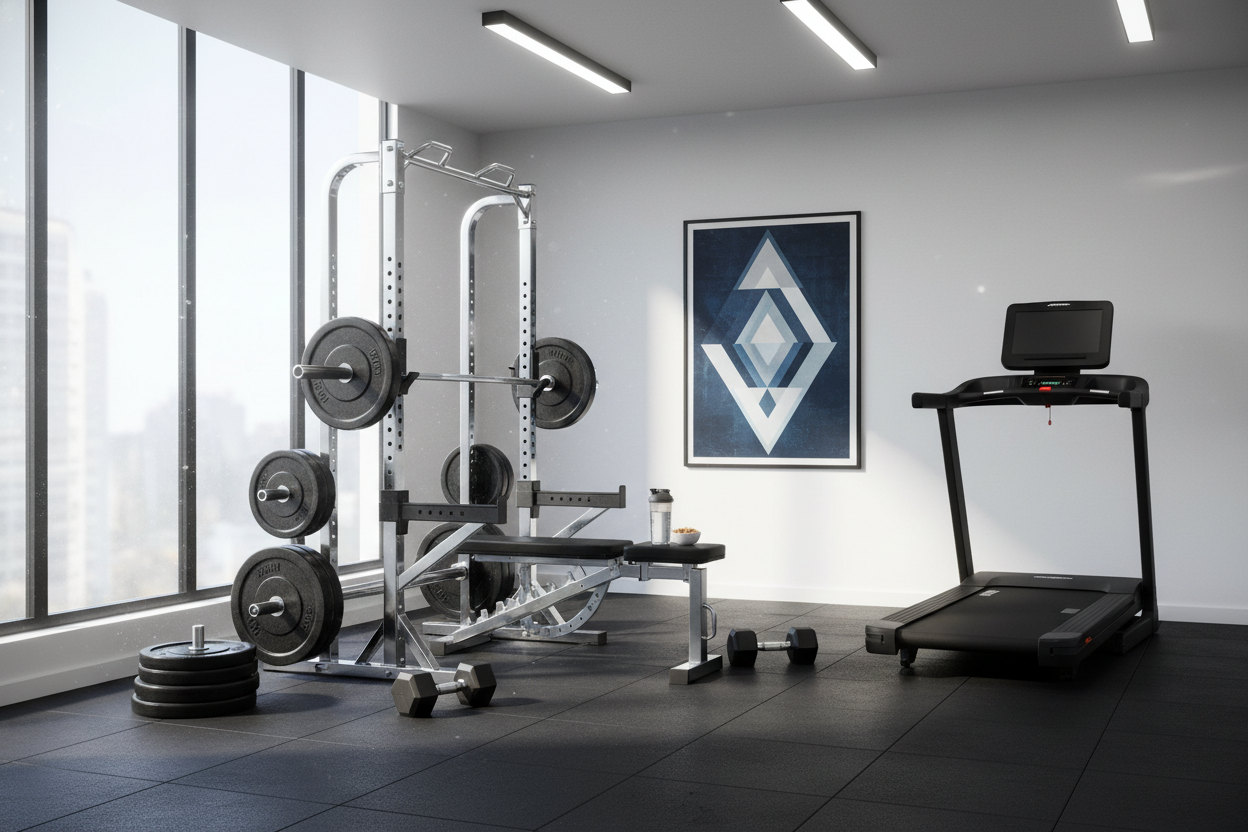
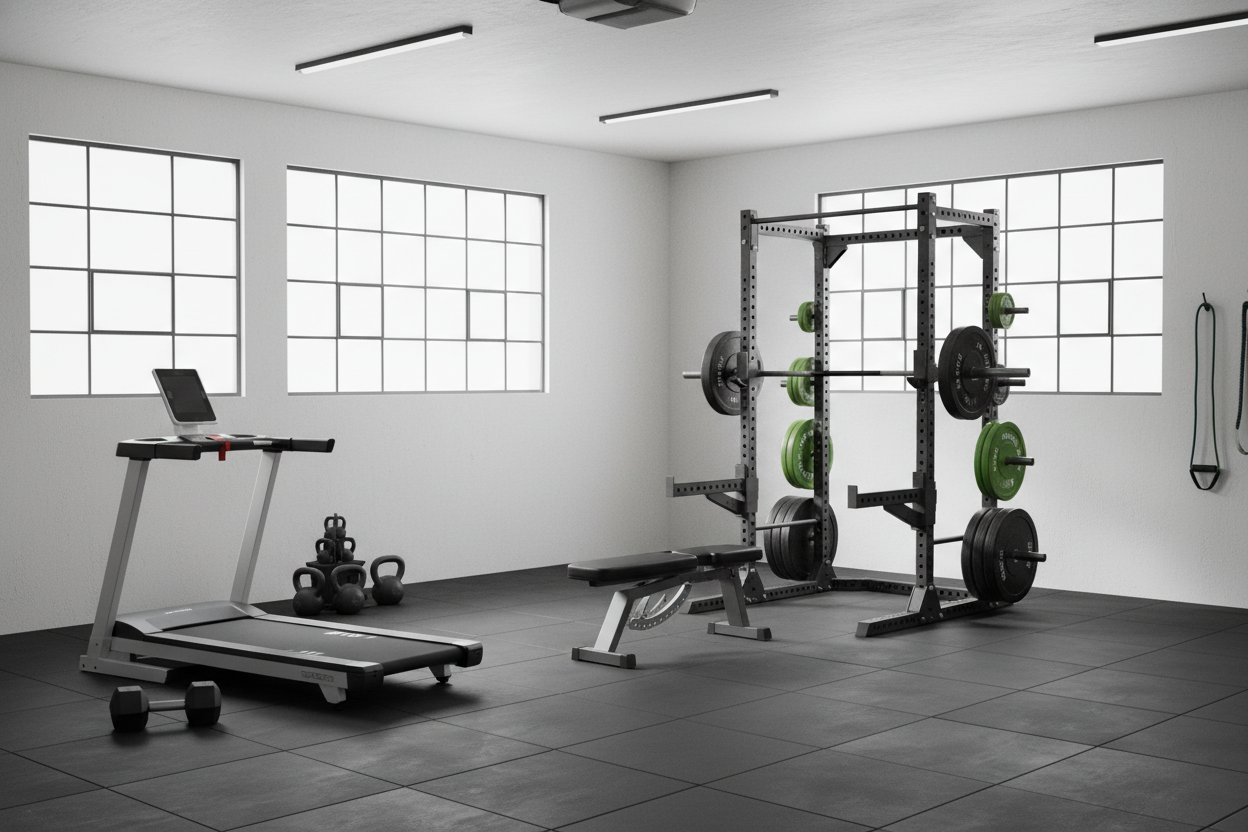
I remember the day I finally cancelled my $120-a-month membership at the 'luxury' club with the eucalyptus towels and the thirty different chest press machines. I bought a used power rack, a beat-up 20kg bar, and 300 lbs of rusty iron plates. I thought I was ready to dominate. I wasn't. Within three weeks, my ego was bruised and my lower back was barking. The rules of strength training change the second you move from a guided machine to a piece of cold, unyielding steel.
- Machines provide stability; barbells demand it.
- If you don't track your lifts, you aren't training, you're just exercising.
- Accessories must solve specific mechanical failures.
- Rest is a discipline, not a luxury.
You Can't Hide Weaknesses Without Machines
In a commercial gym, you can be 'strong' while having the stability of a wet noodle. Leg presses, Smith machines, and selectorized rows handle the stabilization for you. They allow you to isolate around mobility issues. If your ankles are tight, you just move your feet higher on the sled. If your core is weak, the seat back on the shoulder press keeps you upright. You’re essentially training in a padded room where the equipment won’t let you fall.
A standard barbell is a brutal truth-teller. The moment I started squatting in my garage, I realized my '400-lb leg press' meant nothing. Without a machine to balance the load, my knees caved and my chest collapsed. The barbell immediately exposed my lack of thoracic mobility and my dead glutes. You cannot hide a weak link when you are the only thing between a heavy bar and the floor. You have to earn every inch of movement by fixing your bracing and your positioning, things a machine-heavy routine lets you ignore for years.
Rule One: Gravity Doesn't Care About Your Ego
Transitioning to heavy free weights taught me that strength training rules are really just the laws of physics applied to your joints. On a cable machine, you can use momentum to cheat a few extra reps. Gravity is more honest. If you lose your line of force on a 315-lb back squat, that bar is going to pin you or dump you. There is no 'cheating' the lockout on a heavy deadlift without hitching and potentially blowing a disc.
This forced me to respect mechanical tension over 'the pump.' I had to learn how to create internal tension before even touching the bar. If your feet aren't screwed into the floor and your lats aren't packed, you've already lost the rep. You have to survive the weight before you can move it. This realization shifted my focus from 'how much can I move?' to 'how well can I move this weight?' because, in a garage with no spotter and no machines, bad form has immediate, painful consequences.
Rule Two: Progression Must Be Ruthlessly Tracked
When you have access to sixty different machines, it’s easy to confuse 'novelty' with 'progress.' You feel sore because you did a new movement, not because you actually got stronger. In my garage, I quickly realized that because I only use 4 pieces of strength training equipment, I couldn't rely on variety to keep things interesting. I had to rely on the numbers. Adding 2.5 lbs to the bar became the only metric that mattered.
I started keeping a physical logbook on my workbench. Every set, every rep, and every 'RPE' (Rate of Perceived Exertion) got recorded. If I did 225 for 5 last week, I had to do 225 for 6 or 230 for 5 this week. There was no 'switching it up' to a different chest press to hide the fact that I wasn't getting stronger. Limited gear forces a level of focus that most people never achieve. You become obsessed with the micro-loading and the linear progression because that bar is the only thing you've got. If the numbers in the book aren't going up, you're just burning calories, not building a base.
Rule Three: Auxiliary Work Needs a Job Description
In my commercial gym days, my 'accessory work' was just a random collection of whatever looked fun. I’d do three sets of curls, some cable flyes, and maybe some lateral raises just to get a pump before hitting the showers. In a home gym, every rep takes time and energy you could be using for recovery. I had to stop doing random sets and start choosing movements that actually supported my main lifts.
Now, my strength training accessories are selected based on where I fail. If my bench press stalls mid-way, I’m hitting triceps with floor presses or close-grip work. If my deadlift is weak off the floor, I’m doing deficit pulls. I stopped chasing the 'burn' and started chasing the 'fix.' Every secondary movement must have a job description. If a movement doesn't help me squat, bench, or pull more weight, it gets cut from the program. This efficiency is what separates people who look like they lift from people who actually move heavy weight.
Rule Four: Having a Gym at Home is a Recovery Trap
The biggest danger of a garage gym isn't the heavy weights; it's the proximity. When your rack is ten feet from your kitchen, the temptation to 'just do a quick set' on your off days is massive. I fell into this trap early on, hitting heavy singles on a Tuesday when I was supposed to be resting. I thought more work equaled more gain. I was wrong. I ended up with a nagging case of tendonitis in my elbows that took three months to clear.
Muscles don't grow in the garage; they grow while you're sleeping or sitting on the couch. Walking away from the gym is a discipline in itself. You have to treat your rest days with the same intensity as your heavy days. I had to learn to shut the garage door and leave the lights off. Just because the equipment is there doesn't mean you should be using it 24/7. Learning to manage that 'recovery debt' is the difference between a three-year lifting career and a thirty-year one.
Do These Laws Apply to Every Setup?
You might think these rules only apply if you're chasing a 500-lb squat, but they are universal. Whether you are using a barbell, sandbags, or heavy kettlebells, the principles of mechanical tension and progressive overload remain the same. While not all forms of strength training actually created equal in terms of absolute peak power, the mental discipline required to progress on a limited setup is the same across the board.
If you trade your barbell for a pair of 24kg kettlebells, you still have to track your reps. You still have to fix your mobility. You still have to resist the urge to overtrain. A barebones setup doesn't limit your results; it simplifies the path by removing the distractions. It forces you to stop looking for the 'perfect' machine and start looking at the person in the mirror.
FAQ
Is a barbell better than machines for beginners?
Usually, yes. It forces you to develop the stabilizing muscles and core strength that machines ignore. However, the learning curve is steeper, so start with an empty bar and focus on technique over weight.
How often should I change my strength program?
Stop changing it every three weeks. Pick a proven program (like Starting Strength or 5/3/1) and stick to it for at least six months. Consistency beats 'muscle confusion' every single time.
What is the most important piece of gear for a home gym?
A solid power rack with safety pins. It allows you to push yourself to failure on squats and bench presses without needing a spotter. Don't cheap out on your safety.
Do I really need to track every workout?
Yes. Your memory is a liar. You will convince yourself that you did more weight or better reps than you actually did. Write it down so you have cold, hard data to look at when you hit a plateau.