My Back Hated Barbells, So I Tried Machine Compound Exercises
The morning after a heavy squat session used to involve a specific ritual: rolling out of bed sideways because my lower back felt like it had been fused together with cheap wood glue. I spent years convinced that if I wasn't pinned under a barbell, I wasn't really training. I was wrong, and my joints were paying the price for my ego.
I finally hit a breaking point when a 315-pound squat turned into a 'good morning' because my core gave out before my legs did. That's when I shifted my focus to machine compound exercises. It wasn't a retreat; it was a tactical pivot that finally allowed me to train my muscles instead of just testing my luck.
Quick Takeaways
- Machines eliminate the 'stabilization tax,' letting you push target muscles to absolute failure.
- Reduced risk of lower back injury by removing the shear force of a free-standing barbell.
- Easier to implement high-intensity techniques like drop sets and rest-pause.
- Lower central nervous system (CNS) fatigue compared to heavy free-weight movements.
The Day I Finally Admitted Barbells Were Breaking Me
I love the barbell. The knurling, the sound of iron plates clanking, the ritual of the rack—it's addictive. But at 35, my body started sending me invoices I couldn't pay. My quads were never the limiting factor on my squats; it was always my lower back or my bracing. I'd finish a set of five and be too winded to do anything else for ten minutes.
The reality is that most of us aren't professional powerlifters. We want to look better and get stronger without needing a chiropractor on speed dial. When I swapped the back squat for a plate-loaded hack squat, my leg growth exploded. Why? Because I could finally take my quads to the brink without worrying about my spine collapsing like a lawn chair.
What Actually Counts as a Compound Exercises Machine?
We need to define the hardware. A compound exercises machine isn't a leg extension or a cable fly. We are looking for gear that involves multiple joints and allows for massive loading. Think of the 45-degree leg press, the hack squat, or a heavy-duty converging chest press.
These machines mimic the big lifts but remove the balance requirement. A good chest press machine, for example, allows you to drive your elbows back into a deep stretch that a barbell simply won't allow because the bar hits your chest. You're still hitting the shoulders and triceps, but the pec recruitment is off the charts because the machine handles the path of motion for you.
The Hypertrophy Cheat Code: Zero Stabilization
When you're doing a standing overhead press, about 30% of your energy is spent just staying upright. Your core, your glutes, and even your feet are working to keep you from toppling over. That's great for 'functional' training, but it's a bottleneck for muscle growth. If you want big shoulders, you want the weight to go up and down, period.
By using a seated machine press, you can brace your back against a solid pad. This stability allows your brain to send a much stronger signal to the target muscles. You can grind out those ugly, slow reps at the end of a set that would be dangerous with a barbell. That zero stabilization environment is essentially a cheat code for reaching true muscular failure safely.
Why Your Central Nervous System Will Thank You
Heavy deadlifts are a systemic tax. They drain your central nervous system (CNS) so deeply that it can take days to recover. If you're a garage gym owner training 4-5 days a week, you can't afford to be a zombie for half of them. Machine-based compounds allow for high local fatigue with lower systemic fatigue.
I can go absolutely scorched-earth on a seated machine row, pulling four plates per side, and walk out of the gym feeling pumped rather than crushed. My lats are trashed, but my brain isn't foggy. This means I can come back the next day and smash a leg session with 100% intensity instead of dragging my feet.
The 4 Heaviest Machine Movements for Real Mass
If you're going to make the switch, don't waste time on the flimsy stuff. You need the heavy hitters. First is the 45-degree leg press. It is the closest thing to a squat without the spinal loading. Load it up, keep your feet high on the platform to save your knees, and go deep. It is a pure quad and glute destroyer.
Second is the converging chest press. Unlike a standard bench, the handles move toward each other at the top, following the natural function of the pecs. Third, the seated cable row with a heavy stack. It allows you to focus on the stretch and squeeze without your lower back doing a dance to move the weight. Finally, the hack squat. It is brutal, it is honest, and it will give you teardrop quads faster than any barbell ever could.
How to Program This Without Losing Your Edge
You don't have to go 100% machines overnight. Start by replacing your primary 'big lift' of the day with a machine alternative. If you usually start with Bench Press, start with a heavy Machine Press instead. This allows you to use intensity techniques that are suicide on a barbell.
One of my favorite methods is the 'pin-drop.' Because you're on a machine, you can hit failure, reach over, move the pin up two slots, and keep going. To see how to bake this into your routine, check out Exercises for Home Gym Machine: The Pin-Drop Protocol. It is a way to get more volume in half the time without needing a spotter to save your neck.
Are Free Weights Completely Dead to Me Now?
Not at all. I still keep a barbell around for RDLs and the occasional light overhead press. There is a certain 'feel' to free weights that machines cannot perfectly replicate. However, for 80% of my heavy work, I've moved to the machines. My joints feel better, my sessions are more productive, and I'm actually getting bigger because I'm not limited by my weakest link—my lower back.
Some people will tell you that machines are for 'lazy' lifters. Those people usually have chronic tendonitis and a collection of knee sleeves. If you're looking for a counter-perspective or want to see why someone might stick to the bar, read about this guy who did the opposite: I Replaced My Cable Machine With Barbell Exercises for Upper Body. For me? I'll take the machine every time.
FAQ
Can I build as much muscle with machines as with barbells?
Absolutely. Muscle fibers don't have eyes; they only respond to tension and metabolic stress. Machines often allow for higher tension because you aren't distracted by balance.
Are machine compound exercises better for older lifters?
Yes, because they significantly reduce shear force on the spine and allow for safer training near failure. It is about longevity as much as it is about gains.
Do I need a commercial gym to do this?
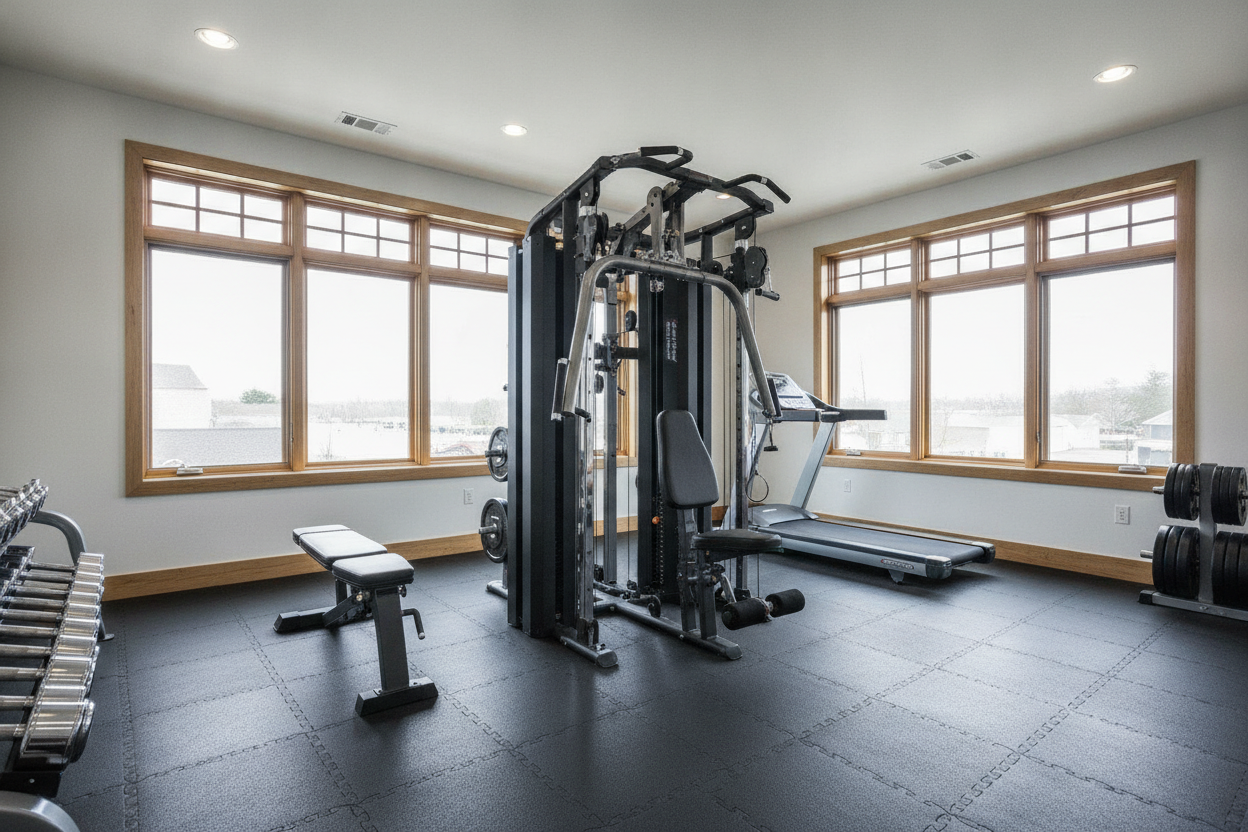
Not anymore. Many home gym companies now make high-quality, plate-loaded machines that fit in a standard garage. You just need to prioritize floor space for the big stuff.