Muscle Confusion Is a Lie: Why You Need a Simple Muscle Building Routine
I spent three years of my life chasing 'muscle confusion.' I’d swap my chest day every two weeks because some guy in a magazine told me my pectorals would 'get bored.' All I ended up with was a collection of mediocre lifts and a physique that looked exactly the same year after year. I was a master of variety but a novice at actual growth.
Real hypertrophy isn't about tricking your body; it's about forcing it to adapt to a specific stress. When you constantly change your exercises, you never get past the 'learning' phase of a movement. You’re not building muscle; you’re just teaching your brain how to coordinate a new movement pattern. To actually grow, you need a simple muscle building routine that you can execute with violent consistency.
- Mastery over variety: Repeating the same lifts allows you to actually push the weight limits.
- CNS efficiency: Your nervous system needs weeks to optimize a movement before the muscle takes the brunt of the load.
- Trackable data: You can't measure progress if your 'data points' change every Monday.
- Minimalist gear: You don't need a 20-piece circuit to get big; a bench and weights are the gold standard.
Why 'Confusing' Your Muscles Actually Confuses Your Progress
The 'muscle confusion' myth suggests that if you do the same thing too long, your body plateaus. It sounds logical, but it’s biological nonsense. Your muscles don't have eyes. They don't know if you're doing a flat bench press or a 30-degree incline press with a neutral grip. They only sense mechanical tension and metabolic stress. When you hop from one 'Instagram workout' to another, you’re resetting your progress every single time.
The first few weeks of any new exercise are dominated by neurological adaptation. Your Central Nervous System (CNS) is figuring out which motor units to fire. If you switch exercises just as you’re becoming efficient, you never reach the point where the muscle is the limiting factor. You’re essentially staying in the 'tutorial' level of the gym. Instead of hunting for novelty, head over to our Workout Hub and pick a foundational program that actually has a trajectory. Mastery is the prerequisite for mass.
By sticking to a simple muscle building workout plan, you allow your CNS to move into the background. Once the movement is second nature, you can finally apply true progressive overload. That’s when the real weight starts moving, and that’s when the scale finally starts to budge.
The Boring (But Effective) Anatomy of a Simple Workout Plan to Gain Muscle
A simple workout plan to gain muscle isn't going to win any awards for creativity. It’s going to look like a list of chores. You need heavy compound movements: squats, hinges, pushes, and pulls. These are the lifts that allow for the most weight to be moved over the greatest range of motion. That is the recipe for mechanical tension, the primary driver of hypertrophy.
Forget the 'finisher' sets of cable cross-overs for now. Your focus should be on the big rocks. If you aren't adding weight or reps to your primary lifts over a 4-week block, you aren't growing. A simple workout routine to gain muscle prioritizes recovery as much as the work itself. I see guys in my local gym hitting 'chest day' with 12 different exercises. By the fourth one, their intensity has dropped by 50%. They’re just doing junk volume.
Instead, pick two heavy movements per session. Hit them with high intensity. Follow them up with two or three isolation moves to round out the volume. That’s it. If you can’t get the job done in five exercises, you aren’t training hard enough. You want to leave the gym feeling like you've triggered a growth response, not like you've just run a marathon of light-weight fluff.
You Don't Need a Warehouse Full of Equipment
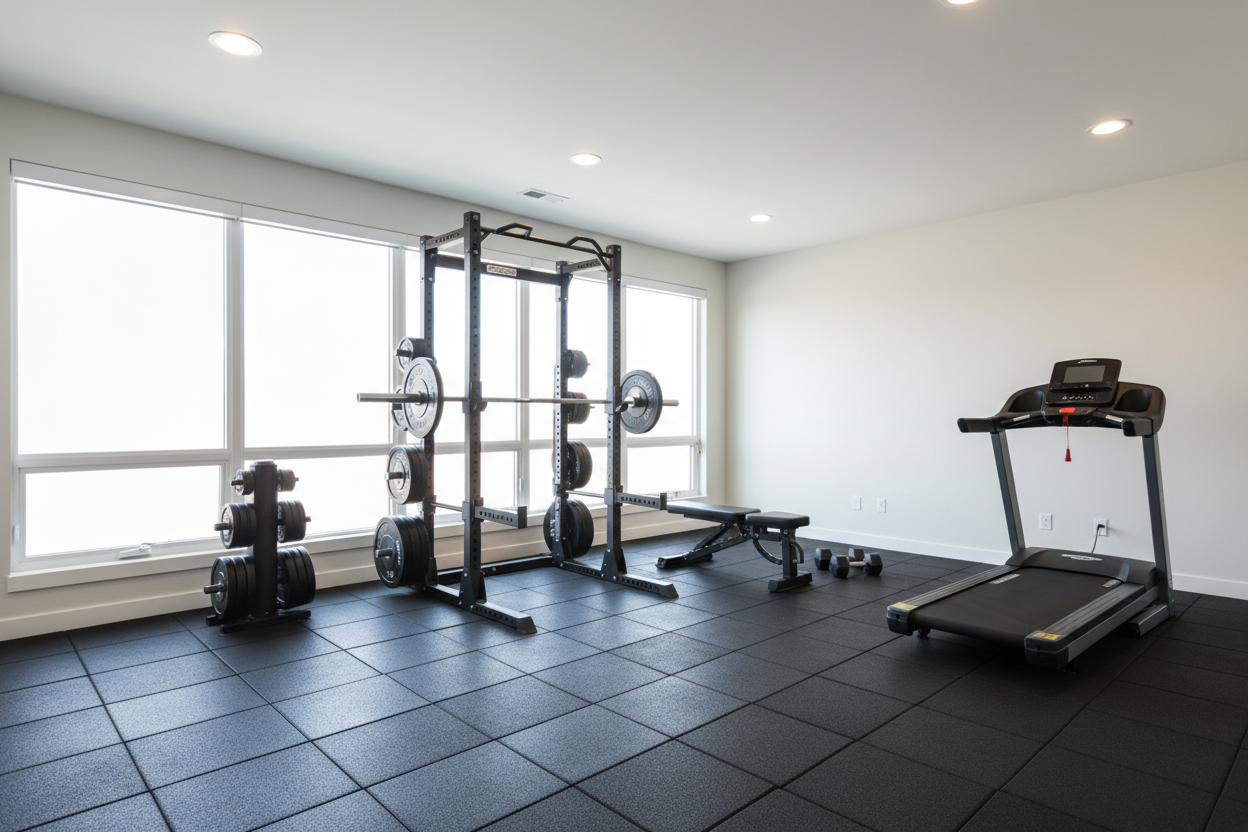
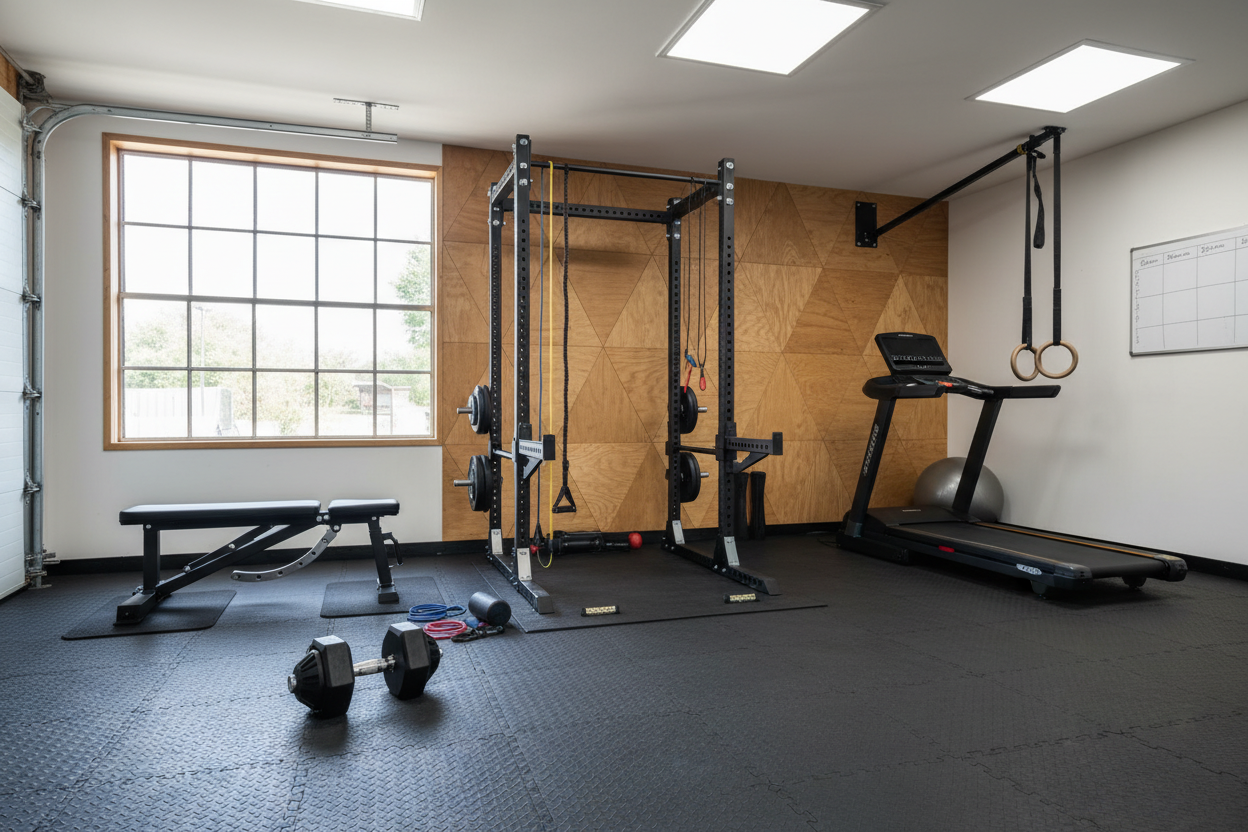
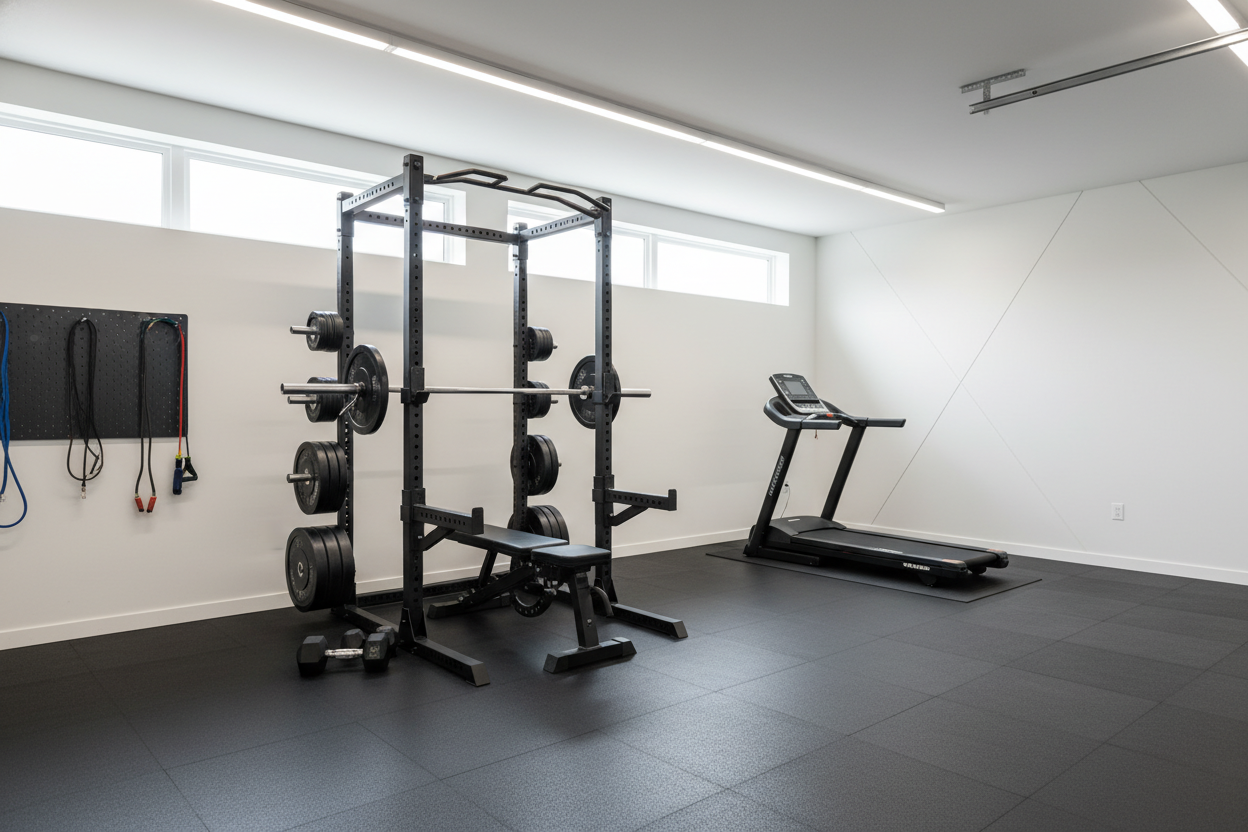
I’ve seen guys build world-class physiques in literal sheds. You don't need a $5,000 cable stack or a row of selectorized machines to execute a simple workout plan for muscle gain. In fact, too much gear often leads to 'analysis paralysis.' You spend more time adjusting pins and pulleys than you do under a heavy bar.
A solid adjustable bench and a heavy set of dumbbells (I prefer the ones that go up to at least 80 lbs) are your bread and butter. But don't overlook the foundation. If you're training in a garage or a spare room, you need a surface that doesn't slip and doesn't crack under a dropped weight. I personally use the 6X8Ft Exercise Mat Yoga Mat Gym Flooring For Home Workout in my own setup. It’s 7mm thick, which is the sweet spot—firm enough for heavy deadlifts so you don't feel like you're standing on a marshmallow, but cushioned enough to save your elbows during floor presses.
This mat covers a 48-square-foot area, which is plenty of room for a full dumbbell circuit or a power rack. When you limit your equipment, you increase your focus. You stop wondering which machine to use and start focusing on how to make the current set harder than the last one.
How to Progress When the Workouts Start Feeling Stale
About six weeks into a simple muscle building workout plan, you're going to get bored. This is the 'danger zone' where most people quit and find a new PDF to follow. Don't do it. Boredom is a sign that you’ve mastered the movement. Now is the time to actually train. When the weights feel 'stale,' you don't change the exercise; you change the intensity variables.
Add a single rep to every set. Slow down the eccentric (lowering) phase to a 4-second count. Decrease your rest periods from 90 seconds to 60 seconds. These are the micro-progressions that build real tissue. I used to be a chronic 'program hopper' until I started using The Muscle Gain Workout Plan PDF That Replaced My Fitness App. It forced me to look at the raw numbers on paper. When you see that you've gone from 60-lb presses for 8 reps to 75-lb presses for 10 reps, the boredom vanishes. Progress is the best motivator there is.
If you’re still feeling the itch for something new, use 'controlled variety' at the end of your workout. Keep your main lifts the same, but swap your last isolation exercise. It feeds the brain’s need for novelty without sacrificing the structural integrity of your progress.
A Bare-Bones Weekly Setup You Can Start Today
If you want a simple workout plan to build muscle, stop overthinking the split. An Upper/Lower split or a Push/Pull/Legs (PPL) routine is all you need. For most home gym owners, a 4-day Upper/Lower split is the sweet spot for recovery and life balance.
Monday (Upper): Dumbbell Bench Press, One-Arm Rows, Overhead Press, Pull-ups.
Tuesday (Lower): Goblet Squats, Romanian Deadlifts, Lunges, Calf Raises.
Thursday (Upper): Incline Dumbbell Press, Lat Pulldowns (or Weighted Chins), Lateral Raises, Bicep Curls.
Friday (Lower): Bulgarian Split Squats, Stiff-Legged Deadlifts, Leg Extensions (or Sissy Squats), Planks.
This covers every major muscle group twice a week. If you're short on time, you can even 'micro-dose' this. I’ve written about how I Micro-Dosed My 7 Day Workout Plan to Build Muscle by breaking these big sessions into 20-minute daily hits. The key isn't how long you spend in the garage; it's the quality of the sets you perform on that mat.
The 12-Week Rule: Committing to the Grind
Consistency is the only 'hack' in fitness. You cannot evaluate a simple muscle building routine in two weeks. You need to commit to a minimum of 12 weeks of the exact same movements. By week 8, you'll be tempted to change. By week 10, you'll feel like you've hit a wall. Push through. That final 4-week block is usually where the most visible changes happen because you're finally using enough weight to create significant damage and repair.
Stop looking for the magic exercise. It doesn't exist. The magic is in the repetition. Put your head down, track your lifts, and stop 'confusing' your muscles. They’ll thank you by actually growing for once.
Personal Experience: The Trap of the 'New'
I remember buying a set of adjustable dumbbells that went up to 50 lbs. I thought I'd outgrow them in a month, so I kept looking for 'fancy' bodyweight variations to make things harder. I wasted six months doing weird, unstable movements. Eventually, I just bought the 25-lb expansion kit and went back to basic heavy pressing. My chest grew more in the next 8 weeks than it had in the previous year. My mistake was thinking the equipment or the 'angle' was the problem. The problem was my refusal to just get stronger at the basics.
FAQ
How many days a week should I train for muscle gain?
For most people, 3 to 4 days is the sweet spot. It allows for high intensity during the session and enough recovery time for the muscle tissue to actually repair and grow. If you train 6 days a week, you often end up just 'going through the motions' because your CNS is fried.
Can I build muscle with just dumbbells?
Absolutely. Your muscles only care about tension. As long as you have enough weight to stay in the 6-12 rep range near failure, dumbbells are arguably better than barbells for hypertrophy due to the increased range of motion and the requirement for stabilizer muscles.
What if I don't have a bench?
You can do floor presses on a high-quality mat. It limits the range of motion slightly, which actually allows you to go heavier and protects your shoulders. However, if you're serious about a simple muscle building routine, an adjustable bench should be your first major equipment purchase.