
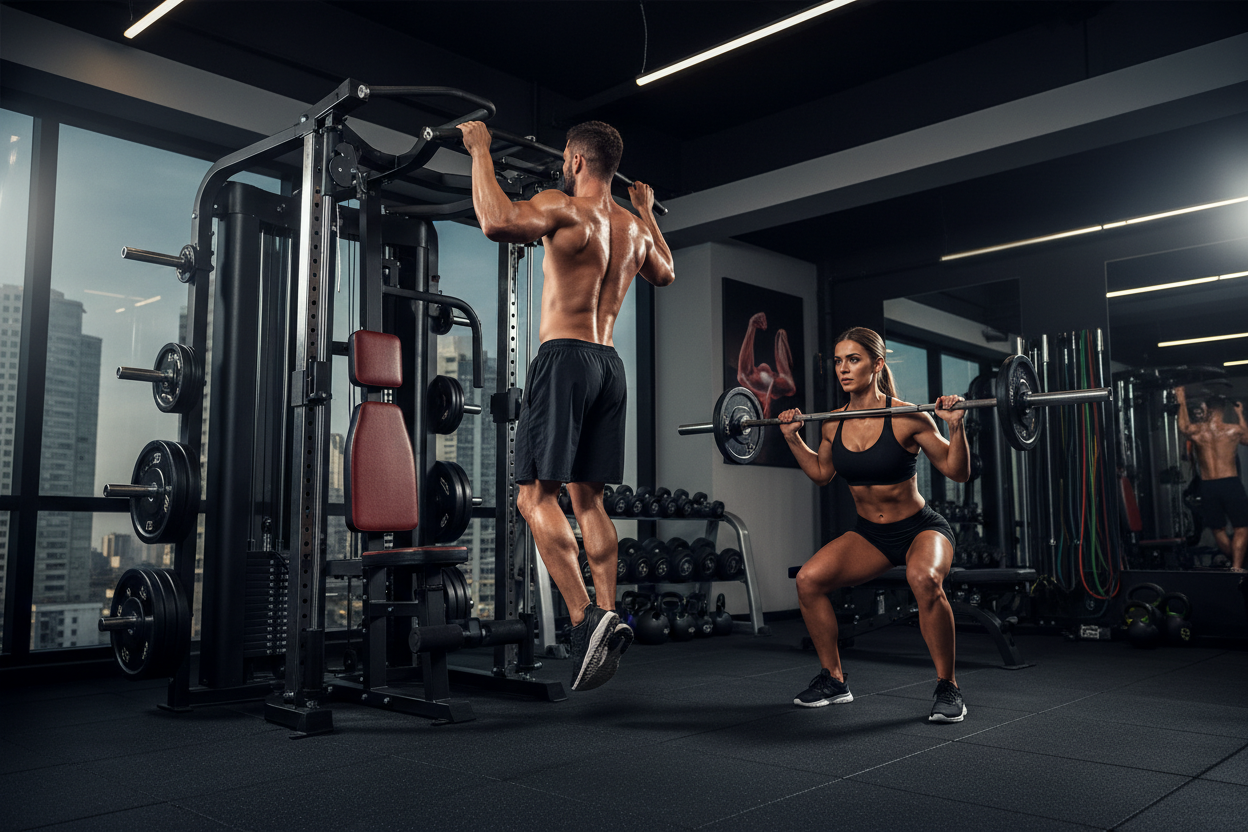
Multi Gym With Pull Up Bar: Is It Actually Worth the Space?
If you're trying to build a comprehensive home gym in a spare bedroom or half-garage, you already know the enemy: a lack of floor space. Balancing the need for heavy compound movements with isolation exercises often leaves home lifters choosing between a bulky power rack and a flimsy cable tower.
Enter the multi gym with pull up bar. This all-in-one hybrid is designed to bridge the gap, giving you the functional versatility of a commercial gym without eating up your entire floor plan. But before you clear out the basement, let's look at what actually makes these machines worth the investment.
Key Takeaways
- Space Efficiency: Combines a functional trainer, smith machine, or weight stack with a dedicated overhead station.
- Ceiling Height Matters: Most units require at least 84 to 90 inches of vertical clearance.
- Versatility: A pull up bar multi gym allows for bodyweight mastery alongside heavy cable or plate-loaded resistance.
- Weight Capacity: Look for a minimum 300 lb user weight limit on the frame for safe, long-term use.
Maximizing Your Home Gym Footprint
When planning a home gym, vertical space is just as critical as your floor plan. Many lifters focus solely on the footprint and forget they actually need room for their head to clear the bar.
Ceiling Clearance and Floor Space
A standard North American basement has ceilings around 96 inches (8 feet). If your chosen machine sits at 85 inches tall, you only have 11 inches of clearance. For a 6-foot-tall lifter, doing a strict chin-up might mean bumping your head. Always measure your ceiling height and leave at least 15 to 18 inches above the highest point of the bar for a full range of motion.
What Separates Good from Great?
Not all home gym systems are created equal. The difference between a frustrating workout and a seamless one usually comes down to build quality.
Weight Capacity and Cable Quality
Entry-level models often feature thin, nylon-coated cables and tubular steel that feels shaky during heavy lat pulldowns. You want a frame made from 11-gauge or 14-gauge steel. Additionally, verify the weight rating on the pull-up station itself. A high-quality unit should comfortably support 300+ pounds, allowing you to eventually add a weighted vest or dip belt to your routine.
Building Your Routine
Having a dedicated overhead bar transforms a standard weight stack machine into a complete upper-body builder.
Integrating Bodyweight and Cables
You can seamlessly superset heavy cable rows with wide-grip pull-ups for an unmatched back pump. The beauty of this setup is the transition time. You move from isolation movements directly into compound bodyweight exercises without walking across a crowded gym floor.
From Our Gym: Honest Take
We've tested dozens of all-in-one trainers in our facility, and I recently spent three months running a hypertrophy block exclusively on a mid-tier multi gym with a multi-grip pull-up station. The knurling on the angled grips was surprisingly aggressive—my chalked hands felt locked in during weighted pull-ups.
However, here is my honest caveat: on many compact models, the seated leg developer or lat pulldown seat sits directly beneath the pull-up bar. At 6'1", I found myself having to tuck my knees quite a bit to avoid clipping the bench on my descent. It's a minor annoyance, but something to keep in mind if you are on the taller side. Despite that, the sheer volume of exercises I could hit in a 50-square-foot space made it a massive win.
Frequently Asked Questions
Is a multi gym with pull up bar worth the investment?
Yes, especially if you have limited space. It consolidates multiple machines—like a lat pulldown, chest press, and overhead station—into one footprint, offering a high return on investment for home lifters.
How much ceiling height do I need?
You need the height of the machine plus roughly 15 to 18 inches of clearance for your head. For an 84-inch machine, aim for at least a 99-inch (8.25 feet) ceiling for comfortable reps.
Can a pull up bar multi gym build real muscle?
Absolutely. By combining progressive overload on the weight stacks or plate-loaded cables with strict bodyweight movements, you have all the necessary tools for progressive hypertrophy and strength gains.


