Most Types of Exercise Equipment for the Home Are Glorified Coat Racks
I remember the first piece of gym gear I bought for my spare bedroom: a plastic-shrouded 'total body' machine that promised the world and delivered a very expensive place to hang my wet laundry. Most types of exercise equipment for the home are marketed to people who want the result without the work, leading to garages filled with dusty plastic and frayed cables. If you are tired of scrolling through Amazon at midnight wondering if that folding treadmill will actually survive a sprint, you are in the right place.
Quick Takeaways
- Prioritize versatility over specificity; one barbell replaces ten machines.
- Heavy-gauge steel (11-gauge or 14-gauge) is the difference between a lifetime investment and scrap metal.
- Non-motorized cardio gear lasts longer and burns more calories per minute.
- Measure your ceiling height before buying any rack or functional trainer.
Why We Fall for the Gimmick Machine Trap
We have all been there. You see a machine with shiny pulleys and a seat that looks like it belongs in a cockpit, and you think, 'This is it. This is the thing that makes me train.' Beginners gravitate toward complex gear because it feels safer and more structured than a raw piece of iron. The reality is that these machines often have fixed movement patterns that do not fit your actual body mechanics.
Commercial gyms have the luxury of space for single-use stations, but your garage does not. I have seen too many people realize too late that dedicated arm machines waste valuable space that could have gone toward a decent bench or a set of plates. If a piece of equipment only does one thing, it better be the only thing you care about.
Free Weights: The Undisputed Kings of the Garage
If I had to start over with a $1,000 budget, $800 of it would go toward a high-quality barbell and a stack of iron plates. These types of home exercise equipment offer the highest return on investment because they never go out of style and they do not have electronics that fail after the 12-month warranty expires. A standard 20kg Olympic bar allows you to squat, press, deadlift, and row—movements that build actual, usable strength.
Dumbbells are the next logical step. While a full rack of fixed dumbbells is the dream, most home lifters are better off with a solid pair of loadable handles or high-quality adjustables like Ironmasters. I have dropped my 50-lb hex dumbbells more times than I can count, and they still work perfectly. Try doing that with a touch-screen 'smart' mirror and see what happens.
Racks and Cages: The Anchor of Your Setup
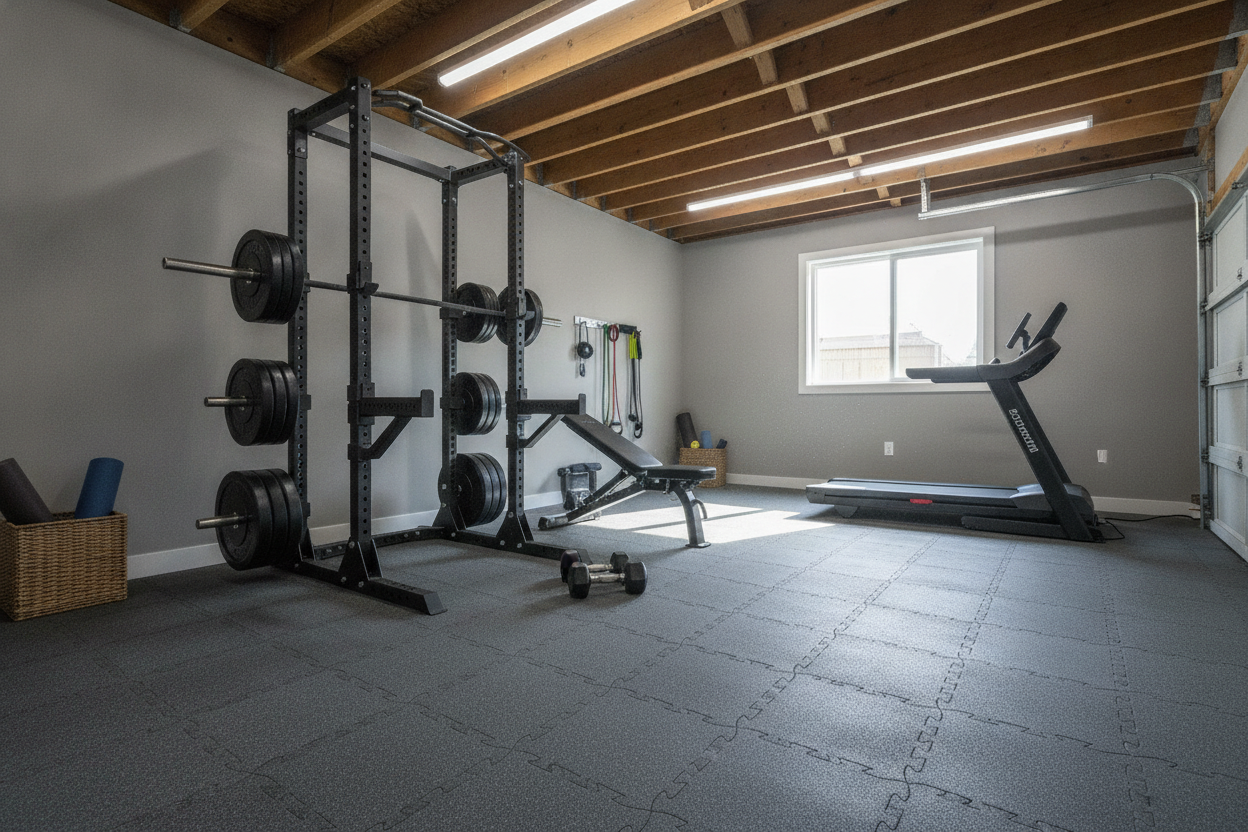
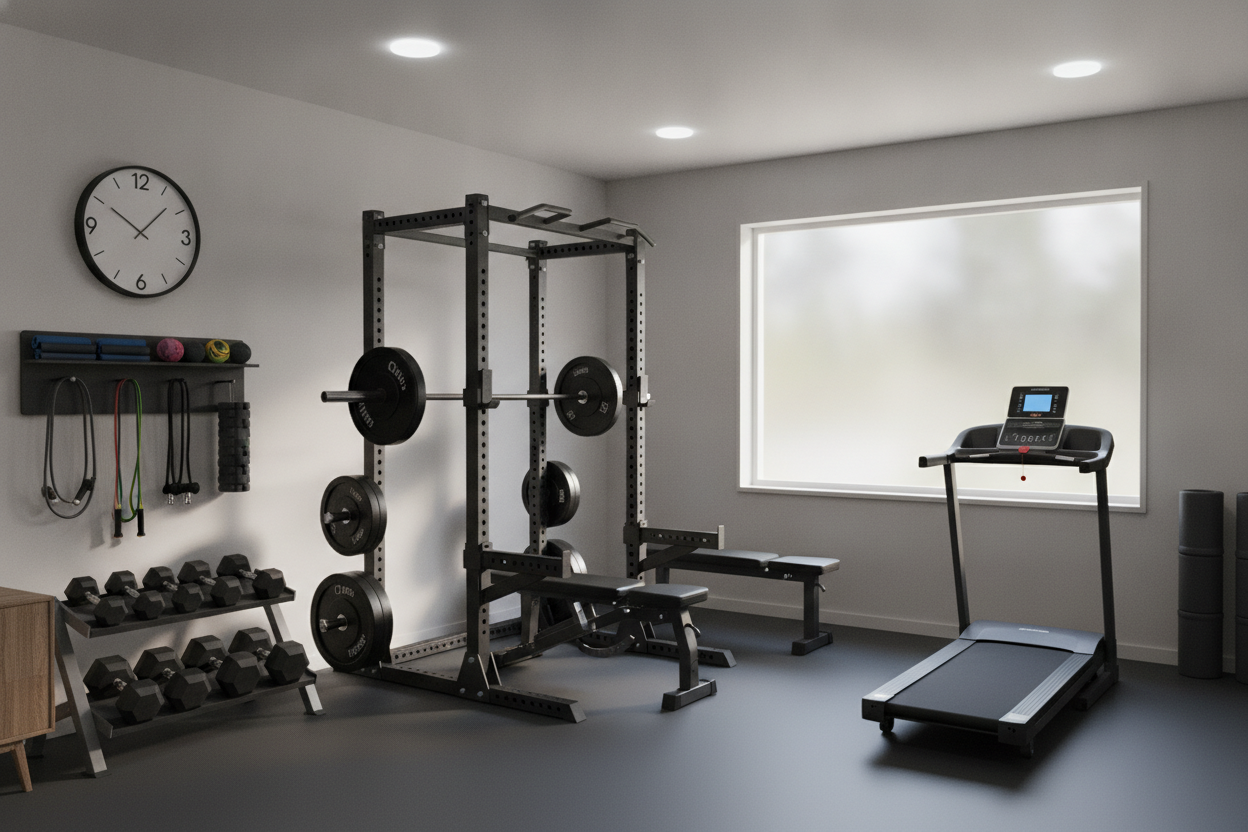
The rack is the literal foundation of your gym. If you are lifting alone, a full power cage with internal spotter arms is non-negotiable for safety. Look for 3x3 inch or 2x3 inch steel tubing. Anything thinner feels like a swaying blade of grass when you try to re-rack a heavy set of squats. I personally use a 14-gauge steel half-rack because I needed the floor space, but I had to bolt it to the ground to keep it from walking across the concrete.
Quality matters here because the supply chain for fitness gear is still a rollercoaster. It is frustratingly common to see why the most reliable heavy-duty gear sells out during the winter months when everyone decides to move their training indoors. If you see a rack made of 11-gauge steel in stock, do not wait for a holiday sale; it will likely be gone by then.
Do You Actually Need a Cable Pulley System?
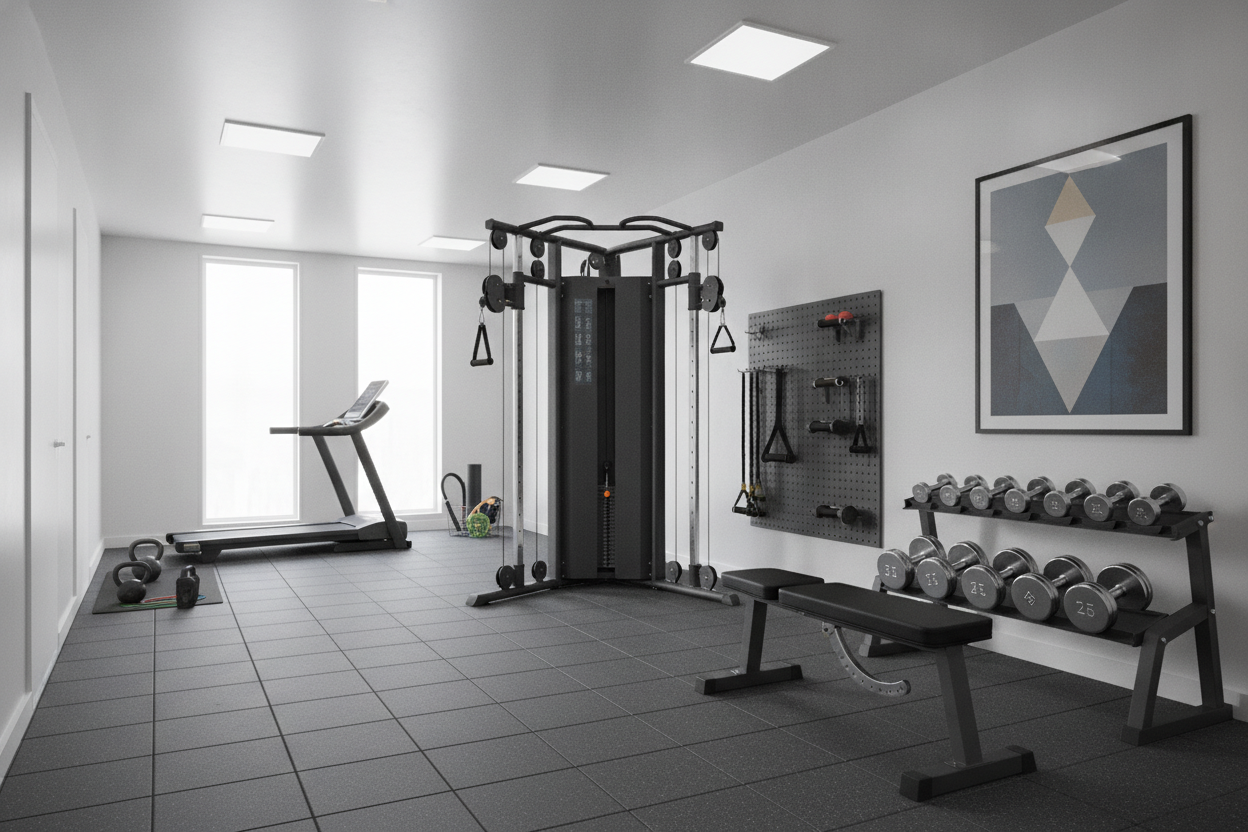
Functional trainers are the 'nice-to-have' luxury of the home gym world. They are fantastic for accessory work, face pulls, and lat pulldowns, but they take up a massive amount of real estate. A standard functional trainer usually requires a 5x5 foot footprint at minimum. If you are tight on space, a simple wall-mounted pulley system or even heavy-duty resistance bands can mimic 80% of those movements for a fraction of the cost and size.
Cardio Gear: Motorized Belts vs. Human Power
I have a personal vendetta against cheap motorized treadmills. The motors burn out, the belts slip, and the consoles become obsolete the second a new software update drops. If you want conditioning equipment that lasts a decade, look at air bikes or rowers. An air bike like the Rogue Echo or the Concept2 BikeErg uses a fan for resistance—the harder you pedal, the harder it gets.
These machines are 'human-powered,' meaning there are fewer electronics to fail and no motor to overheat. Plus, a rower can be stood up on its end when you are done, taking up about the same floor space as a dining room chair. That is the kind of efficiency you need when you are sharing your gym space with a lawnmower and a water heater.
How to Pick What Actually Fits Your Training Style
Stop buying gear for the person you want to be in six months and start buying for the person you are today. If you hate running, that $2,000 treadmill will not change your mind; it will just become a very expensive place to hang your hoodies. If your goal is powerlifting, buy the stiffest bar and the thinnest plates you can find. If you are into CrossFit, prioritize a pull-up bar and a solid floor mat.
I spent years trying to fit 'commercial' expectations into a 120-square-foot room. I once bought a leg press machine that was so large I had to shimmy sideways just to reach my dumbbells. I sold it three months later at a loss. Learn from my mistake: keep your floor open, keep your gear versatile, and invest in steel, not screens.
My Personal Gear Regret
Early in my home gym journey, I bought a 'budget' barbell from a big-box sporting goods store. It had bolted ends instead of snap rings, and the knurling felt like smooth PVC pipe. One afternoon, while deadlifting 315 lbs, the bolt on the left side sheared off, and the plates slid across my floor, denting the concrete. I saved $100 on the bar but spent $300 on floor repairs. Now, I only buy bars from brands that specialize in strength, because my shins and my floor can't afford 'budget' mistakes.
FAQ
Is it better to buy new or used equipment?
Used iron plates and dumbbells are great because iron doesn't expire. However, I always buy my barbells and racks new. You want to know exactly how much abuse a bar has taken and ensure a rack hasn't been modified or structurally compromised.
How much space do I really need for a home gym?
A 10x10 foot area is the sweet spot. It is enough room for a full-sized Olympic bar (which is 7 feet long) and a rack, with just enough clearance on the sides to load plates without hitting the walls.
What is the best flooring for a garage gym?
Skip the 'puzzle' foam mats. They compress under heavy weight and slide around. Go to a farm supply store and buy 3/4-inch thick rubber horse stall mats. They are indestructible, dampen noise, and protect your foundation.