Maximize Performance: The Honest Guide to Work Out Accessories
Walking into a modern sports store or scrolling through Amazon feels less like shopping and more like navigating a minefield of marketing hype. Do you really need an elevation mask? Is that $80 foam roller actually better than a PVC pipe? The fitness industry thrives on convincing you that the next gadget is the secret to your six-pack.
Here is the reality: The right work out accessories can significantly improve your biomechanics, safety, and recovery. However, the wrong ones are just expensive clutter that might actually hinder your progress by acting as a crutch. Let’s strip away the marketing fluff and look at what actually belongs in your gym bag.
Key Takeaways: Quick Summary
- Prioritize Stability: Flat-soled shoes and proper lifting belts aid force transfer, not just "back support."
- Grip Dynamics: Use straps when your grip fails before the target muscle; use chalk for raw grip training.
- Avoid Crutches: Don't wear a belt for warm-ups. Allow your core to build natural stability first.
- Material Matters: Look for leather in belts and neoprene in sleeves; synthetic blends often fail under heavy loads.
The Hierarchy of Gym Gear
Not all accessories serve the same purpose. To make smart decisions, you must categorize gear based on function: Stability, Isolation, or Recovery.
1. Stability Gear: Shoes and Belts
Stability is the bedrock of force production. If you are squatting in running shoes, you are essentially lifting on a marshmallows. The compression of the foam absorbs the force you generate, rather than transferring it into the floor.
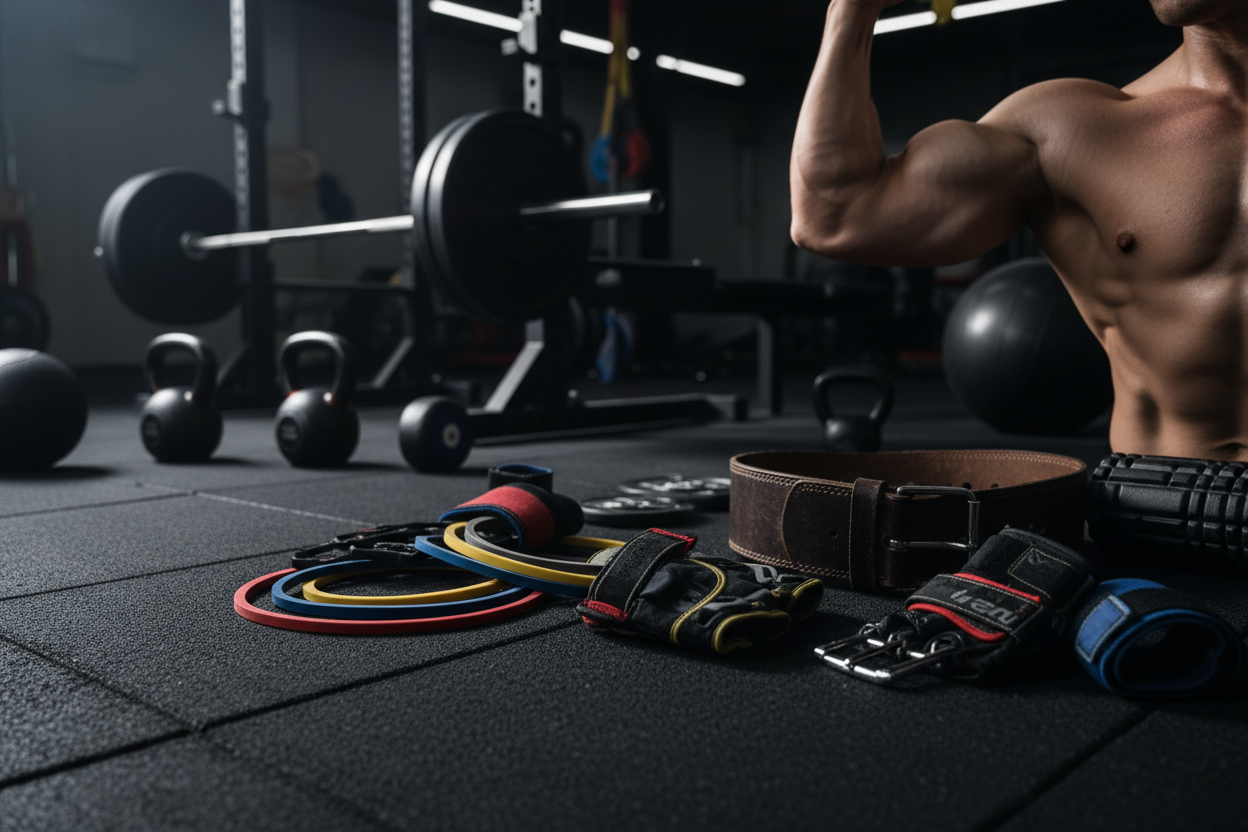
The Lifting Belt: A common misconception is that a belt supports your back like a brace. It doesn't. A belt provides a tactile cue for your abdominal wall to push against. This increases intra-abdominal pressure (IAP), which rigidifies the torso. If you aren't breathing into the belt (Valsalva maneuver), wearing one is purely cosmetic.
2. Isolation Tools: Straps and Wraps
Your posterior chain is significantly stronger than your grip. This creates a bottleneck in movements like deadlifts or rows.
Lifting straps remove the grip variable. This allows you to take the lats or hamstrings to true mechanical failure without your hands giving out first. However, over-reliance on straps can lead to weak forearm development. The strategy is simple: use raw grip for warm-ups and lighter sets, and strap up only for your heaviest working sets.
The Science of Compression
Knee and elbow sleeves are often sold as safety devices, but their primary benefit is thermal. Neoprene sleeves keep the synovial fluid in the joint warm, reducing friction and the sensation of stiffness.
While tight sleeves offer a degree of "rebound" (elastic energy) out of the bottom of a squat, their main role is proprioception. The pressure of the sleeve heightens your awareness of where your joint is in space, helping you maintain better alignment under load.
Common Mistakes to Avoid
The biggest error lifters make is the "all-gear, all-the-time" approach. Walking on the treadmill while wearing a lifting belt does nothing but weaken your core over time. Accessories should be deployed tactically.
If you are hitting 50% of your one-rep max, leave the belt in the bag. If you are doing bicep curls, you likely don't need wrist wraps. Let your body do the work until the intensity demands extra support.
My Personal Experience with work out accessories
I remember buying my first stiff, 10mm leather lever belt. I thought it would instantly add 50 pounds to my squat. The product description promised "ultimate comfort," but that was a lie. For the first three weeks, that belt left deep, purple bruises along my hip bone and lower ribs.
There is a specific, sharp pinch you feel at the absolute bottom of a squat when a new leather belt digs into your soft tissue. It’s distracting and painful. I almost threw it away. But once I broke it in by rolling it back and forth and sweating in it for a month, it molded to my torso. Now, I can feel the exact moment my brace is locked in just by the pressure against my lower back. That unpolished, painful break-in period is something most guides gloss over, but it's the reality of using high-quality gear versus the cheap nylon stuff.
Conclusion
Building a better physique requires effort, consistency, and intelligent programming. Gear is simply a multiplier of that effort. Start with the essentials—flat shoes and perhaps some chalk. As your strength increases, introduce belts and sleeves to facilitate heavier loads safely. Don't look for a magic fix; look for tools that allow you to work harder.
Frequently Asked Questions
Do beginners need a lifting belt immediately?
No. Beginners should focus on learning how to brace their core naturally. Introducing a belt too early can mask poor bracing mechanics. Wait until you have mastered the form of compound lifts and are moving significant weight before investing in a belt.
Are lifting gloves better than chalk?
Generally, no. Lifting gloves add a layer of material between your hand and the bar, which effectively increases the bar's diameter and makes it harder to grip. They also prevent callus formation. Chalk keeps the hand dry and increases friction, providing a superior, secure grip.
What is the difference between wrist wraps and lifting straps?
They serve opposite functions. Wrist wraps stiffen the wrist joint to prevent it from bending backward during pushing movements like the bench press. Lifting straps loop around the bar to secure your grip during pulling movements like deadlifts.