Mastering the Powerhouse Smith Machine for Serious Home Gains
You finally decided to build out the garage gym. You didn't want a flimsy rack, so you went with a classic: the powerhouse smith machine. It’s a staple in the home fitness world, often found on the used market or tucked away in basements, waiting to be used properly. But there is a massive difference between just moving weight from point A to point B and actually stimulating muscle growth with this specific piece of gear.
Many lifters dismiss Smith machines as "cheating." That is a mistake. When you understand the fixed plane of motion and the safety mechanisms of the Powerhouse line, you unlock the ability to train to failure safely without a spotter. This guide cuts through the noise and shows you how to utilize this machine effectively.
Key Takeaways: Maximizing Your Setup
- Safety First: The primary advantage of the Powerhouse system is the adjustable safety stops. Set them one inch below your bottom range of motion before every set.
- The "Elite" Difference: The powerhouse elite smith machine typically includes an integrated cable system and pec deck, turning a squat stand into a full-body station.
- Bar Weight Math: Unlike a standard 45lb Olympic bar, the counterbalanced bar on these machines often weighs significantly less (usually 15-25lbs). Adjust your plate math accordingly.
- Lubrication is Critical: Because these often use bushings rather than expensive linear bearings, regular silicone spray is required to prevent the bar from "stuttering" during descent.
Understanding the Fixed Path Mechanics
The defining feature of this machine is the vertical, fixed path. You cannot fight this. If you try to squat with the same body mechanics you use for a free-weight barbell squat, you will hurt your lower back or knees.
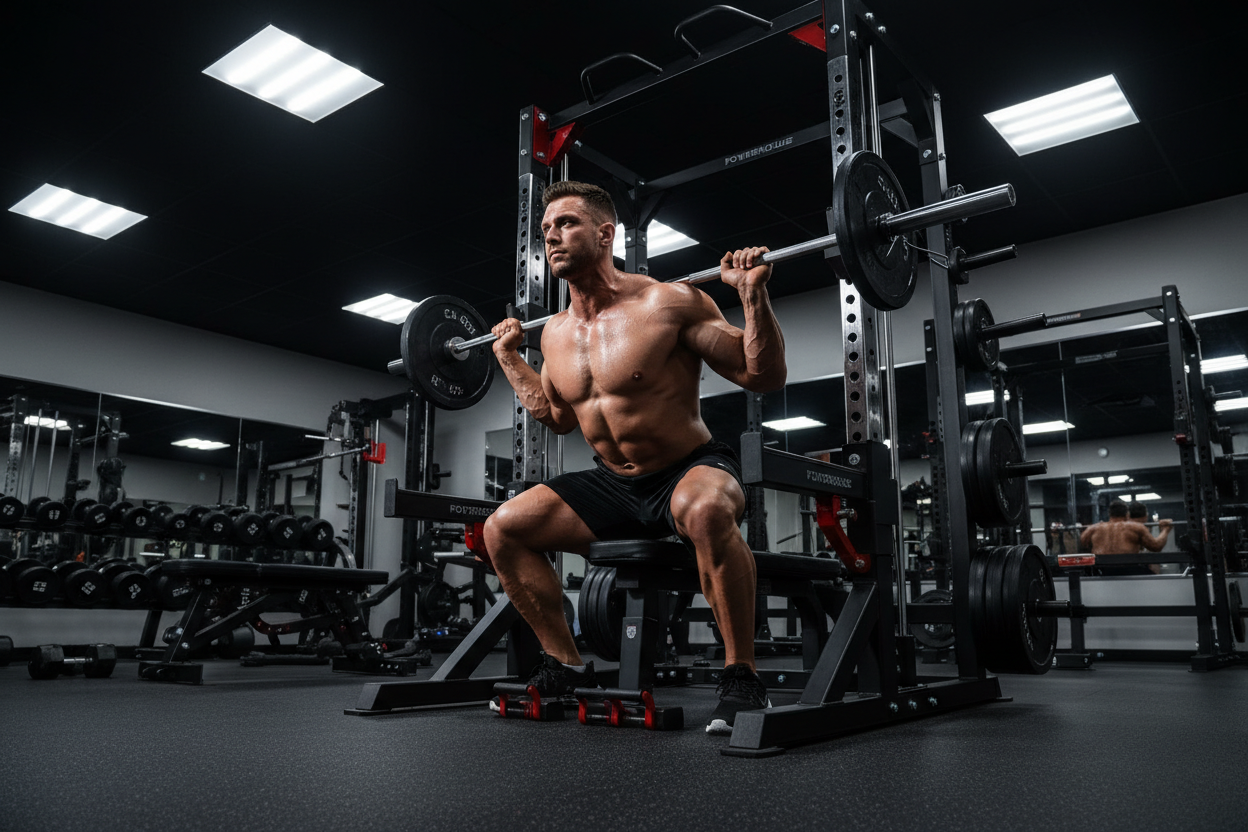
With a Powerhouse unit, you need to adjust your foot placement. For squats, step your feet out further forward than you naturally would. This allows you to lean back into the bar, turning the movement into something closer to a hack squat. This targets the quads aggressively while taking shear force off the lumbar spine.
The Powerhouse Elite Configuration
If you are working with the powerhouse elite smith machine, you aren't just dealing with a bar. This model usually incorporates a high-low pulley system. The biggest mistake users make here is neglecting the cable tension.
Over time, the cables on the Elite models stretch. If you feel "slack" before the weight stack engages, you are losing the initial tension required for hypertrophy. Check the turnbuckles or termination points at the back of the cage. Tightening these ensures that the resistance is immediate, which is crucial for exercises like tricep pushdowns or cable crossovers.
Common Mistakes That Kill Progress
Ignoring the "Lock-Out" Rotation
The hook system on these machines requires a specific wrist rotation to rack and unrack the weight. A common injury occurs when a lifter fatigues and their wrist naturally flexes backward, accidentally rolling the hooks into the catch slots mid-rep. Keep your wrists neutral. Practice the wrist flick with an empty bar until it becomes muscle memory.
Neglecting Rail Maintenance
Friction is the enemy of the Smith machine. The Powerhouse models generally use plastic or composite bushings that slide over steel guide rods. If these rods get dusty or rusty, the bar won't travel smoothly. It will catch, causing you to push unevenly. Wipe the rods down with a clean rag and apply a light coat of 100% silicone lubricant weekly. Do not use WD-40; it attracts dirt and eventually gums up the works.
My Training Log: Real Talk
I spent about two years training exclusively on an older Powerhouse Elite model I picked up from a neighbor. Let me tell you something the manual doesn't mention: the drag on the guide rods is real, especially on the eccentric (lowering) phase.
There was this specific grittiness to the movement if I didn't wipe the chrome rods down before every session. I also remember the pec-deck attachment being incredibly awkward. The pads were spaced a bit too wide for my frame, putting weird stress on my rotator cuffs if I went too heavy. I eventually stopped using the pec deck for heavy flyes and used it strictly for rear-delt work, which felt much more natural on that specific frame.
Another thing to watch out for is the knurling on the bar. On my unit, it was surprisingly passive—almost slippery. I had to use chalk even for moderate loads because the bar diameter felt slightly thinner than a standard Olympic bar, making it harder to squeeze tight. If you feel that slip, strap up. Don't let your grip be the limiting factor on a heavy shrug or row.
Conclusion
The powerhouse smith machine is a workhorse if you respect its mechanics. It allows you to overload your muscles safely and provides a controlled environment for testing your limits. Don't worry about the "free weight purists." If you maintain the guide rods, adjust your foot positioning, and utilize the safety stops, you can build a massive physique right in your garage.
Frequently Asked Questions
How much does the bar weigh on a Powerhouse Smith Machine?
Unlike a standard 45lb barbell, the bar on a Powerhouse unit is often counterbalanced or simply lighter due to the guide mechanism. It typically weighs between 15 and 25 lbs. You should weigh it with a luggage scale or bathroom scale to be precise for your tracking.
Can I bench press safely alone on this machine?
Yes, this is one of its main benefits. The safety catches (adjustable stops on the side rails) prevent the bar from crushing you if you fail a rep. Always set these stops just below your chest level before you start pressing.
Is the Powerhouse Elite Smith Machine good for deadlifts?
It is not ideal for traditional deadlifts because the bar path is fixed and cannot move toward your body as you hinge. However, it is excellent for Rack Pulls (partial deadlifts) where you set the safety stops at knee height to target the upper back and traps.