Mastering the Best Leg Weights Exercises for Maximum Growth
Leg day isn't just about soreness; it's about structural integrity and systemic growth. Yet, walk into any commercial gym, and you will see trainees wasting energy on movements that offer a poor return on investment. If you want serious hypertrophy, you need to focus on the best leg weights exercises that recruit the most muscle fibers and trigger an anabolic response.
We aren't here to discuss fad movements or balance-ball circus acts. This is about the foundational lifts that have built massive quads and hamstrings for decades. Let's strip away the noise and focus on the mechanics of moving iron.
Quick Summary: The Essentials
If you are looking for the most effective movements to include in your routine, here is the hierarchy of leg training based on muscle recruitment and mechanical tension:
- The Barbell Back Squat: The primary driver for overall leg mass and central nervous system adaptation.
- Romanian Deadlifts (RDLs): The superior choice for posterior chain development (hamstrings and glutes).
- Bulgarian Split Squats: The ultimate unilateral movement to fix imbalances and improve stability.
- Walking Lunges: Excellent for functional strength and metabolic conditioning.
- Front Squats: Focuses intensity on the quadriceps while enforcing thoracic extension.
The King of the Jungle: The Barbell Squat
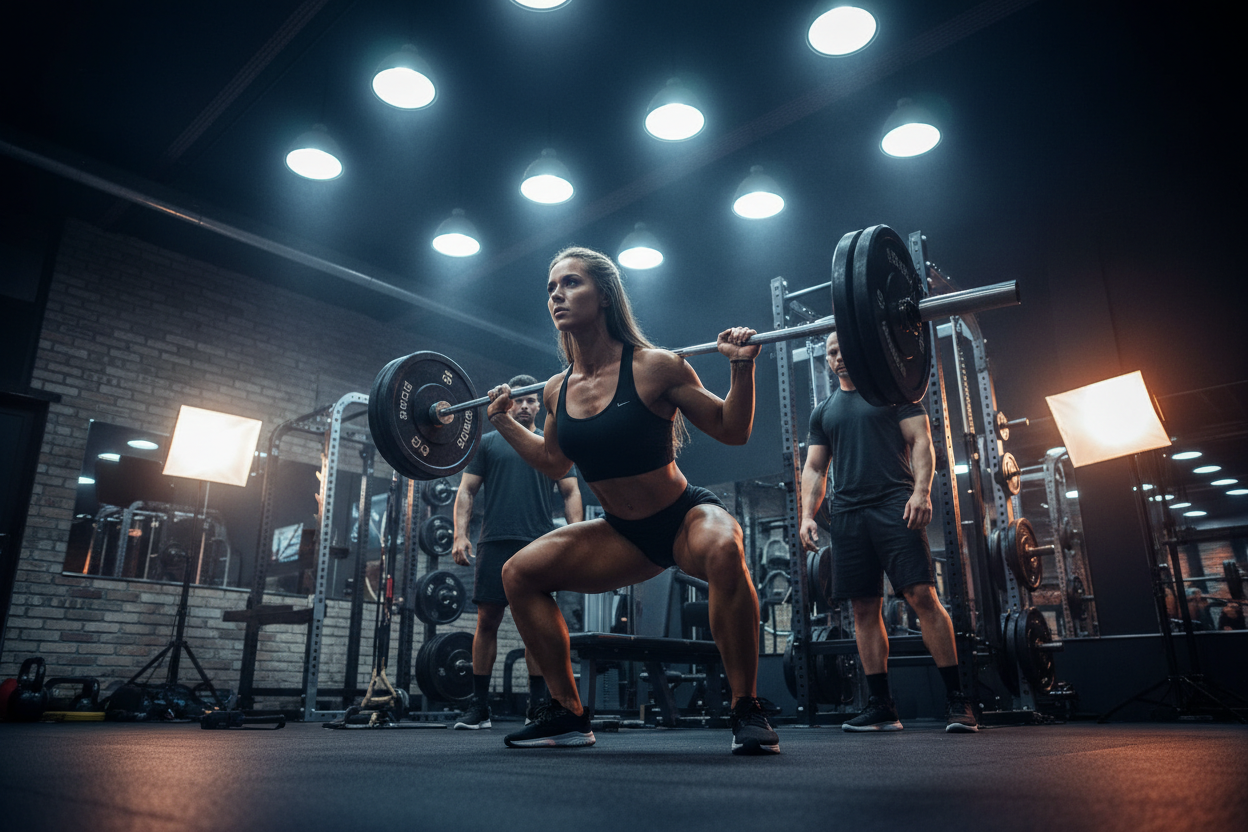
You cannot have a conversation about a gym leg workouts with weights without addressing the squat. However, simply putting a bar on your back isn't enough. The value comes from the depth and the tension.
High Bar vs. Low Bar
For pure leg hypertrophy, the high-bar squat generally reigns supreme. By placing the bar on your traps (rather than your rear delts), you force your torso to stay more upright. This increases the degree of knee flexion, which directly translates to more load on the quadriceps. Low bar allows for more weight, but it shifts much of the load to the hips and back.
Dominating the Posterior Chain
Most lifters are quad-dominant. To build a complete physique, your workout with weights for legs must prioritize the back of the legs. The Romanian Deadlift (RDL) is non-negotiable here.
Unlike a conventional deadlift, which starts from the floor, the RDL starts from the top. The goal is to push your hips back as far as physically possible while keeping a soft bend in the knee. The rep ends not when the plates hit the floor, but when your hips stop moving back. Going lower than your hamstring flexibility allows just puts stress on your lumbar spine, not your legs.
Unilateral Training: The Missing Link
Bilateral movements (squats, leg press) are great for load, but they hide weaknesses. If your right leg is 10% stronger than your left, your body will naturally shift the weight to compensate. This is where unilateral work becomes vital.
The Bulgarian Split Squat
This is arguably the most hated exercise in the gym because of how effective—and painful—it is. By elevating the rear foot, you place nearly the entire load on the front leg. This removes the lower back as a limiting factor, allowing you to take the quads and glutes to absolute failure safely. It is a humbling exercise; you will likely need significantly less weight than you think.
My Training Log: Real Talk
I want to be honest about what it feels like to actually commit to these movements. I remember a specific training block where I decided to prioritize the Bulgarian Split Squat over the heavy barbell squat for six weeks.
The first thing I noticed wasn't the pump—it was the instability. The first time I grabbed the 60lb dumbbells, my ankle wobbled so hard I thought I was going to roll it. It wasn't a strength issue; it was a stabilizer issue. But the real "tell" that this exercise works? It’s the specific, deep soreness in the glute medius (the side of the hip) that you just don't get from bilateral squats.
Also, let's talk about grip. When doing high-rep RDLs or walking lunges, my forearms often catch fire before my hamstrings do. I learned the hard way that there is no shame in using lifting straps on leg day. The goal is to torch your legs, not test your grip strength. Once I strapped in, I could focus entirely on the stretch in my hamstrings without worrying about the bar slipping out of my sweaty palms.
Conclusion
Building legs requires a tolerance for discomfort. The best leg weights exercises are rarely the fun ones. They are the movements that leave you breathless and wobbly. Focus on mastering the hinge and the squat pattern, fix your imbalances with unilateral work, and progressively add weight to the bar. The growth will follow.
Frequently Asked Questions
How often should I perform these leg exercises?
For most natural lifters, training legs twice a week allows for optimal frequency. This lets you split the volume, perhaps focusing one day on squats (quads) and another on hinge movements (hamstrings/glutes) to manage fatigue.
Can I do these exercises with dumbbells instead of a barbell?
Absolutely. Dumbbells are excellent for lunges, split squats, and RDLs. However, for the main squat movement, you may eventually run out of heavy enough dumbbells to challenge your legs, which is where a barbell becomes necessary for continued overload.
Why does my lower back hurt during leg workouts?
This usually signals a form breakdown. In squats, it often means your hips are rising faster than your chest (stripper squat). In RDLs, it usually means you are rounding your spine or lowering the weight past your active range of motion. Lighten the load and film your sets to check your spine neutrality.