Mastering Exercises for Back Thigh: The Blueprint for Explosive Legs
Most gym-goers have a serious imbalance problem. Walk into any weight room, and you will see countless people loading up the leg press or squat rack, focusing heavily on their quadriceps. Meanwhile, the posterior chain gets treated as an afterthought. This isn't just an aesthetic issue; it’s a recipe for knee injuries and stalled athletic performance. If you want legs that perform as powerfully as they look, you need to prioritize exercises for back thigh development.
The hamstrings are the brakes and the gas pedal of your lower body. Neglecting them creates a structural weakness that limits your squat potential and sprint speed. This guide cuts through the fluff to show you exactly how to train the back of your legs for mass, strength, and resilience.
Key Takeaways: The Hamstring Hierarchy
- Prioritize the Hinge: The most effective mass builder is the hip hinge movement (like Romanian Deadlifts), which lengthens the muscle under tension.
- Don't Forget Knee Flexion: To fully target the short head of the biceps femoris, you must include curling movements (like lying leg curls or Nordics).
- Control the Eccentric: The back of the thigh responds best to slow, controlled lowering phases.
- Volume Matters: Because hamstrings are fast-twitch dominant, lower reps with higher intensity often yield better results than high-rep burnouts.
Understanding the Anatomy of a Back Leg Exercise
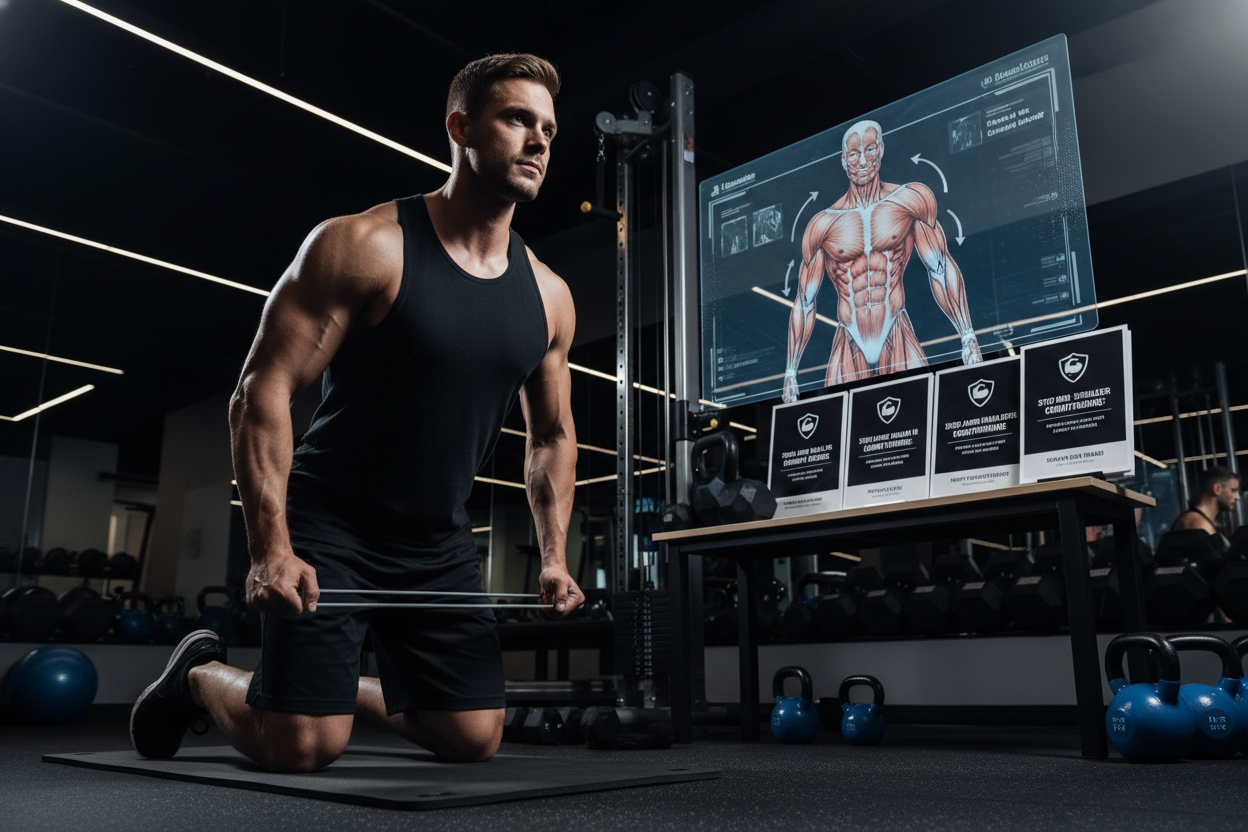
Before grabbing a barbell, you need to understand what you are actually training. The "back thigh" isn't just one slab of meat. It is a group of three muscles: the semitendinosus, semimembranosus, and the biceps femoris.
Here is the science often missed: these muscles cross two joints (the hip and the knee). This means a comprehensive routine must include exercises for the back of thighs that address both functions: extending the hip and bending the knee. If you are only doing seated leg curls, you are leaving 50% of your gains on the table.
The King of Mass: Romanian Deadlifts (RDLs)
If you only choose one movement, make it the Romanian Deadlift. It is the gold standard for hip extension. However, most people butcher the form by turning it into a lower-back exercise.
The Setup and Execution
Start with the bar at hip height. Unlike a conventional deadlift, the goal here isn't to get the weight to the floor; it's to push your hips back as far as possible. Imagine you are trying to close a car door behind you with your glutes.
Keep your knees soft but fixed—they shouldn't bend further as you lower the weight. Stop the moment your hips stop moving backward. For most, this is just below the knee. Any lower, and your lower back takes the load.
The Ultimate Strength Builder: Nordic Hamstring Curls
When discussing a back leg exercise for injury prevention, the Nordic Curl is unrivaled. Research consistently shows it reduces hamstring strain rates in athletes. It is an eccentric-focused movement, meaning it overloads the muscle as it lengthens.
You will need a partner to hold your ankles or a dedicated Nordic bench. Lower your torso toward the ground as slowly as physically possible. Keep your hips extended; don't bend at the waist. You likely won't be able to pull yourself back up initially—that is fine. Use your hands to push off the floor and reset. The magic is in the descent.
Isolation Work: Seated vs. Lying Leg Curls
For pure hypertrophy (muscle growth), machine curls are necessary. But there is a nuance here. A study published in the Journal of Strength and Conditioning Research suggests that seated leg curls may induce greater hypertrophy than lying curls because the seated position places the hamstrings in a lengthened state at the hip.
When performing these exercises for the back of thighs, focus on the squeeze. Do not kick the weight up using momentum. Hold the contraction for one full second at the bottom, then take three seconds to release it.
My Training Log: Real Talk
I want to be transparent about what this training actually feels like because textbook descriptions rarely capture the reality. The first time I truly committed to a hamstring-specialization block, I learned a hard lesson about the "Nordic" curl.
I remember setting up, feeling confident because I had a strong squat. I began the descent, and about halfway down, my hamstrings didn't just fatigue—they seized up violently right near the glute insertion. It wasn't a subtle burn; it felt like a guitar string being tightened until it was about to snap.
The next day was even more humbling. The DOMS (Delayed Onset Muscle Soreness) from heavy RDLs and Nordics is unique. It’s not just soreness; it’s a stiffness that makes simple tasks, like putting on socks or sitting on a toilet seat, legitimately difficult. I remember walking with a distinct "stiff-leg" waddle for three days. If you don't feel that specific, deep-belly ache in the muscle mid-thigh the next day, you probably didn't control the eccentric phase enough.
Conclusion
Building impressive legs requires balance. By integrating heavy hip hinges and controlled knee flexion movements, you transform your legs from a visual imbalance to a functional powerhouse. Stop treating exercises for back thigh as accessory work at the end of your leg day. Move them to the front, attack them with intensity, and watch your squat numbers—and your leg development—skyrocket.
Frequently Asked Questions
How often should I train exercises for back thigh?
For most lifters, training hamstrings twice a week is optimal. This allows for sufficient recovery while providing enough frequency to stimulate growth. You might dedicate one day to hip-hinge movements (heavy loading) and another to isolation/curl movements (metabolic stress).
Can I do exercises for the back of thighs at home without machines?
Absolutely. While machines are great for isolation, you can perform Romanian Deadlifts with dumbbells, kettlebells, or even a resistance band. Nordic curls require only a way to anchor your feet (like under a couch), and sliding leg curls can be done on a hardwood floor with a towel.
Why do my hamstrings cramp during leg curls?
Cramping is common and usually indicates that the muscle is being asked to contract in a shortened position it isn't strong enough to handle yet. It can also stem from dehydration or electrolyte imbalance. Reduce the weight, focus on hydration, and gradually build up your tolerance to the shortened position.