Machine Weight Training: The Blueprint for Safe Muscle Growth
For years, a pervasive myth has circulated in weight rooms: if you aren't lifting heavy barbells, you aren't really training. This "free weights or nothing" mentality ignores the biomechanical advantages of machine weight training. While barbells require you to stabilize the load, machines provide that stability for you, allowing you to direct 100% of your effort into the target muscle.
If your goal is pure hypertrophy (muscle growth) or safe rehabilitation, ignoring the machine section of the gym is a strategic error. Let’s break down how to utilize fixed-path resistance to build a physique that looks as strong as it performs.
Key Takeaways
- Stability equals output: Machines remove the need to balance the weight, allowing for higher motor unit recruitment in specific muscles.
- Safety near failure: You can push to absolute mechanical failure safely without a spotter during a weight machine workout.
- Constant tension: Many modern machines provide consistent resistance curves that free weights cannot mimic.
- Fast setup: Strength training using machines allows for rapid weight changes, making techniques like drop sets highly efficient.
Why Prioritize Strength Training on Machines?
The primary argument for strength training on machines is the stability factor. When you squat with a barbell, a significant amount of neural energy is spent just keeping you upright. When you use a hack squat machine, that stability requirement vanishes.
This allows you to focus entirely on the output of the quadriceps. This isn't "cheating"; it is targeted isolation. For bodybuilders or those looking to bring up lagging body parts, strength training with weight machines offers a level of precision that free weights struggle to match.
The Hypertrophy Advantage
Machine strength training creates a unique environment for metabolic stress. Because you don't have to worry about form breakdown causing an injury as much as you do with free weights, you can grind out those last few painful reps. This creates the metabolic accumulation necessary for cell swelling and growth.
Structuring Your Weight Machine Workout
You don't need to haphazardly jump from the leg extension to the chest press. To get results from weight training on machines, you need a structured split. Treating machines with the same respect as barbells is key.
The Push-Pull-Legs Machine Split
You can effectively run a standard PPL split using only resistance training machines at the gym. Here is how to structure the volume:
- Push (Chest/Shoulders/Triceps): Focus on Chest Press (converging axis if possible), Seated Overhead Press, and Cable Tricep Extensions.
- Pull (Back/Biceps): Prioritize Chest-Supported Rows, Lat Pulldowns, and Machine Preacher Curls.
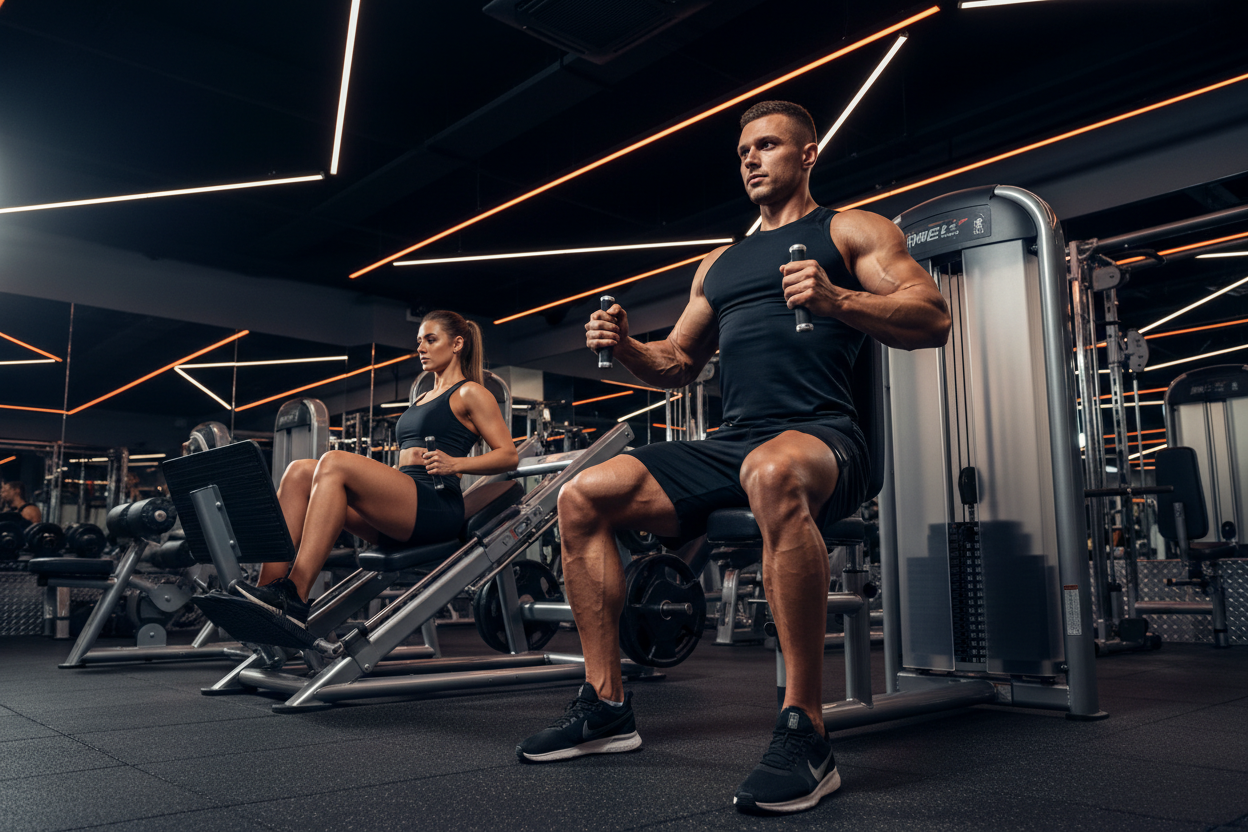
- Legs (Quads/Hamstrings): Hack Squats, Leg Press, Leg Extensions, and Seated Leg Curls.
Common Mistakes in Strength Training Using Machines
Just because the path of motion is fixed doesn't mean you can't mess it up. Gym machines strength training requires proper setup to be effective.
Ignoring the Pivot Point
Every machine has an axis of rotation (usually marked by a red dot or a bolt). If your joint (knee or elbow) isn't aligned with this pivot point, you introduce shearing forces to the joint. This is the number one cause of pain during weight training using machines.
Slamming the Stack
If the weight stack crashes down between reps, you have lost tension. The eccentric (lowering) phase is where the most muscle damage occurs. Control the weight on the way down. If the plates clang, you are moving too fast.
My Training Log: Real Talk
I want to be honest about the reality of strength training at the gym with machines. It isn't always the smooth, futuristic experience manufacturers advertise.
Last week, I was using an older selectorized row machine. The pin was slightly bent, and I had to jiggle the weight stack just to get it to lock into the 180lb plate. Then there’s the friction. On the eccentric part of the rep, I could feel the grit in the guide rods—a stuttering feeling that made the movement slightly jerky.
And let's talk about the vinyl pads. After a heavy set of hack squats, peeling your back off a sweaty vinyl pad creates a suction sound that echoes through the gym. It’s unglamorous. But despite the sticky vinyl and the occasionally gritty cable, the pump I got in my quads was something I simply couldn't replicate with a barbell that day because my lower back was fatigued. That is the trade-off: you deal with the machine's quirks to get that targeted, safe intensity.
Conclusion
Machine weight training is not a regression from free weights; it is a specialized tool for specific goals. Whether you are working around an injury or chasing maximum muscle growth, machines allow you to push past your neurological limits safely. Adjust the seat, align your joints, and control the tempo. The growth will follow.
Frequently Asked Questions
Can you build real muscle with just machines?
Absolutely. Your muscles do not know if you are holding a barbell or pushing a padded handle; they only detect tension. If you apply progressive overload during weight training on machines, you will build muscle tissue effectively.
Is machine training safer than free weights?
Generally, yes. Strength training using machines reduces the risk of acute injury caused by dropping weights or losing balance. However, repetitive strain injuries can still occur if the machine is not adjusted to your body mechanics.
How often should I increase the weight on machines?
Apply the same progressive overload principles as any other training. Once you can perform the top end of your rep range (e.g., 12 reps) with perfect form and controlled tempo, increase the weight by the smallest increment available on the stack.