Machine Cardio Workout Explained: Maximize Your Home Setup
Hitting a plateau while staring blankly at a basement wall is a rite of passage for many home gym owners. Whether you are dealing with limited space, a tight budget, or just pure boredom, a structured machine cardio workout is the key to breaking out of that rut and actually looking forward to your sweat sessions.
In this guide, we will break down exactly how to optimize your cardio equipment workout, select the right gear for your floor plan, and build a cardio machine routine that delivers results without eating up your entire evening.
Key Takeaways
- Match the machine to your goals: Rowers build full-body power, while ellipticals offer low-impact recovery.
- Space matters: Always account for a 2-foot clearance around moving parts, especially for air bikes and treadmills.
- Mix intensities: Alternating between HIIT and LISS keeps your cardio machine exercise engaging and effective.
- Maintenance is non-negotiable: Lubricating belts and wiping down consoles prevents costly repairs.
Structuring Your Routine
HIIT vs. Steady-State
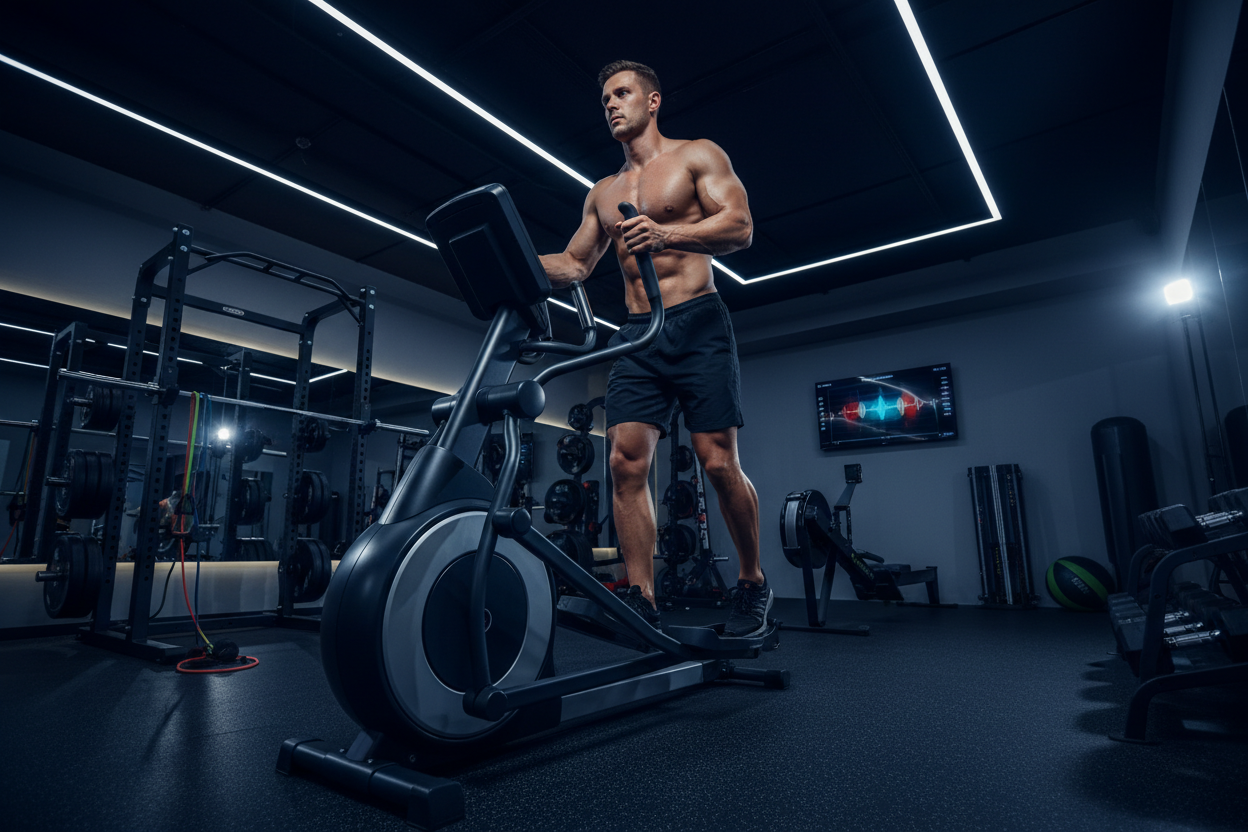
When planning a cardio workout with equipment, you generally have two paths: High-Intensity Interval Training (HIIT) or Low-Intensity Steady State (LISS). HIIT is perfect for air bikes and rowers, demanding maximum effort for short bursts followed by brief rest. LISS, on the other hand, is ideal for treadmills and ellipticals, allowing you to build a massive aerobic base while recovering from heavy strength training.
Progression and Overload
Just like barbell lifting, your cardio machine workout needs progressive overload. Do not just hop on and pedal aimlessly. Increase resistance levels, incline, or target RPMs week over week. If you are wondering how to start cardio machine training effectively, begin with a simple 20-minute session, alternating one minute of hard effort with one minute of easy recovery.
Space Planning and Equipment Selection
Footprint and Clearance Guidelines
A common mistake North American home gym owners make is underestimating the footprint of commercial-grade gear. A standard motorized treadmill requires at least 80 inches of length and a dedicated 15-amp circuit. If you are outfitting a tight garage corner, consider a concept rower or a fan bike—both offer a brutal workout but can be tipped upright to save precious square footage when not in use.
From Our Gym: Honest Take
Over the last three years, I have tested dozens of modalities in my uninsulated, often freezing garage gym. When it comes to the ultimate machine cardio workout, I consistently gravitate back to the fan bike. However, here is the honest truth: the noise level is deafening. At 80 RPM, it sounds like a helicopter is landing next to my squat rack, making it impossible to hear a podcast without noise-canceling earbuds. That said, the zero-maintenance belt drive has survived wild temperature swings with absolutely no rust or degradation, making it a bulletproof investment for harsh environments.
Frequently Asked Questions
How often should I do a cardio machine workout?
For general cardiovascular health and recovery, aim for 3 to 4 sessions per week. Mix two moderate steady-state days with one or two intense interval sessions to avoid burnout and overuse injuries.
What is the best cardio machine exercise for bad knees?
Ellipticals and stationary recumbent bikes are excellent choices. They provide a closed-chain movement that entirely removes the impact forces associated with running, protecting your joints while still elevating your heart rate.
How do I maintain my home cardio equipment?
Wipe down sweat from the console and handles after every single use to prevent corrosion. For treadmills, lubricate the running deck every 3 to 6 months depending on usage, and regularly check drive belts for fraying.