
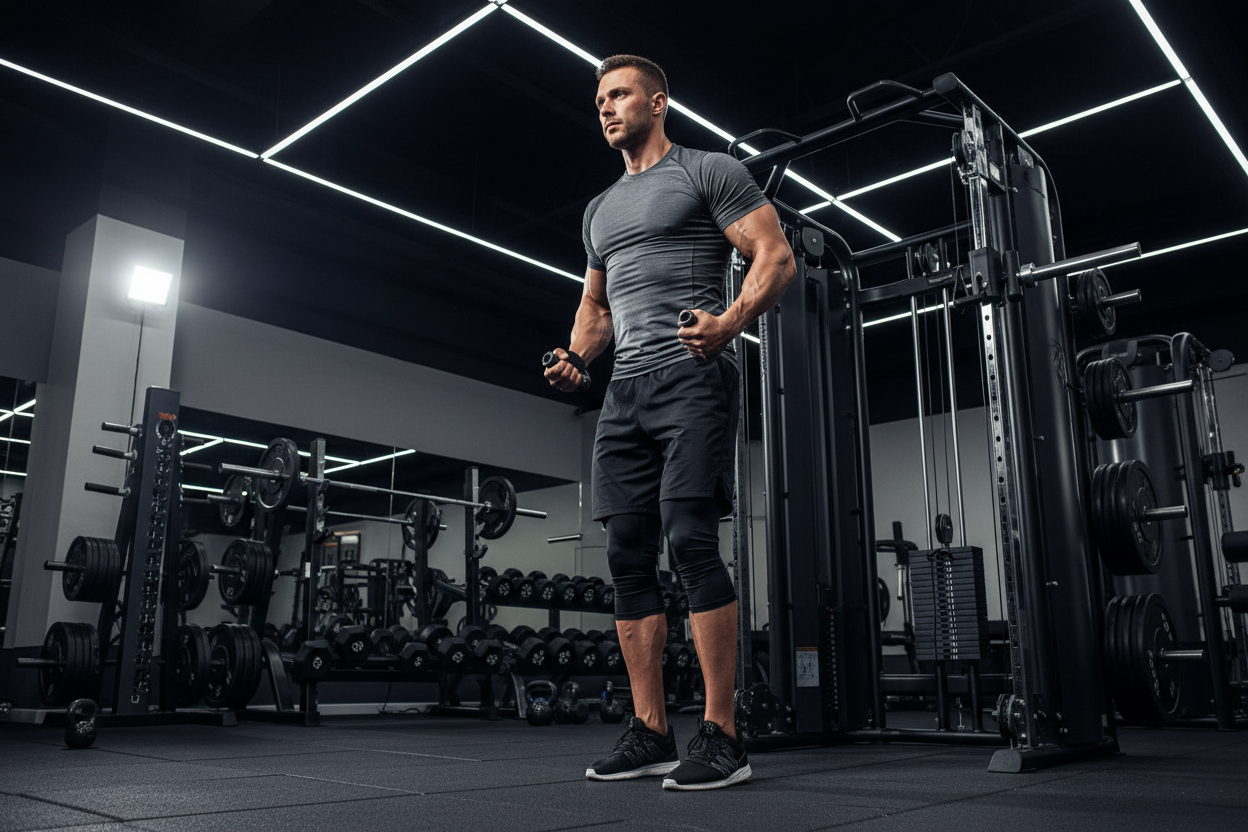
Lower Ab Workout Standing: Stop Wasting Time on the Floor
If you are tired of straining your neck and grinding your tailbone into a thin yoga mat, you are not alone. Traditional floor crunches often lead to lower back pain and poor posture, especially for home gym owners pushing through heavy compound lifts. That is exactly why shifting your focus to a lower ab workout standing is one of the smartest training decisions you can make.
Training your core from an upright position mimics real-world movement, improves balance, and integrates seamlessly with the equipment you already have in your garage or basement gym. In this guide, we will break down why upright core training works, the gear you need, and how to program it effectively.
Key Takeaways
- Spine-Friendly: A lower ab workout standing up minimizes lumbar flexion, protecting your lower back.
- Functional Strength: Upright movements train your core exactly how you use it in daily life and heavy lifts.
- Space Efficient: Standing lower ab exercises require zero floor space, making them perfect for cramped garage gyms.
- Equipment Versatility: Easily scale movements using dumbbells, kettlebells, or a functional cable trainer.
Why Upright Training Changes the Game
Functional Core Engagement
When you perform lower abs standing exercises, your core is forced to stabilize your entire body against gravity. Unlike lying on the floor, where the ground provides passive stability, standing engages your transverse abdominis, obliques, and hip flexors simultaneously. This translates directly to better bracing during heavy squats and deadlifts.
Perfect for Compact Home Gyms
Space is the ultimate premium in any home gym. If your power rack and bench take up 80 percent of your garage, finding room to sprawl out for a core circuit can be frustrating. Moving to a standing position means you only need the footprint of your own body. You can easily perform a stand up exercise for lower abs right inside your rack or in the tight clearance between your treadmill and the wall.
Essential Movements for Your Routine
Cable High-to-Low Woodchoppers
If you have a functional trainer or a simple pulley system attached to your rack, this is a top-tier movement. Set the pulley high, grab the D-handle, and chop diagonally across your body while keeping your hips square. This torches the lower abs and obliques while requiring intense rotational control.
Kettlebell Standing Marches
Hold a heavy kettlebell or dumbbell in a front rack position (or overhead for an advanced challenge). Slowly march your knees up above your waistline, alternating legs. This is one of the most brutal standing lower ab exercises you can do, demanding massive lower abdominal control to lift the leg without leaning back.
From Our Gym: Honest Take
I used to finish every lifting session with a grueling 15-minute floor ab circuit, but after heavy deadlift days, my lower back would scream at me. Switching to a lower abs workout standing up completely changed my recovery. I started using our home gym's dual cable cross for standing reverse crunches and high-knee cable pull-downs. At 6'2", I noticed that doing these upright required my core to stabilize my longer torso much more aggressively than floor work ever did. The only caveat? You have to be incredibly strict with your form. It is very easy to let your hip flexors take over if you aren't actively bracing your stomach.
Frequently Asked Questions
Are lower ab exercises standing up effective?
Absolutely. They are highly effective for building functional core strength, improving balance, and burning calories since standing requires more full-body muscle activation than lying down.
Do I need equipment for a stand up exercise for lower abs?
While bodyweight moves like standing bicycles and high knees are great for beginners, adding resistance is crucial for progressive overload. We highly recommend utilizing resistance bands, a single kettlebell, or a cable machine to maximize your standing lower ab workouts.
How often should I do a lower ab workout standing?
Treat your core like any other muscle group. Incorporating these upright movements 2 to 3 times a week at the end of your regular strength training sessions will yield excellent results without overtraining.


