Lightweight Running Machine: Is It Actually Worth the Investment?
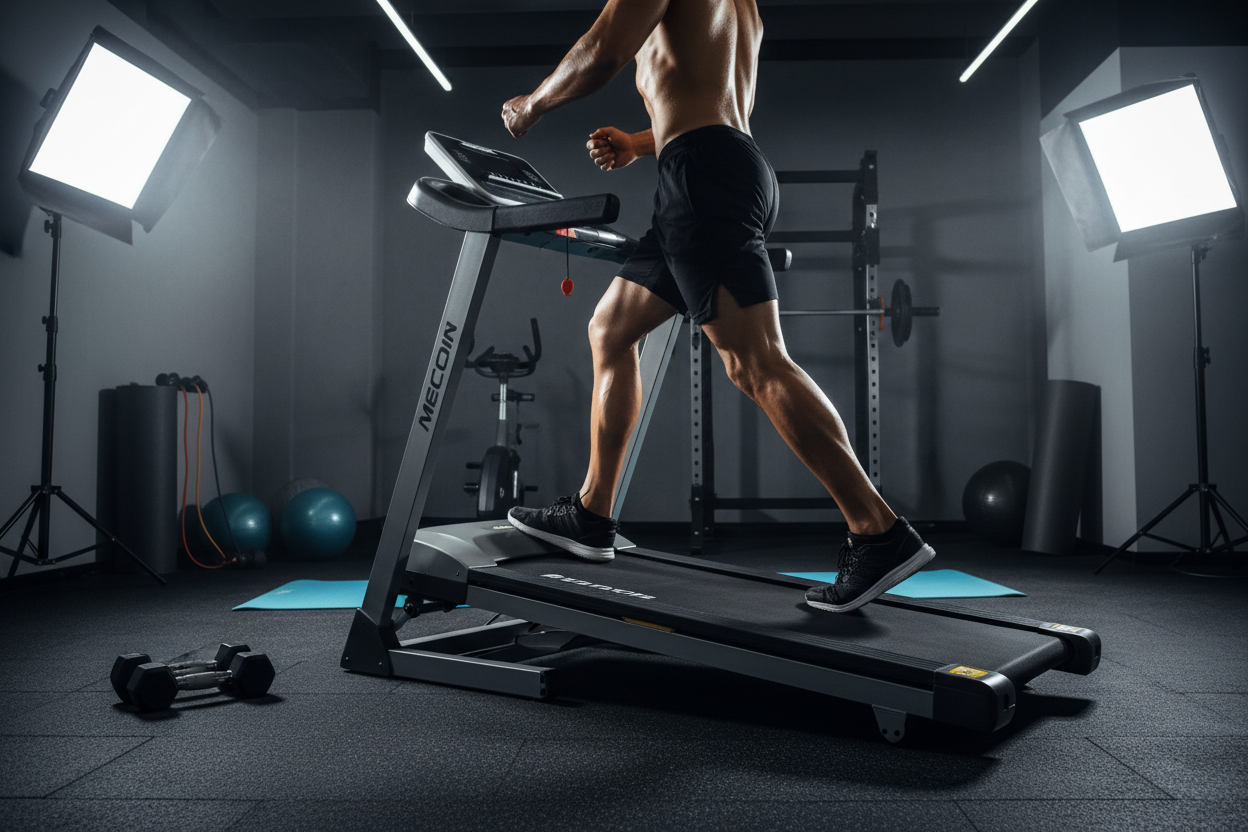
If you've ever tried to haul a 250-pound commercial treadmill up a flight of stairs, you already know the struggle. For most North American home gym owners—especially those in apartments or sharing multi-use basement spaces—traditional cardio equipment is simply too bulky. That's where a lightweight running machine comes into play.
But with so many stripped-down models flooding the market, it can be tough to separate a reliable training tool from a flimsy clothes hanger. This guide will walk you through exactly what to look for, how to plan your space, and whether these streamlined treadmills can actually handle your daily mileage.
Key Takeaways
- Portability over Power: Expect smaller motors (1.5 to 2.5 CHP), best suited for jogging and light running rather than marathon training.
- Space Efficiency: Most models fold flat, requiring less than 8 inches of vertical clearance for under-bed storage.
- Weight Limits: Maximum user capacities typically hover around 220 to 250 lbs to maintain a lighter frame.
- Incline Trade-offs: While flat models are common, a compact folding treadmill with incline offers better workout variety at a slightly heavier weight.
Buying Guide: Balancing Weight and Performance
When shopping for compact treadmills for sale, the biggest mistake people make is expecting commercial gym performance from a 90-pound unit. Here is how to navigate the key specs.
Motor Size and Speed Limits
A lighter machine usually means a lighter motor. Most streamlined models peak at around 7 to 8 mph. If your goal is steady-state cardio or brisk walking, this is plenty. If you are an elite sprinter, you'll likely overtax the motor and experience belt hesitation.
The Incline Factor
Finding a slim folding treadmill with incline can be a game-changer. Adding just a 3% to 5% grade drastically increases your caloric burn and posterior chain engagement without requiring you to run at top speeds. However, motorized inclines add weight, so many ultra-light models rely on manual incline pins. Decide if the convenience of auto-incline is worth an extra 15 pounds of machine weight.
Space Planning: Will It Actually Fit?
The primary appeal of these units is their footprint. But "compact" means different things to different manufacturers.
Vertical vs. Horizontal Folding
When evaluating treadmills space saving features, look at the folding mechanism. Some fold upright to sit against a wall, while others fold completely flat. If you plan to store it under a sofa, ensure you have at least 6 to 8 inches of clearance. Always measure your baseboards and furniture heights before hitting the checkout button.
From Our Gym: Honest Take
We've tested dozens of cardio machines in our facility, but I specifically took a highly-rated lightweight model home to my second-floor apartment for a 30-day trial. The portability was fantastic; I could easily wheel it from the closet to the living room by myself.
However, the trade-off for that mobility is deck stability. At 185 pounds, I noticed a slight "bounce" in the running deck when pushing past 6 mph. It wasn't a dealbreaker, and the shock absorption actually felt decent on my knees, but it lacked the rock-solid, planted feel of a heavy-duty unit. My advice? Get a dense rubber equipment mat. It dampens the noise for downstairs neighbors and grips the floor to prevent the machine from creeping forward during aggressive strides.
Frequently Asked Questions
Is a lightweight running machine good for bad knees?
Yes, many lighter treadmills feature softer, more flexible decks that absorb impact better than running on concrete. However, if the deck is too thin, it may bottom out. Look for models explicitly advertising shock-absorbing elastomers.
Can I get a compact folding treadmill with incline under $500?
It is possible, but usually, you will be looking at manual incline systems rather than motorized ones at that price point. Motorized incline models in this weight class typically start around the $600 to $800 range.
How long do lightweight treadmills last?
With regular maintenance—like lubricating the belt every 3 months and keeping the motor free of dust—a high-quality compact treadmill can last 5 to 7 years of moderate use.