Lifting Flooring: Stop Cracking Your Garage Foundation
There is nothing quite like the panic of dropping a heavy barbell and hearing an ominous crack echo from beneath your feet. Whether you are setting up in a two-car garage or a basement, lifting flooring is often the most overlooked—yet most critical—investment you will make for your training space. You can buy the best power rack and the finest barbell on the market, but if you destroy your home's foundation, your lifting days are going to get very expensive, very fast.
In this guide, we are breaking down everything you need to know about building a bulletproof foundation. From choosing the right thickness to deciding between budget stall mats and premium tiles, this breakdown will help you build a weight lifting floor that protects your gear, your home, and your joints.
Key Takeaways
- Thickness matters: A minimum of 3/4-inch rubber is required for heavy deadlifts and Olympic weightlifting.
- Material is key: Vulcanized rubber is denser, less porous, and more durable than bonded crumb rubber.
- Subfloor protection: Heavy lifters should combine rubber mats with a plywood subfloor for maximum impact dispersion.
- Odor control: Budget agricultural mats often carry a strong sulfur smell; premium gym tiles are treated to minimize indoor odors.
Choosing the Right Thickness and Material
The 3/4-Inch Gold Standard
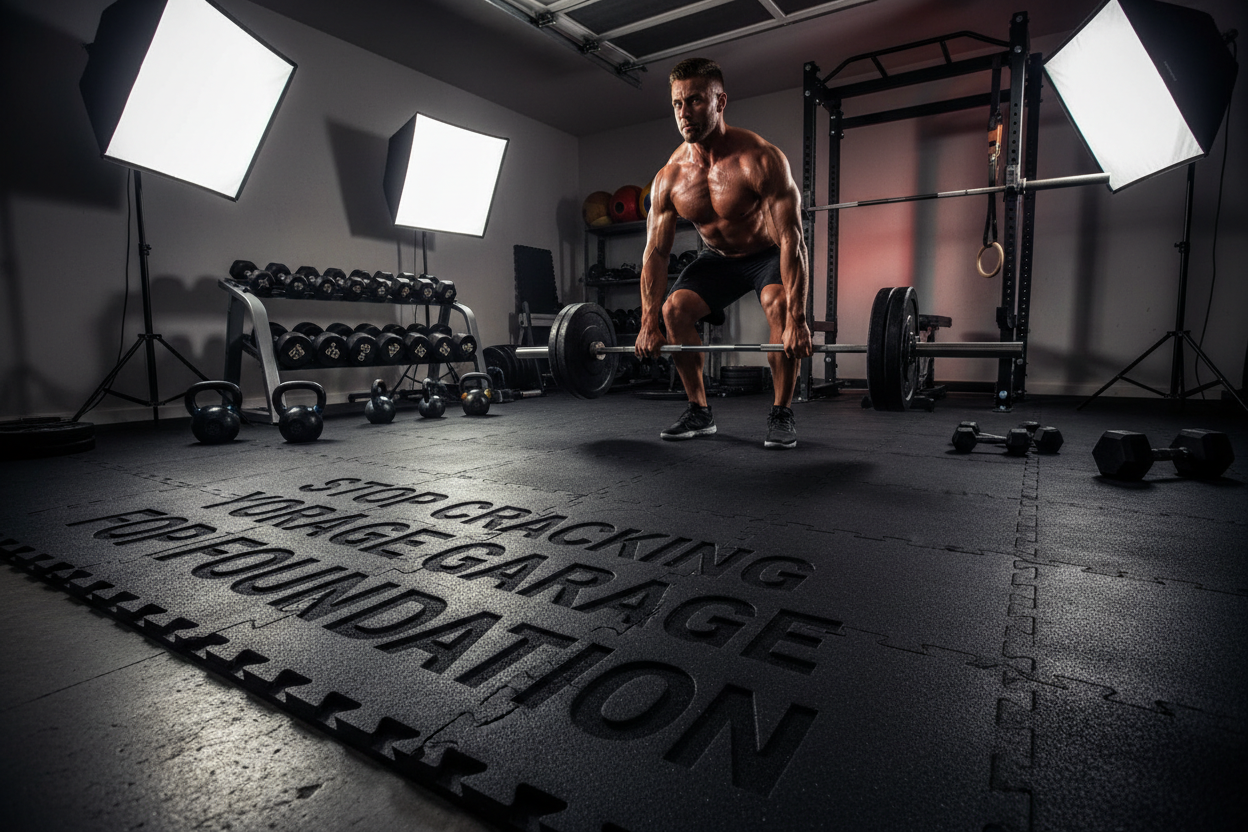
When planning your weightlifting floor, thickness is your first line of defense. For general fitness and dumbbell work, 3/8-inch or 1/2-inch rubber might suffice. However, if you are dropping loaded barbells, 3/4-inch rubber is the absolute minimum standard. This thickness absorbs the kinetic energy of dropping iron or bumper plates, preventing the shockwaves from transferring directly into your concrete slab.
Horse Stall Mats vs. Premium Gym Tiles
The great home gym debate often comes down to budget versus finish. Horse stall mats (typically 4x6 feet and 3/4-inch thick) are incredibly durable and cost-effective. However, they are heavy, hard to move, and can off-gas a strong rubber odor for months. Premium interlocking gym tiles or rolled rubber options offer a seamless look, easier installation, and are specifically manufactured for indoor air quality—though they come at a higher price point.
Space Planning for North American Homes
Garage Gyms vs. Basement Setups
If you are building a garage gym, you have to account for the slope of the concrete. A thick, high-density rubber mat can help bridge minor unevenness, but severe slopes might require a leveled plywood subfloor. For basement gyms, moisture is the enemy. Always ensure your concrete is sealed or use a dimpled underlayment beneath your rubber to prevent mold growth trapped under the mats.
From Our Gym: Honest Take
When I first built out my garage setup, I went the cheap route and bought 1/2-inch interlocking foam tiles. Big mistake. Within a month, my squat stand had permanently compressed the foam, and a dropped 45-pound plate punched a hole right through it. I upgraded to 3/4-inch vulcanized rubber stall mats. While the durability is unmatched—my chalked grip slips before these mats ever show wear—I have to be honest about the installation. Moving 100-pound floppy rubber mats solo is a workout in itself, and the barnyard rubber smell took about two months and a lot of Simple Green to fully fade. If I were setting up a spare bedroom or an enclosed basement today, I would 100% spend the extra cash on low-odor, premium gym tiles to save my nose and my sanity.
Frequently Asked Questions
Can I just use a yoga mat or foam tiles for a weight lifting floor?
No. Foam tiles and yoga mats compress under heavy loads, making them unstable for squats and deadlifts. They also offer zero impact protection for your subfloor if you drop a weight.
How do I clean a weightlifting floor?
Keep it simple. Sweep or vacuum loose chalk and dust regularly. For a deep clean, use a mop with warm water and a pH-neutral cleaner (like a few drops of Dawn dish soap). Avoid harsh chemicals like bleach, which can degrade the rubber over time.
Do I need plywood under my rubber mats?
If you are deadlifting over 400 pounds or doing Olympic lifts where the bar is dropped from overhead, yes. A layer of 3/4-inch OSB or plywood under your rubber mats helps disperse the force over a wider area, drastically reducing the risk of cracking your concrete foundation.