Leg Ext Curl Machine: The Ultimate Space-Saving Leg Builder
Leg day often gets a bad rap for being complicated. You need racks, plates, and usually a massive footprint to hit every muscle group effectively. But if you are training in a garage gym or a crowded commercial facility, efficiency is the name of the game. This is where the leg ext curl machine shines.
It’s a controversial piece of equipment. Purists argue that combined machines compromise biomechanics, while minimalists swear by them. The truth lies somewhere in the middle. If you want to isolate your quads and hamstrings without buying two separate, expensive units, this machine is your best bet.
Quick Summary: Is It Worth It?
- Space Efficiency: The primary benefit is getting two massive movements (quad extension and hamstring curl) in a footprint of less than 15 square feet.
- Cost Effectiveness: A high-quality leg extension/leg curl combo machine costs significantly less than buying two standalone commercial units.
- Transition Speed: Modern designs allow you to switch from extensions to curls in seconds, making supersets easy.
- Biomechanics: While older models were clunky, newer pivot points align better with the human knee joint for safer movement.
Why the Combo Machine is a Home Gym MVP
Space is the most valuable currency in a home gym. A standalone leg extension machine takes up a lot of floor space for a single movement pattern. The same goes for a prone leg curl.
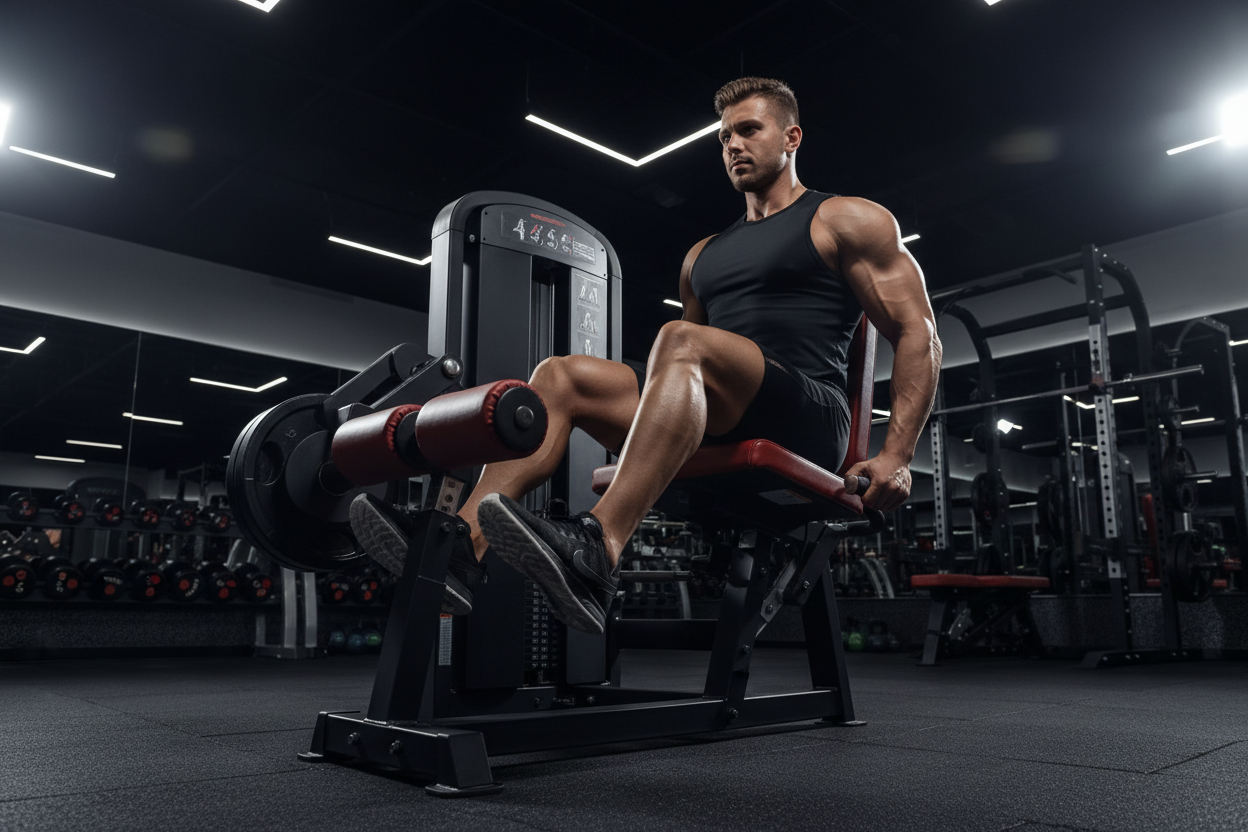
The leg extension/curl machine solves this geometry problem. By utilizing a central pivot point and an adjustable swing arm, you can target the anterior chain (quads) and posterior chain (hamstrings) from a single seat. For anyone trying to build a complete physique in a garage or basement, this versatility is non-negotiable.
The Mechanics of the Switch
On a standard leg curl/extension machine, the transition involves moving the shin pad and adjusting the starting position of the lifting arm. High-end models use a simple pop-pin system. You pull the pin, rotate the arm down for extensions or up for seated curls, and lock it back in. This speed is crucial if you are trying to keep your heart rate up or perform supersets.
Mastering the Leg Extension
When setting up for the extension portion on a leg extension/leg curl machine, alignment is everything. Your knee's axis of rotation needs to line up perfectly with the machine's pivot point (usually indicated by a red dot or a bolt).
If you sit too far back, you place shearing force on the knees. If you sit too far forward, you lose leverage. Adjust the back pad until your knees hang just off the edge of the seat, allowing for a full range of motion without your hips lifting off the pad.
Perfecting the Seated Leg Curl
Many lifters neglect the hamstring portion of the leg curl and leg extension machine because it can feel awkward compared to lying curls. However, seated curls are actually superior for hamstring hypertrophy.
Why? Because sitting puts your hips in flexion. This stretches the hamstrings at the origin (the hip), allowing for a deeper stretch and harder contraction. To get the most out of this, use the thigh clamp (lap bar) tightly. If there is a gap between your quad and the pad, you will use momentum rather than muscle to move the weight.
Common Mistakes to Avoid
Even the best leg ext curl unit won't save you from bad form. Here are the errors that kill gains:
- Kicking, Not Squeezing: Don't launch the weight up. Control the concentric (lifting) phase and pause at the top.
- Ignoring the Eccentric: The negative portion of the lift is where the muscle damage occurs. Lower the weight over 3 seconds.
- Wrong Shin Pad Placement: For extensions, the pad should be just above the ankle. For curls, it should be behind the ankle/Achilles area. If it's on your calf, you lose leverage.
My Training Log: Real Talk
I’ve spent years training in commercial facilities and cramped garage gyms, and I have a love-hate relationship with the leg extension/leg curl combo machine.
I specifically remember testing a mid-range unit a few years ago. On paper, it looked perfect. In reality? The transition was a headache. Every time I switched from curls to extensions, I had to wrestle with a sticky pop-pin that always seemed to jam right when my adrenaline was high.
But the thing that sticks with me is the shin pad. On cheaper models, the vinyl gets incredibly slick once you start sweating. I recall doing heavy leg curls and feeling my ankles sliding around inside the roller, forcing me to stop mid-set to wipe it down with a towel. Also, the "clank" of the weight stack on these combo units hits differently—it echoes right through the floor because the guide rods often aren't as smooth as dedicated commercial units. Despite the grit and the noise, that machine built my quad sweep better than squats ever did simply because I could push to absolute failure safely without a spotter.
Conclusion
The leg ext curl machine isn't just a space-saver; it's a legitimate tool for hypertrophy. Whether you are equipping a home gym or navigating a busy fitness center, this machine allows for safe, high-intensity isolation work. Focus on your alignment, control the negative, and don't let the convenience of the machine make you lazy with your intensity.
Frequently Asked Questions
Is a combo leg extension/curl machine as effective as separate machines?
Yes, for muscle building, it is just as effective. The resistance profile is similar. The main difference is usually comfort and setup time, but the muscle stimulation for the quads and hamstrings remains high quality.
Can leg extension/leg curl machines damage your knees?
Knee pain usually stems from improper alignment, not the machine itself. Ensure the pivot point of the machine aligns perfectly with your knee joint. Avoid "locking out" violently at the top of the movement to protect the joint.
Which is better: seated leg curl or lying leg curl?
Studies suggest the seated leg curl (often found on combo machines) is slightly better for hypertrophy. Sitting flexes the hip, which places the hamstrings in a stretched position, allowing for greater muscle activation compared to the lying variation.